The casino industry is barreling into a fresh wave of change as mergers and acquisitions pick up speed across the sector. Market indicators suggest more casino companies will chase buyouts and consolidation, with low borrowing costs and tempting company valuations fueling the fire.
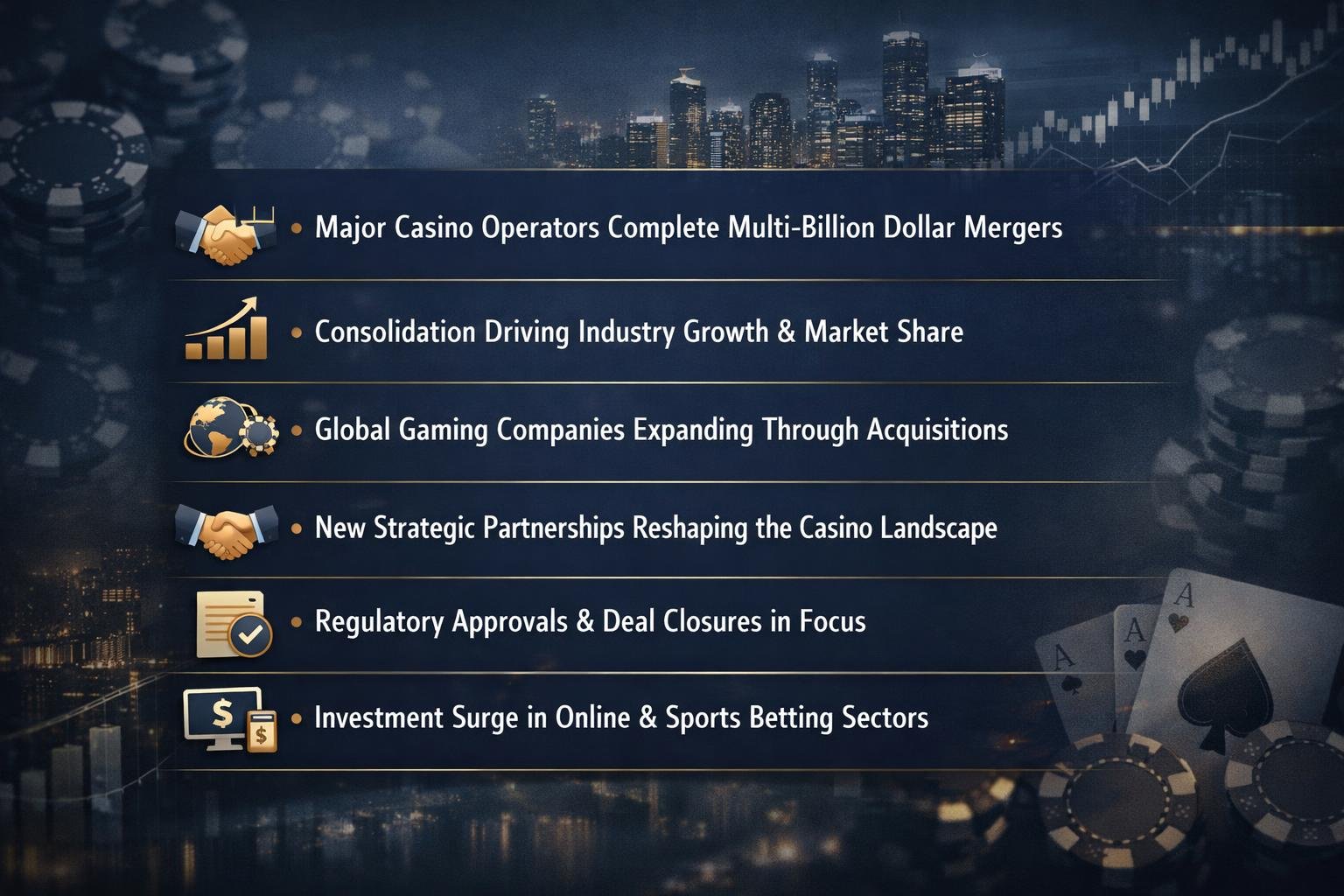
Several forces are clearly pushing this trend forward. Public casino companies face relentless pressure from investors who want quick results, so private ownership starts looking more attractive.
Operators are struggling to find real growth in the crowded U.S. market. This situation nudges them toward selling off assets or teaming up with rivals.
Private buyers see value in snapping up established casino brands at these prices. It’s not just about Las Vegas anymore—regional casinos, online gambling outfits, and international expansion plans all feel the impact.
Some analysts see a future with fewer, more focused operators. Private equity firms are circling, eyeing casino properties as long-term bets.
Key Takeaways
-
Casino mergers and acquisitions are expected to increase due to low borrowing costs and undervalued stock prices
-
Caesars Entertainment is considering takeover bids from potential buyers including Texas billionaire Tilman Fertitta
-
Growth opportunities in untapped international markets and online gaming are driving consolidation across the industry
Current Landscape of Major Casino Acquisitions & Mergers

Consolidation is the name of the game in 2026, with major deals shaking up the casino market. Economic conditions make big acquisitions easier—borrowing costs are still inviting, and companies want to broaden their portfolios.
Overview of Major Casino Deals in 2026
Right now, Fertitta Entertainment’s $7 billion offer for Caesars Entertainment is the headline act. If you add in Caesars’ debt, the deal balloons to a staggering $31.5 billion.
This would be the biggest casino acquisition since Eldorado Resorts scooped up Caesars for $17.3 billion back in 2020. The combined company would end up running about 60 casino resorts across the U.S.
Carl Icahn has tossed in a competing bid at $33 per share, coming in at roughly $6.7 billion. That gives Caesars a backup plan if Fertitta’s deal falls through.
Prediction markets are putting the odds of a Caesars buyout at 75% for 2026. Regulatory hurdles, though, have pushed the likely closing into 2027—there’s a tangle of financial reviews and executive background checks to get through.
Regulators in multiple states are taking their time, so forget about any quick approvals. The earliest anyone expects a green light is now sometime in 2027.
Drivers Behind Recent Casino Mergers and Acquisitions
Low borrowing costs are making these deals possible. The premium spread over government bonds means it’s still economical to buy up casino equity.
Private companies are pushing a lot of the action. Hard Rock International’s purchase of the Mirage stands out as a recent example.
Public casino companies, not seeing much stock growth, are more open to acquisition offers. Buyers with capital are taking advantage of that mindset.
Strategic focus matters, too. Las Vegas Sands, for instance, sold The Venetian to Apollo Global Management in 2021 to double down on other properties.
Impact on Casino Resorts and Local Markets
If Fertitta lands Caesars, we’re looking at a giant with about 60 properties nationwide. The new owner would almost certainly sell off some assets to help trim Caesars’ $24.5 billion debt.
Those asset sales could spark more mergers and acquisitions throughout the sector. Smaller operators and private equity firms would get a shot at picking up individual resorts.
Deals like these touch both brick-and-mortar resorts and online gaming. Fertitta already runs the Golden Nugget online casino, while Caesars has its own digital platforms.
Local markets might see new names on the doors of major casinos. I wouldn’t be surprised to see buyers double down on their best locations and ditch the underperformers.
Headline Casino Takeovers: Caesars, Fertitta, and Icahn

Caesars Entertainment found itself at the heart of a high-stakes bidding war in early 2026. Buyers are eager to pounce on Caesars’ big market footprint and favorable valuations during this period of transition.
Tilman Fertitta's Bid for Caesars Entertainment
Fertitta Entertainment put forward a $7 billion offer for Caesars, making it the lead suitor as Caesars weighs its options. That’s about a 17% premium over Caesars’ stock price at the time.
If the deal goes through, Fertitta’s empire would expand to roughly 60 casino resorts nationwide. He’s been eyeing Caesars for years—he first approached them about a merger in 2018.
The $34-per-share offer from Fertitta tops Icahn’s $33-per-share bid, putting Fertitta in a strong position. Still, sources say there’s no guarantee—talks could break down before any signatures hit the paper.
Carl Icahn's Competing Acquisition Effort
Carl Icahn’s Icahn Enterprises fired back with an all-cash offer of about $33 per share. Caesars’ board hasn’t officially said no, so the door’s open for more back-and-forth.
Icahn’s history with Caesars goes back to 2019, when he built up a 9.78% stake and pushed for a sale. His activist moves led to board shakeups—three members replaced, two new ones added.
Since then, Icahn has grown his position to a “sizable” stake, keeping the heat on management to boost shareholder value. His bid sets up a direct clash with Fertitta for control of one of Vegas’ biggest operators.
Significance of the Caesars Deal for the Industry
This takeover battle is happening as Caesars struggles with weak financials and lower visitor numbers in 2025. That makes it ripe for strategic buyers looking to scoop up undervalued assets while borrowing remains cheap.
If a deal goes through, the buyer would control a huge portfolio—around 60 properties in multiple markets. That’s a gaming empire by any measure.
The strategic implications are broad. The deal could spark a new round of consolidation as other operators look for scale to compete in a tough market.
Regulatory and Financial Hurdles
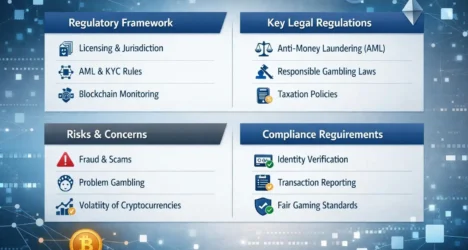
Any acquisition of Caesars faces a wall of regulatory scrutiny. Buyers have to pass deep background checks and get sign-off from every state gaming commission where Caesars operates.
Financing is another mountain to climb. Pulling together $31.5 billion, and managing Caesars’ $24.5 billion debt, is no small feat.
Caesars’ market cap remains central to negotiations, with equity values in the $6.7 to $7 billion range based on the current premium bids.
Expanding Horizons: Online Gambling, iGaming, and Digital M&A

The pivot toward digital platforms is driving a new wave of acquisitions in online gambling and iGaming. Companies are snapping up tech firms and sports betting platforms to grab market share.
Names like Genius Sports and Barstool Sports have become hot targets as traditional casinos look for ways to merge with digital brands.
Growth of iGaming and Online Casino Acquisitions
I’ve watched a real surge in iGaming consolidation as companies fight for online dominance. The online casino market attracts billions because margins are high and overhead is lower than in physical casinos.
Social casino games stand out as especially attractive. These mimic slots and poker without real-money betting, so they churn out steady revenue with less regulatory hassle. That lighter compliance load makes them easy to roll out in new regions.
Big gaming groups buy up platforms to tap into established customer bases and proven tech. When Playtech bought Virtue Fusion for $37 million in 2010, it gained valuable bingo software that helped it lead the market. You see this playbook across the sector—why build from scratch when you can buy expertise?
Notable Mergers in Online Gambling and Prediction Markets
GVC Holdings and William Hill’s joint $530 million purchase of Sportingbet let GVC (now Entain) break into international markets. Both companies got access to Sportingbet’s user base and betting infrastructure in several countries.
Prediction markets are the new frontier for M&A. These platforms let users bet on everything from elections to economic stats, not just sports. Companies buying into prediction markets are targeting younger, tech-savvy users who want something different.
Operators in the online gambling space keep making deals to gain tech, enter new markets, or knock out rivals. That’s where most of the action is right now.
Influence of Technology Firms: Genius Sports & Barstool Sports
Genius Sports has carved out a spot as a key tech supplier for sports betting. It provides official data feeds, streaming, and betting tech to big operators worldwide. That integration makes Genius an attractive partner for anyone wanting to upgrade their betting platforms.
Barstool Sports took another route—building a media brand first, then moving into sports betting. Penn Entertainment grabbed a stake in Barstool to reach its young, loyal audience. The result? A blend of traditional casino operations and digital media that drives new customer signups.
These tech-focused acquisitions highlight a broader trend. Traditional gambling firms know they need digital expertise to stay competitive. In some cases, data and media reach are just as valuable as gaming licenses.
Convergence of Land-Based and Digital Casino Brands
Traditional operators are pouring billions into online platforms. They want to serve customers wherever they play—on the casino floor or from their couch.
Parent companies now run multiple brands under one roof, each targeting a different crowd. One might focus on slots, another on table games or sports betting. This way, they keep customers in the family without cannibalizing their own business.
When players hop between brands owned by the same company, the operator keeps all that revenue in-house. This cross-brand retention strategy now justifies many big acquisitions. Loyalty programs that work both online and in-person help build customer lifetime value and stickiness.
Emerging Trends and Predictions for Future Casino Mergers

Private equity firms are moving aggressively into casino acquisitions. Meanwhile, established operators are streamlining portfolios through strategic asset sales.
Looking ahead, the market outlook points to more consolidation, with online gambling growth and untapped regional markets driving the next wave of deals.
Role of Private Equity and Strategic Buyers
Private equity investors are zeroing in on casino deals as traditional operators scramble to modernize. I keep seeing firms backed by heavyweights like Carl Icahn and Tilman Fertitta circling established casino properties, looking for the right fit.
These buyers don’t just bring money—they bring operational know-how. They're usually after undervalued assets ripe for a tech overhaul and stronger management.
Private equity's growing interest marks a shift in the landscape. We’re moving from simple operational consolidation to financial engineering, with a clear focus on unlocking new value.
What’s the draw? It’s the steady cash flow casinos can generate, plain and simple. Brick-and-mortar properties offer real assets as collateral, which is something online-only platforms just can’t match.
I’d bet we’ll see even more private equity deals as established gaming companies unload non-core properties, hoping to sharpen their focus on core markets.
Portfolio Optimization and Asset Divestiture
Big operators are offloading secondary properties to pour resources into flagship venues and online platforms. Las Vegas Sands, for instance, sold its Vegas properties to double down on Asia, though the market keeps shifting under our feet.
Companies are taking a hard look at which assets actually move the needle. Regional casinos in crowded markets often end up on the chopping block.
The cash from these sales usually fuels digital expansion or fresh acquisitions, especially in newly regulated states. This shuffle creates openings for mid-sized players and private equity shops itching for growth.
Assets that don’t fit one operator’s playbook might be a perfect springboard for another. That’s the kind of efficiency that makes the market more dynamic—and frankly, more interesting to watch.
Market Outlook: What's Next for Casino Industry M&A
Market indicators suggest mergers and acquisitions will pick up speed as operators chase growth in untapped regions. Expansion into newly regulated jurisdictions and favorable conditions are setting the stage.
Integrating online gambling remains at the top of the agenda. I’m expecting more deals that pair old-school casino operators with digital upstarts, aiming to build all-in-one gaming ecosystems.
Cross-border acquisitions should also spike, as companies look outward for global expansion. The strategic implications are hard to ignore.
Key factors shaping future deals:
-
Regulatory expansion in U.S. states now greenlighting sports betting and online gaming
-
Technology acquisitions—think AI analytics and mobile-first platforms
-
International growth with eyes on Latin America and Asia
-
Scale advantages as bigger players try to lock down industry leadership
Las Vegas still dominates the conversation, but let’s be honest: the real action now stretches far beyond Nevada.