










Bitcoin really flipped the script on how we move money at online casinos. When you pick a Bitcoin Casino Payment Method, you deposit and withdraw straight from your crypto wallet—no banks, no middlemen.
This approach cuts through the usual payment headaches and, honestly, most transactions land in minutes instead of dragging on for days. Sure, plenty of folks still reach for their Visa or Mastercard, but Bitcoin’s gone from a fringe option to a go-to for online gambling payments and crypto transactions as we head into 2026.

I’ve watched Bitcoin morph into one of the top alternatives to old-school payment methods. Speed, lower fees, and a lot more privacy—those are the big draws.
Casinos don’t just stop at Bitcoin, either. You’ll see Ethereum, Litecoin, and a bunch of other cryptos on the menu now, so you get to pick what fits your style.
Understanding how bitcoin deposits work at online casinos can help you figure out if it’s your speed or not. The process isn’t like using a card or bank transfer, and there’s a whole set of pros and cons you’ll want to know before you send your first crypto deposit.
Key Takeaways
-
Bitcoin lets you send money directly from your wallet to the casino, and it’s usually way faster than old banking methods.
-
You get more privacy and, most of the time, lower fees than credit cards or bank transfers.
-
Crypto values jump around a lot, so your balance might be worth more—or less—when you cash out.
What Is This Payment Method?
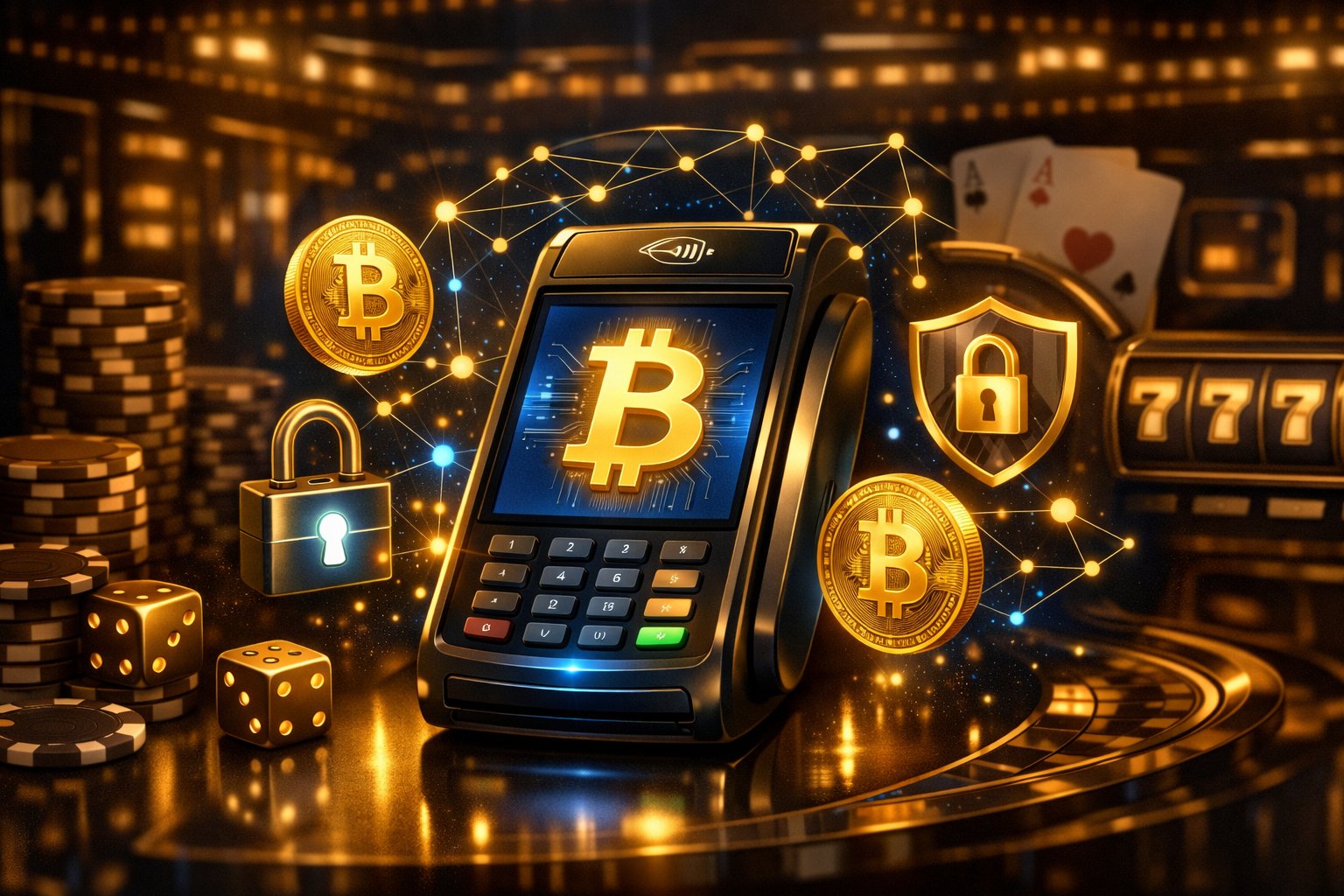
Bitcoin’s a digital currency that lets me send money straight to another person—no banks or payment companies needed. At online casinos, I just use my crypto wallet address to deposit or cash out, which means faster transactions and more privacy than most other options.
Technically speaking, Bitcoin is the world’s first decentralized digital currency. No one controls it, and transactions happen directly between people on a peer-to-peer network. When players start asking, “What is bitcoin?” they usually find out it means more freedom than using a regular bank.
Payment Method Overview
Under the hood, Bitcoin runs on blockchain technology—a public ledger that logs every transaction across a bunch of computers. When I pay with Bitcoin at a casino, the network double-checks everything and locks my transaction into the blockchain forever.
All I need is a wallet address. No credit card numbers, no bank details, not even my name. Cryptography keeps everything locked down with math so complex, it’s basically unbreakable.
Most Bitcoin transactions confirm in about 10 minutes. Sometimes, casinos process withdrawals even faster—think 6 to 12 minutes if the network isn’t slammed. Fees float up or down depending on how busy things are; when everyone’s using Bitcoin, you might pay a bit more to get your transaction through first.
History and Development
Bitcoin showed up in 2009, thanks to a mysterious creator named Satoshi Nakamoto. It kicked off the whole cryptocurrency movement and introduced the world to decentralized money.
Online gambling sites started eyeing Bitcoin around 2012 or 2013. Early adopters jumped on board for the speed, lower fees, and privacy you just couldn’t get from banks. That’s when the first all-crypto casinos started popping up.
Bitcoin ended up laying the groundwork for the entire crypto gambling ecosystem. Its success inspired thousands of other coins, many now accepted at online casinos. The standards and expectations you see in crypto casinos today? Bitcoin set most of those.
Popularity Among Online Casino Players
Right now, Bitcoin handles more than 70% of all crypto transactions at online casinos. Even some sweepstakes casinos—like Stake.us—are dipping their toes into digital currencies.
This dominance isn’t just hype. Players trust Bitcoin, and it’s the top pick for fans of table games and slots. The speed of these transactions keeps attracting new users, and honestly, it’s not slowing down.
The adoption rate for crypto casinos has outpaced traditional online casino growth by over 300% worldwide. People pick Bitcoin because it’s 14 to 15 times faster than the old ways. Most deposits and withdrawals wrap up in 10 to 20 minutes, depending on how many blockchain confirmations the casino wants.
Here’s something cool: Bitcoin’s blockchain lets you check that games are “provably fair.” I can actually verify that the casino didn’t mess with the results. That transparency builds real trust, and the privacy angle is a big deal for anyone who doesn’t want to hand over sensitive info to a gambling site.
Why Do Casinos Use This Payment Method?

Casino operators love Bitcoin because it cuts costs, speeds up payments, and pulls in players who care about privacy. Since Bitcoin is decentralized, casinos dodge a lot of the banking headaches they deal with every day.
Key Benefits for Casinos Table
|
Benefit |
Impact on Casino Operations |
|---|---|
|
Lower Transaction Fees |
No intermediary banks mean casinos save money on every deposit and withdrawal |
|
Faster Processing |
Bitcoin transactions complete in minutes instead of days, improving cash flow |
|
Global Reach |
Casinos can accept players from any country without currency conversion issues |
|
Reduced Chargebacks |
Bitcoin transactions are final, protecting casinos from fraudulent payment disputes |
|
Privacy Features |
Less regulatory paperwork and compliance costs for bitcoin online casinos |
Seamless Integration with Gaming Platforms
Adding Bitcoin to a casino platform is surprisingly straightforward. Most modern casino systems can plug in Bitcoin support through simple API connections without tearing apart their whole payment setup.
From a player’s perspective, depositing with crypto is easy. Usually, you just scan a QR code or copy a wallet address, send your Bitcoin, and the funds show up in your account—often within minutes.
Behind the scenes, crypto payment processors handle the heavy lifting. They can convert Bitcoin to regular currency instantly if the casino wants, or just keep everything in crypto. Many sites use both approaches, depending on their business model.
Players see the same familiar deposit screen, even though the backend is all crypto. This means casinos don’t need to retrain their customer support teams or overhaul their user guides.
Security and Fraud Prevention
Bitcoin’s blockchain gives casino operators a public, tamper-proof record of every transaction. If there’s ever a question about a deposit or withdrawal, I can check the public blockchain myself—no guesswork.
Common fraud tricks, like stolen credit cards, just don’t work with Bitcoin. You need the private wallet keys, and those are nearly impossible for a thief to get.
Smart contracts and automation cut down on human error, too. When a player requests a withdrawal, the blockchain checks that the funds exist before anything goes out. This protects both the casino and the player from mistakes or shady moves.
Benefits for Players
Bitcoin gives casino players some real perks over the old payment systems. You get fast transactions, solid security, and managing your account gets a whole lot easier with BTC.
Ease of Use and Accessibility
Depositing with Bitcoin at a casino is honestly pretty simple. It works like any other payment method, but there are fewer hoops to jump through.
When I want to withdraw, it’s just as easy. Most casinos show a QR code or wallet address—scan or copy it, send your BTC, done.
No banks to approve anything, no card verifications, no random declines. I just send Bitcoin from my wallet to the casino’s address, and that’s it.
Bitcoin never takes a day off. Doesn’t matter if it’s a weekend or midnight—I can deposit or withdraw whenever I want.
A lot of casinos skip the long verification process for BTC users, so I can jump into the action faster. Some sites even throw in special bitcoin casino bonuses to sweeten the deal, like free spins on top slots.
Welcome bonuses for crypto users can be pretty generous. Sometimes, you’ll see higher matching percentages than you’d get with regular money. The best sites bundle these into big welcome packages, and honestly, most players find crypto-specific deals are worth more.
Regulars look for reload or cashback bonuses to keep their bankrolls healthy. If you’re betting big, high roller bonuses can be way more valuable than standard offers.
Speed of Deposits and Withdrawals Table
|
Transaction Type |
Bitcoin |
Traditional Methods |
|---|---|---|
|
Deposits |
5-15 minutes |
1-5 business days |
|
Withdrawals |
2-24 hours |
3-7 business days |
|
Processing Time |
Varies (Instant to 24h) |
Varies by method |
Bitcoin payments clear way faster than bank wires or cards. My deposits usually show up in minutes, not days.
If you want the fastest withdrawals in the business, Bitcoin’s tough to beat. Some platforms even offer instant withdrawals for users who’ve been verified.
Fast payouts come in handy when you’re chasing a time-sensitive bonus. You can meet your wagering requirements and cash out quicker. Some casinos toss in better no deposit bonus terms for BTC users, since processing is cheaper and simpler.
Enhanced Security Features
Technically speaking, Bitcoin transactions ride on blockchain technology, which is built for security from the ground up. When I play at crypto casinos, I don’t have to share any sensitive banking details or card numbers.
This setup keeps my personal data away from prying eyes and potential data breaches. Under the hood, every transaction gets verified on the blockchain and, once it’s done, you can’t reverse it.
No chargebacks here, but that also means nobody can sneak unauthorized withdrawals out of my casino account. The casino never gets access to my Bitcoin wallet—only I hold my private keys, and that’s a pretty big deal for peace of mind.
Many top casinos sweeten the deal for BTC users, tossing in exclusive bonuses and VIP perks. Since transaction fees are lower, casinos can afford to offer better rewards than what you’d get with payment methods that skim 2-5% in processing fees.
How Does This Payment Method Work?
Here’s how it works: Bitcoin casino payments run on blockchain tech, which records every transaction in a digital ledger. You send BTC from your wallet to the casino’s address for deposits, and for withdrawals, it’s just the reverse.
Step-by-Step Guide to Deposits
First things first—you need BTC in your wallet. Most folks buy bitcoin through a reputable crypto exchange to get started.
I usually use Binance or Coinbase to manage my digital assets, but there are plenty of options out there. Some people prefer non-custodial wallets like Electrum, or go for hardware wallets like Ledger or Trezor for more control.
Security matters, so I always enable multi-factor authentication and two-factor authentication on every account. Once I’ve loaded up my wallet, I head to the casino’s cashier section after logging in.
I pick Bitcoin as my deposit method. The casino gives me a unique BTC address or a QR code, and I double-check every character—one typo can send funds into the void.
Next, I open my wallet and start a transfer to the casino’s address. I pick a network fee based on how fast I want things to move. After sending, I just wait for blockchain confirmations.
Usually, casinos credit my account after 1-3 confirmations. That’s about 10-60 minutes, though if the casino uses the Lightning Network, deposits can land in seconds.
Step-by-Step Guide to Withdrawals
When it’s time to cash out, I hit the casino cashier and pick Bitcoin for withdrawals. I punch in how much I want and paste my personal Bitcoin wallet address.
To be honest, I used to compare crypto withdrawals to e-checks, but Bitcoin moves way faster. Once the casino approves, they send the BTC straight to my wallet.
The blockchain processes the transaction, and with standard on-chain transfers, I see my funds in 10-60 minutes, depending on network traffic. Lightning Network withdrawals? Those show up almost instantly.
I never leave big balances sitting in my casino account. I always pull winnings back to my own wallet, where I control the private keys and nobody else can get in.
Transaction Fees and Limits
Minimum deposit amounts usually fall between $10 and $25 in BTC. For withdrawals, you’re typically looking at $20 to $50 as the minimum.
Here’s something interesting: most casinos don’t charge deposit fees at all. For withdrawals, a lot of operators cover the network fees themselves to nudge you toward using Bitcoin.
When I do pay network fees, they’re usually low—Lightning Network transactions cost less than a penny. Standard on-chain fees change with blockchain congestion but still beat the cost of wire transfers or credit card fees.
Withdrawal limits with Bitcoin can be massive. Some casinos set six-figure maximums or have no caps at all, which is great for high rollers. Deposit limits are also higher than what you’ll find with credit cards, which often top out around $5,000.
Compatibility and Global Reach
Bitcoin works in most countries where online gambling is legal. You can use it with other cryptocurrencies like Ethereum and Tether, and it’s supported on mobile casino apps and browser platforms for deposits and withdrawals.
Availability in Different Countries Table
Because crypto doesn’t care about borders, Bitcoin casino payments work in lots of regions. I’ve noticed players in Europe, Canada, and parts of Asia use Bitcoin regularly, and new crypto-friendly casinos keep popping up to serve these areas.
Of course, some countries block online gambling entirely, so Bitcoin casinos aren’t immune to those rules. The U.S. is a mixed bag—some states are fine with crypto gambling, others not so much.
|
Region |
Bitcoin Casino Access |
Notes |
|---|---|---|
|
Europe |
Widely available |
Most countries permit crypto gambling |
|
Canada |
Available |
Legal in most provinces |
|
United States |
Limited by state |
Varies by jurisdiction |
|
Latin America |
Growing adoption |
Popular in Argentina, Brazil, Mexico |
|
Asia |
Mixed access |
Legal in some countries, blocked in others |
|
Australia |
Restricted |
Strict online gambling laws |
Supported Currencies Table
Most Bitcoin casinos support several cryptocurrencies, not just Bitcoin. Always check which coins a casino takes before signing up—it’s worth a look.
Ethereum often processes transactions faster than Bitcoin. Tether and other stablecoins come in handy if you want to dodge price swings.
|
Cryptocurrency |
Average Speed |
Common Use |
|---|---|---|
|
Bitcoin (BTC) |
2-24 hours |
Most accepted, highest recognition |
|
Ethereum (ETH) |
1-5 minutes |
Faster transactions, smart contracts |
|
Tether (USDT) |
1-10 minutes |
Stable value, popular for deposits |
|
Litecoin (LTC) |
2-5 minutes |
Lower fees, quick processing |
Mobile Compatibility and Usability
Bitcoin casino payments play nicely with mobile devices, whether you use casino apps or just your browser. I connect my crypto wallet straight to the casino platform—it’s pretty seamless these days.
You’ll need a Bitcoin wallet (or another crypto wallet) installed on your phone. Trust Wallet is a popular choice, and some hardware wallet brands even have mobile apps now.
With a crypto wallet, I just scan a QR code and send my deposit—no typing out long addresses on a tiny keyboard. Most casinos have mobile sites tuned for wallet integration.
A hardware wallet adds another layer of security but usually needs you to connect to a computer for transactions. For mobile play, hot wallets are more convenient, while cold storage is better if you’re holding big sums.
Comparison with Other Payment Methods
Honestly, a Bitcoin Casino Payment Method stands out for speed and privacy compared to the usual suspects like Apple Pay or Google Pay. It even holds its own against Play+ Prepaid Card, Discover, or American Express, and stacks up as a serious alternative to Skrill and other banking options.
Understanding how Bitcoin compares to e-wallets and debit cards helps you make the right call. Many players go for crypto because it supports instant withdrawals—though, let’s be real, volatility is always lurking in the background compared to something stable like PayPal casinos.
Advantages Over Other Options
Bitcoin moves money way faster than most banks. Using Visa or Mastercard for withdrawals can mean a several-day wait, but with Bitcoin, once it’s confirmed on the blockchain, you’re usually looking at 10-20 minutes.
Some sites offer automated payouts, but most licensed casinos still take a little time for security checks. VIP Preferred and Skrill have their own security perks, but Bitcoin only needs a wallet address—you don’t have to hand over personal info to the casino.
Fees are another win for Bitcoin. E-wallets like PayPal and Neteller often tack on percentage-based fees, while Bitcoin’s network fees are usually minimal (unless the network’s slammed).
One more thing: Bitcoin lets you access provably fair gaming. Thanks to blockchain tech, you can independently verify game results—something you just can’t do with traditional payment methods.
Disadvantages Compared to Competitors
Here’s the catch—Bitcoin is volatile. Your balance might drop in value between deposit and withdrawal, which doesn’t happen with debit cards, PayPal, or e-wallets (since they use stable fiat currency).
The learning curve is steeper, too. Setting up a wallet and getting a grip on blockchain basics takes more effort than just typing in your card details. E-wallets like Neteller are much simpler for total beginners.
Bitcoin confirmations take around 10 minutes on average. That’s faster than bank wires, but PayPal and e-wallets can do instant deposits, so they’re still quicker in some cases.
Not every casino takes Bitcoin yet. Debit cards and e-wallets are accepted at more online gambling sites, so crypto isn’t universal—at least not yet.
Best Use Cases
Bitcoin shines when you want privacy and don’t want gambling charges showing up on your bank statement. The pseudonymous setup is ideal if you value discretion.
I use Bitcoin for larger transactions since e-wallet fees can get expensive. If you’re pulling out $1,000, a flat $5 Bitcoin fee is a lot better than a 3% e-wallet charge.
It’s also a natural fit for tech-savvy players who already use crypto elsewhere. If you’re comfortable with the tech, adding crypto casino deposits is just another use case.
And if you’re in a region where banks block gambling payments, Bitcoin gives you a workaround when debit cards or PayPal hit a wall.
Licensing and Regulatory Compliance
Bitcoin casinos run under specific licensing frameworks. These frameworks set the rules for legality and trust.
Legitimate operators have to get gaming licenses. They also need to use strict identity checks and allow third-party audits to prove fair play and financial security.
Licensing Requirements
Traditional operators like BetMGM Casino follow state regulations. Some brick-and-mortar spots let you handle transactions with cash at the casino cage.
Online, Bitcoin is the closest thing to that direct, physical exchange. Regulators step in to check that blockchain transactions meet strong player protection standards.
Honestly, only a few jurisdictions clearly allow crypto gambling. Curacao is the go-to for many, with licensing costs around $35,000 to $60,000 and clear crypto-friendly rules.
Gibraltar costs a lot more—think $150,000 or more just to get started—but you get more regulatory credibility and easier access to decent banking partners. Malta’s MGA license is stricter with crypto, usually tacking on another 6-9 months of paperwork for extra approvals.
The UK Gambling Commission lets casinos accept Bitcoin but demands thorough transaction monitoring that proves where the money comes from. This gets tricky when blockchain records end at mixing services or privacy wallets.
Licensed Bitcoin casinos must keep at least 80% of player funds in cold storage wallets with multi-signature security. Regulators check these wallet setups during compliance reviews, and if you keep too much in hot wallets, you risk losing your license.
Anti-Money Laundering (AML) and Know Your Customer (KYC) Policies
Every legitimate jurisdiction requires player verification—even for crypto-only transactions. The fully anonymous Bitcoin casino model only shows up with unlicensed operators, and they’re always on thin ice with regulators.
Technically speaking, I still need to verify your real-world identity, even if you deposit from a blockchain address that looks anonymous. That’s the main compliance headache for Bitcoin casinos.
My KYC process usually asks for:
-
Government-issued ID verification when you create an account or make your first withdrawal
-
Proof of address—like a utility bill or bank statement
-
Extra checks for big transactions
-
Source of funds verification for large deposits or anything that looks suspicious
AML protocols require real-time transaction monitoring. I use tools that flag things like layering through multiple wallets, odd timing patterns, and amounts that seem designed to dodge reporting rules.
These platforms aren’t cheap—expect $3,000 to $8,000 a month—but they satisfy regulators. I collect basic info when you sign up, and then I’ll ask for more if you hit withdrawal thresholds. This way, I can follow the rules without making your life miserable.
Certifications and Third-Party Audits
Licensed Bitcoin casinos go through regular third-party audits to check game fairness, random number generators, and financial reserves. You’ll usually see certification seals from labs like eCOGRA, iTech Labs, or GLI.
These audits confirm my provably fair gaming algorithms work as advertised, and that I keep enough crypto reserves to cover all player balances. Third-party certifications mean you don’t have to take my word for it.
Financial audits show that I keep player funds separate from operating cash and meet cold storage requirements. Regulators also check my responsible gambling commitments. Compliance reports go in quarterly or yearly, listing wallet addresses, transaction volumes, and any flagged AML incidents.
Payment processors and banks look at these certifications before they’ll work with a Bitcoin casino. Gibraltar or Isle of Man licenses, paired with real third-party audits, give me the credibility for long-term, legit financial relationships.
Common Issues and How to Resolve Them
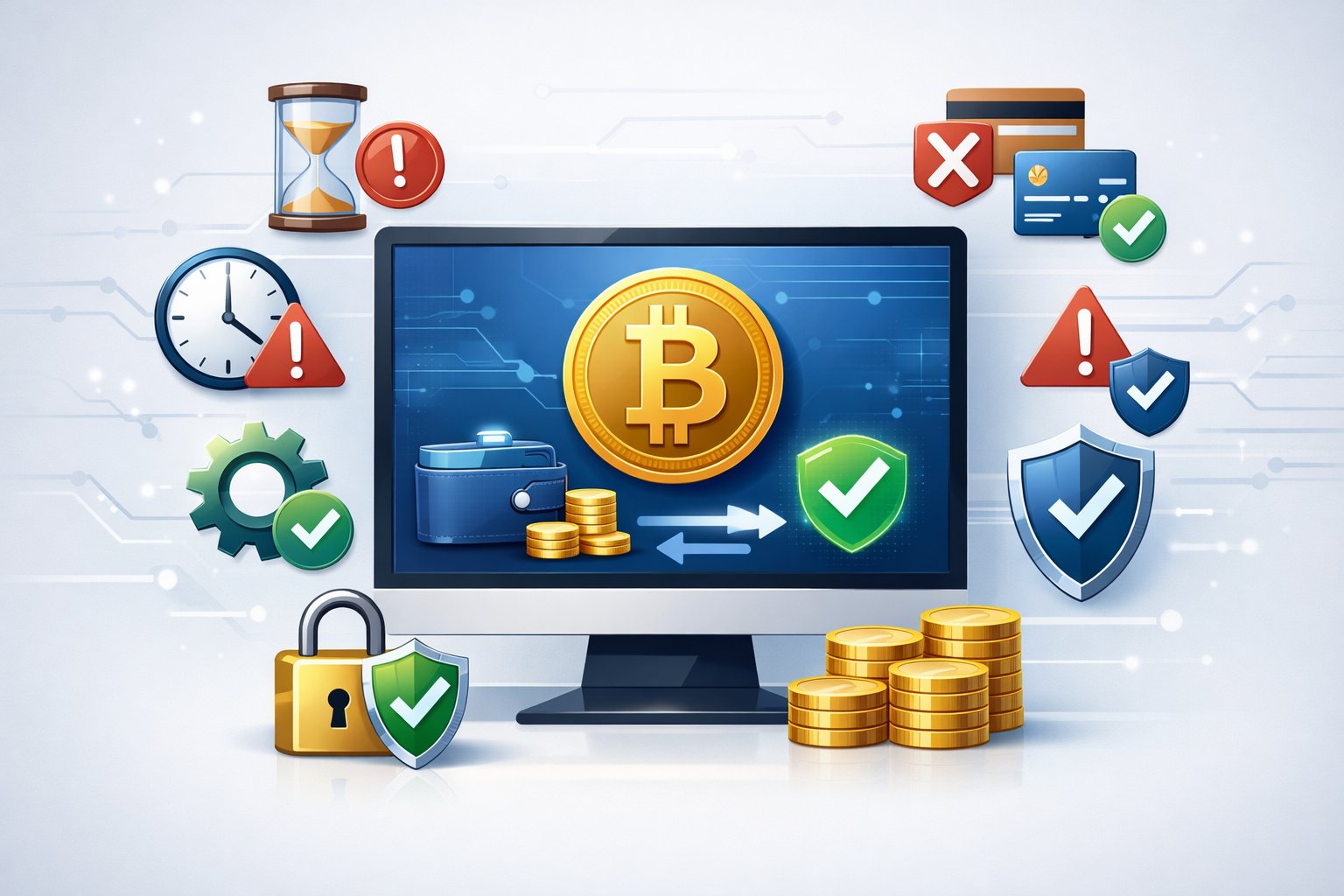
Bitcoin casino payments usually work well, but sometimes you’ll hit snags. The big three are transaction delays, deposit errors, and withdrawal issues—each with its own fix.
Transaction Delays
Bitcoin transactions aren’t always instant. The blockchain has to confirm your payment, which can take 10 to 60 minutes, depending on how busy things are.
If your transaction’s dragging, check network congestion first. When everyone’s sending Bitcoin at once, the network slows to a crawl.
You can check current status on blockchain explorers like Blockchain.com or Mempool.space. The fee you picked also matters—a low fee means your transaction sits at the back of the line.
Most wallet apps show the fee level you chose. Sometimes, you can speed up a stuck transaction with Replace-By-Fee (RBF), if your wallet supports it. Not all wallets do, so double-check your settings before you count on this.
Deposit or Withdrawal Errors
Most deposit errors happen because of wrong addresses. Bitcoin addresses are long and unforgiving—one wrong character, and your funds are gone.
Always copy and paste the deposit address from the casino’s page. Never type it by hand. I always send a tiny test amount first if I’m moving a lot of Bitcoin—just to be sure.
Some casinos set a minimum deposit. If you send less, your account might not get credited. Always check the casino’s deposit page for these limits.
Withdrawal errors usually come down to unmet wagering requirements or missing account verification. Most casinos will ask you to verify your identity before letting you withdraw, even if you’re using Bitcoin. Make sure you’ve finished any KYC checks and met bonus terms before trying to cash out.
Contacting Support
If you can’t fix a payment issue yourself, reach out to the casino’s support team. Have your transaction ID (TXID) handy—you’ll find it in your Bitcoin wallet’s history.
Good casinos run live chat support 24/7, which I find way faster than email for urgent stuff. When you contact them, explain your issue, give them the transaction ID, the amount, and the exact time you sent it.
Take screenshots of your wallet showing the transaction and any error messages from the casino. The more info you provide, the faster support can help. Most reputable casinos sort out missing deposits within 24 to 48 hours once you’ve sent proof.
Pros and Cons
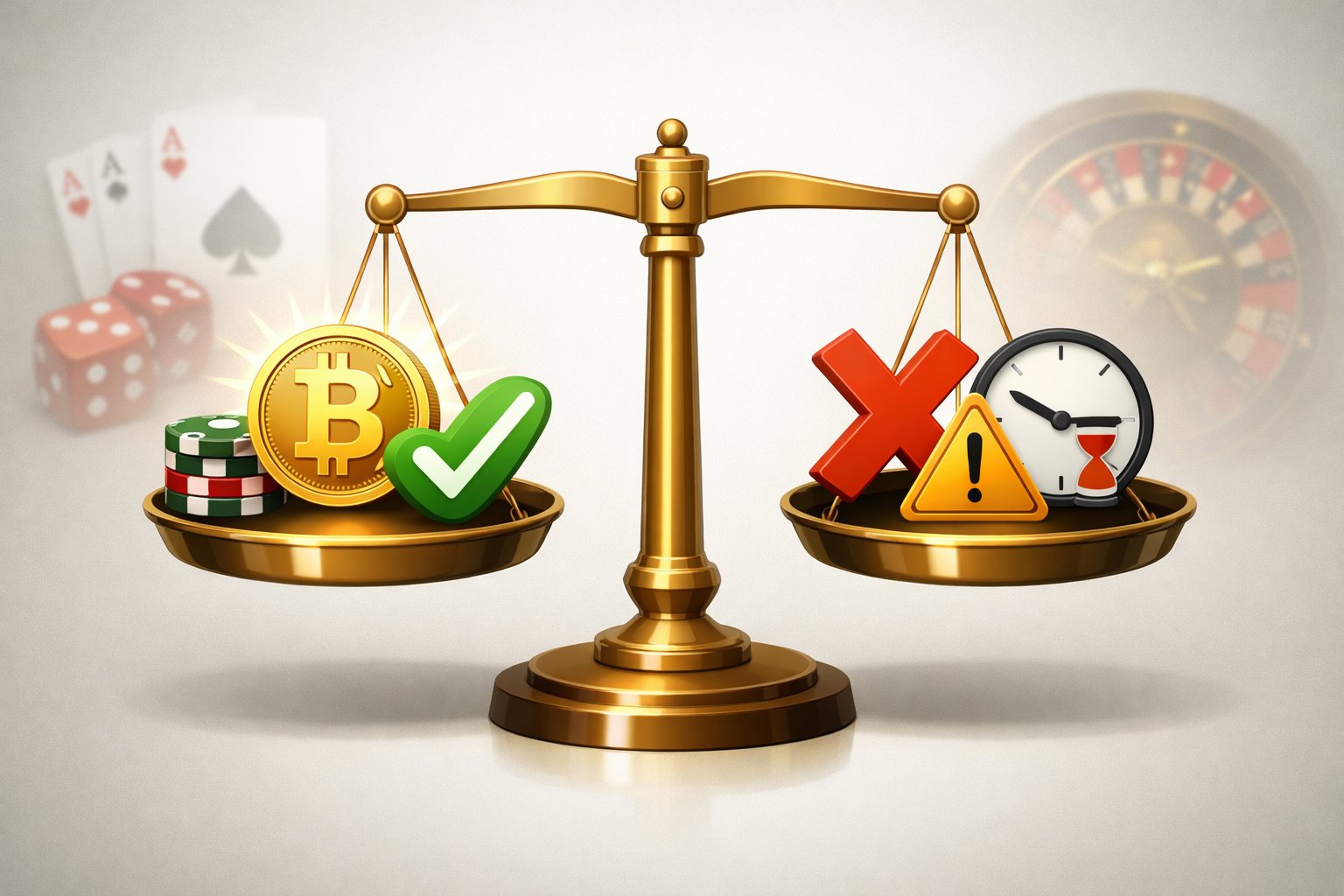
Bitcoin brings some real perks—fast transactions, low fees—but also a few headaches like price swings and limited acceptance. Here’s a breakdown of the main pros and cons, so you can decide if Bitcoin fits your style.
Four Advantages Table
|
Advantage |
Description |
|---|---|
|
Low Transaction Fees |
Bitcoin cuts out banks, so you dodge the usual credit card or wire transfer fees. Most crypto casinos don’t tack on withdrawal fees either—just the small network fee, which changes based on how busy the blockchain is. |
|
Fast Transactions |
Deposits and withdrawals are usually instant or finish in a few minutes. Traditional options can take days, especially for withdrawals. Bitcoin also skips the whole currency exchange mess. |
|
Privacy Protection |
Your name isn’t tied to your Bitcoin wallet address. Most Bitcoin casinos ask for less personal info than banks or credit cards do. |
|
Global Access |
Bitcoin works everywhere—no regional blocks or conversion fees. Everyone’s using the same digital currency, no matter where they live. |
Four Disadvantages Table
|
Disadvantage |
Description |
|---|---|
|
Price Volatility |
Bitcoin’s price jumps around a lot. If the market drops, your winnings lose value. Sometimes it swings the other way, but the unpredictability is always there. |
|
Irreversible Payments |
Once you send Bitcoin, there’s no undo button. One mistake in the address, and your funds are gone for good. I always use QR codes to avoid fat-finger errors. |
|
Limited Casino Options |
Not every casino takes Bitcoin yet. The number is growing, but it’s still smaller than traditional payment options. Still, I’d argue quality matters more than quantity here. |
|
Technical Knowledge |
You need to know how to set up and secure a Bitcoin wallet. Managing private keys and keeping things safe takes a bit more effort than just swiping a card. |
Conclusion and Final Thoughts
Bitcoin’s really shaken up the world of casino payments. I’ve watched it go from a niche experiment to a legit option for online gambling.
Faster transactions, lower fees, and more privacy are tough to beat. If you want control over your money, these perks stand out.
But Bitcoin isn’t for everyone. The price swings can be nerve-wracking. If you put in $100 today, it could be $90 or $110 tomorrow—something to keep in mind, especially if you leave funds in your account for a while.
-
Bitcoin’s best if you already own crypto
-
Transactions are much faster than banks
-
Fees are lower than most cards or wires
-
You have to be okay with price swings
-
Fewer casinos take Bitcoin, but the list is growing
If you want privacy and instant withdrawals, I’d suggest trying a Bitcoin casino payment method. You might even snag a better welcome bonus—many sites reward crypto users with extra perks, since there’s no risk of chargebacks on their end.
Start small if you’re new. Test with amounts you’re willing to lose while you figure out the process. That’s how I learned the ropes without stressing about big losses.
In the end, it comes down to your priorities. Bitcoin gives you bigger withdrawal limits and access to exclusive games, but old-school methods still work for plenty of players. Just make sure you gamble responsibly and pick the option that fits your comfort level with both tech and risk.