Picking the right way to pay at online casinos can really change how easy it is to get your money in and out. Your payment method is kind of like the engine behind your whole online gaming experience—if it runs well, everything else feels smoother.
Most players turn to either e-wallets or credit cards for online gambling. Both have their perks, but they work differently when it comes to convenience and how fast you can move your money. If your payment goes through quickly, you get to spend more time actually playing instead of waiting around.
E-wallets usually get your withdrawals to you faster and give you more flexibility, while credit cards are great for quick deposits but can be a pain when you want to cash out. Credit cards link right to the casino, so using them feels simple at first. E-wallets sit between you and the casino, adding a step that changes how your transactions get handled.
Let me break this down for you: I’ll show how each payment method handles deposits, withdrawals, fees, and security. You’ll get a feel for which one fits your style and what to keep in mind before deciding.
Key Takeaways
-
E-wallets move your money out faster than credit cards and handle both deposits and withdrawals more smoothly
-
Credit cards are easy to start with, but payouts can get delayed or blocked
-
Each method comes with its own fees and privacy quirks that can shape your banking experience at the casino
Fundamental Differences Between E-Wallets and Credit Cards
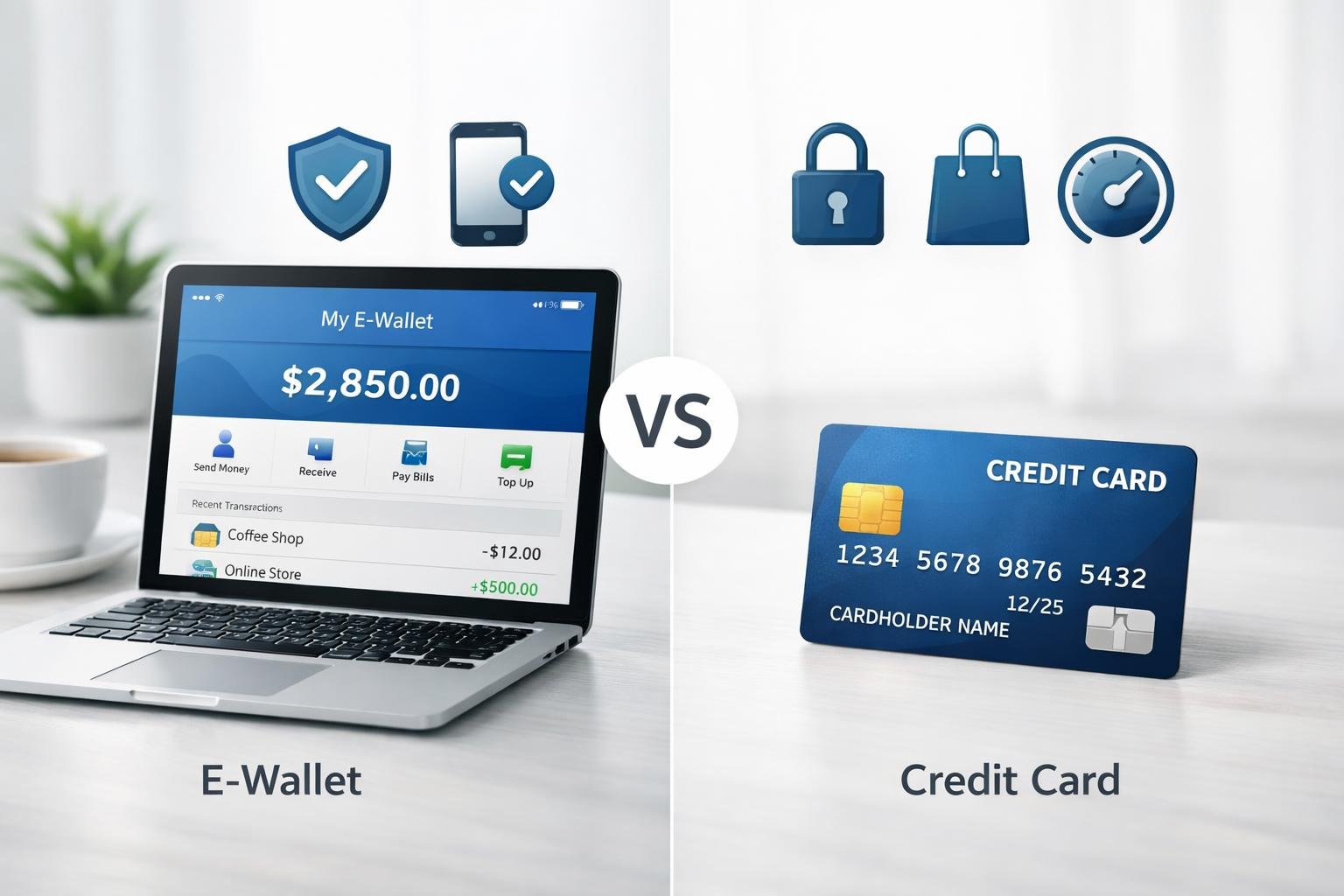
Credit cards send your payment straight from your card issuer to the casino. E-wallets, on the other hand, hold your funds separately and then send them on your behalf. This setup changes how your money gets handled and which security features you get access to.
Providers and acceptance also depend on this structure. Both e-wallets and credit cards have to follow certain rules to keep your play safe, but not every method works everywhere.
How Each Payment Method Works at Online Casinos
Credit and debit cards like Visa and Mastercard connect your bank account right to the casino’s payment system. You usually just enter your card info, and you’re set. Some casinos add extra verification steps, but it’s mostly straightforward.
With e-wallets, I load money into my digital wallet first—think of it like topping up a prepaid card. Then, I use that wallet to pay the casino, so the casino never sees my actual bank details, just my wallet info.
This difference really shows up when it’s time to withdraw. Credit card withdrawals often show up as refunds or reversals, and you might wait 3–7 business days (if the casino even allows it). A lot of casinos don’t support card withdrawals at all.
E-wallets make withdrawals much simpler. The casino just sends your winnings straight to your wallet balance, and I usually see the money within a day.
Popular Providers: Visa, Mastercard, PayPal, Skrill, Neteller
Visa and Mastercard are everywhere when it comes to credit cards at online casinos. Most sites take at least one of them. American Express pops up less often, mostly because of higher fees and stricter rules around gambling.
For e-wallets, PayPal, Skrill, and Neteller stand out. PayPal is super common for everyday stuff but isn’t available at every casino due to regional rules. Skrill and Neteller were built for online gambling, so I see them at more casinos than PayPal. Apple Pay is also picking up steam, especially on mobile-first casino sites.
Each company charges different fees. Visa and Mastercard usually don’t charge for deposits, but you might get hit with currency conversion. Skrill and Neteller sometimes charge 1–3% for withdrawals or when you swap currencies.
Accepted Use Cases: Deposits, Withdrawals, and Global Accessibility
Credit cards are accepted for deposits at most online casinos around the world, and you can usually get started with just your card info. But when it comes to withdrawing, things get tricky—lots of casinos don’t allow it, or it takes forever to process through the card network.
E-wallets handle both deposits and withdrawals with less hassle. I can cash out my winnings to PayPal, Skrill, or Neteller way faster than I ever could with a credit card. If you’re someone who likes to cash out often, e-wallets are hard to beat.
Where you live can affect which method works. Credit cards are accepted in most countries, but some banks block gambling payments. E-wallets face different licensing rules depending on the region. For example, PayPal isn’t an option at most US casinos, but Skrill and Neteller work in more places globally.
Transaction Speed, Convenience, and User Experience
E-wallets are usually the fastest way to move money at online casinos. Deposits show up instantly, and withdrawals often hit your account in just a few hours. If you care about getting your winnings quickly, this is a big deal.
Deposit and Withdrawal Times Compared
E-wallet deposits show up in your casino account almost immediately. When I use PayPal, Skrill, or Neteller, my balance updates in seconds. Credit cards are also fast for deposits, but sometimes banks block gambling payments before they even go through.
Withdrawals are where you really notice the difference. E-wallets usually get your money back to you within 24 to 48 hours. Credit cards? You might wait three to five business days, sometimes even longer, depending on your bank and the casino.
Some casinos even highlight e-wallets as "fast withdrawal" options, while credit cards get lumped into the slower categories.
Instant Deposits and Fast Withdrawals
Pretty much every major e-wallet lets you deposit instantly at online casinos. You can move money from your wallet to your casino account with zero waiting. If you’re the kind of player who wants to get started right away, this is a big plus.
When it comes to withdrawals, speed matters even more. E-wallets really shine here. I’ve seen PayPal withdrawals show up in my account in as little as 12 hours. Skrill and Neteller are usually just as quick, and Apple Pay is catching up, especially for mobile users.
Credit card withdrawals take longer because banks have to check the transaction, and their fraud systems add more delays. Sometimes, the bank even treats it like a cash advance, which means extra fees and more waiting.
Setup, Accessibility, and Interface Usability
Setting up an e-wallet means creating an account, verifying who you are, and linking a funding source. It usually takes 10 to 15 minutes, but you might need to upload ID and wait up to a day for approval.
If you already have a credit card, you can use it right away—just enter your card details at the casino, and you’re good to go. No extra accounts or extra steps.
E-wallet apps are built for digital payments. I can check my balance, see my transaction history, and keep track of pending transfers all in one spot. These platforms use SSL to keep your info safe every time you log in. Most also let you manage different currencies and switch between them. With credit cards, casino transactions just show up on your regular bank statement, mixed in with everything else.
Customer Support and Problem Resolution
E-wallet companies usually have support teams who know the ins and outs of gambling payments. When I’ve had issues, PayPal and Skrill sorted things out within a day or two. They get what casino players need and can talk directly to the casinos if something goes wrong.
With credit cards, any dispute goes through your bank’s normal process. If you need to challenge a charge, you file a claim that can drag on for weeks. Plus, banks aren’t focused on gambling, so you might have to explain a lot more than you’d like.
It’s also easier to see what fees you’ll pay with e-wallets—they show you everything before you hit confirm. Credit cards sometimes slip in extra charges like foreign transaction fees or cash advance fees, and you might not notice until later.
Security, Privacy, and Regulatory Considerations
E-wallets and credit cards take different approaches to keeping your info safe, watching for fraud, and following the rules. This affects what personal details you share and what you have to do before you can start playing.
Encryption and Data Protection
Both e-wallets and credit cards use strong encryption to protect your data. Casinos use SSL protocols to keep your financial details private, making it almost impossible for someone else to read your info. This is pretty much standard these days.
Here’s where privacy splits: With credit cards, the casino’s payment system handles your card details directly. E-wallets only show the casino your wallet account, not your actual bank or card info.
By adding that extra step, e-wallets keep your sensitive banking info away from the casino. If a casino ever gets hacked, there’s less of your personal data floating around.
Fraud Protection and Monitoring
Credit cards usually offer solid fraud protection. If someone makes an unauthorized charge, you can dispute it with your card company, and they’ll often reverse it while they look into what happened.
E-wallets handle fraud a bit differently. For wallets like Apple Wallet or Google Wallet, your card issuer still watches for fraud. Third-party e-wallets (PayPal, Skrill, Neteller) run their own checks, but the dispute process isn’t always the same as with a bank card.
It’s easier to reverse a credit card charge if something goes wrong. E-wallet transfers are mostly final once you confirm them, which is good for casinos but can be tough if you need to fix a mistake.
Identity Verification, AML, and KYC Requirements
Both payment types ask you to prove who you are, but they go about it differently. With credit cards, you usually upload documents to the casino and show you own the card.
E-wallets make you go through KYC (Know Your Customer) checks twice—once when you set up your wallet and again when you join the casino. Anti-money laundering rules require both wallet providers and casinos to check your identity and watch for suspicious activity. Uploading documents is safer these days, thanks to better encryption. Many e-wallets now use two-factor authentication for extra protection.
Once your e-wallet is verified, casino withdrawals usually go faster because you’ve already been checked out by the wallet provider.
Responsible Gambling Tools and Compliance
Casinos have to offer tools for responsible gambling, but your payment method can change how those tools work. With a credit card, you can set deposit limits at one casino, but nothing stops you from using the same card somewhere else.
E-wallets make it easier to stick to a budget. You can load a set amount and use it across different casinos, which helps you control your spending. Some wallets even let you block gambling payments altogether if you need a break.
Rules and oversight aren’t the same everywhere. Credit card companies have to follow banking laws and can block gambling payments in certain places. E-wallets face different regulations, but that’s changing as more people use them for online gaming.
Costs, Limits, and Additional Comparisons
Fees, limits, and even which bonuses you can claim can change a lot depending on whether you use an e-wallet or a credit card. It’s worth taking a close look at all the charges before you start playing, so you don’t get any surprises later. Knowing the ins and outs helps you pick the payment method that fits your style and your budget.
Transaction Fees, Currency Conversion, and Cash Advance Charges
Let me break this down for you—e-wallets like PayPal, Skrill, and Neteller usually tack on withdrawal fees between 1% and 3% of whatever you're moving. If you deposit or withdraw in a currency that doesn't match your wallet's, you'll probably get hit with a currency conversion fee too.
Credit cards often let you deposit for free at online casinos. But here's the catch: your bank might treat casino deposits as cash advances instead of regular purchases. That means interest starts piling up right away, sometimes at rates as high as 20% to 30% a year, and you don't get any grace period.
Cash advance fees usually land in the 3% to 5% range. So, if you put in $100, you could pay an extra $3 to $5 before interest even kicks in. These fees can make credit cards a pricey choice if you deposit often.
Banks usually charge less for transfers and ACH payments than e-wallets or cards. Wire transfers might cost you $15 to $30 each time, but eCheck and ACH are often free or just a couple bucks. Using ACH can help you dodge the steeper fees from other methods.
Limits, Processing Fees, and Spending Controls
Minimum deposit amounts change depending on how you pay. Most US casinos set the bar at $10 to $20 for credit cards and e-wallets, but bank transfers might make you start at $50 or more.
E-wallets set daily or monthly spending caps based on whether you've verified your account. If you've gone through verification, you might be able to deposit $10,000 or more at once. If not, you could be stuck with a $500 limit or even less.
Credit card limits depend on your available credit line, which your bank controls—not the casino. Some banks just block gambling transactions altogether, so sometimes your deposit won't go through even if you have enough credit.
Withdrawal fees can really vary. E-wallets often charge 1% to 3% to cash out. Credit card withdrawals, if they're even allowed, don't usually have fees from the casino but still get hit with cash advance charges and interest, just like deposits.
Bonus Offers: Cashback, Free Spins, and Promotions
Not every payment method gets you in on casino bonuses. E-wallet deposits often miss out on welcome bonuses or free spins, so always check the bonus terms before picking how you pay.
Credit and debit cards usually qualify for all the promos—cashback, deposit matches, free spins, the whole nine yards. That makes cards appealing for bonus hunters, even if the fees are a bit higher.
Sometimes PayPal casinos throw in special promos just for wallet users. These can help make up for missing out on standard welcome offers, but PayPal isn't available everywhere, so it depends on the casino and your location.
VIP programs sometimes favor certain payment methods. For example, some casinos give extra loyalty points for using prepaid cards like Play+ or for bank transfers. It's worth checking the VIP section at your casino before you settle on a payment method.
Alternative Payment Methods in the Casino Ecosystem
Bitcoin and other cryptocurrencies are becoming big players at gambling sites. Bitcoin casinos can process deposits and withdrawals within hours, and their fees are usually lower than traditional options. Plus, crypto gives you a bit more privacy compared to cards or e-wallets.
Prepaid cards, like the Play+ card, work at lots of legal US casinos. They let you fund your account without linking your bank directly. Fees for withdrawals are usually less than e-wallets, and you can grab your cash at ATMs if you want.
If you prefer something totally fee-free, cash at the casino cage is still an option at land-based casino partners. No transaction or conversion fees, and the money moves instantly for both deposits and withdrawals.
Apple Pay and ACH are getting more popular too, especially for people who want the ease of digital payments but don't want to mess with traditional banking. Choosing the right payment method is really about figuring out what matters most to you—cost, speed, privacy, or convenience.