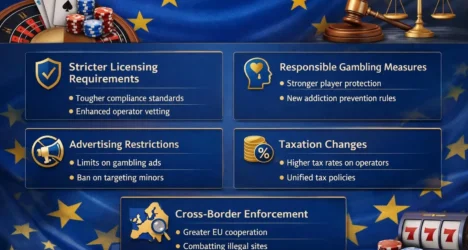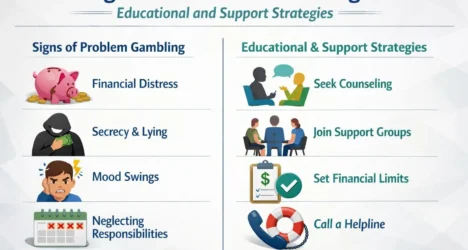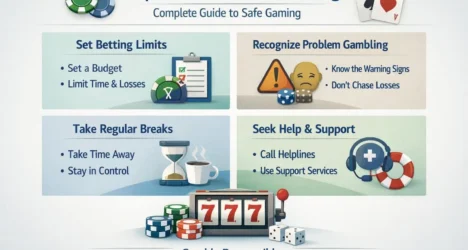


The European Union rolled out sweeping changes to gambling regulations in 2026. These updates directly affect how operators manage their platforms and how players use gambling services.
The new rules target transparency, consumer protection, and oversight of digital gaming activities. Both traditional gambling operators and companies running hybrid gaming models—mixing free-to-play mechanics with real-money features—fall under these changes.
By February 2026, every gaming company in the EU had to start publishing mandatory transparency reports under the Digital Services Act. These reports cover content moderation, risk assessments, and platform governance.
Starting June 19, 2026, platforms offering digital contracts must include a visible cancellation button for subscriptions and recurring services. The EU AI Act also brought in new disclosure rules for AI-driven features in games—think NPC bots and automated moderation tools.
I've compiled the most relevant updates for operators, service providers, and players across EU markets. The data shows a broader regulatory shift toward platform accountability and tighter controls on monetization mechanics now viewed as similar to gambling.
Key Takeaways
-
EU gaming companies must publish Digital Services Act transparency reports and offer mandatory cancellation buttons for digital subscriptions starting June 2026.
-
New AI disclosure rules require platforms to tell players when they're interacting with AI-driven systems, such as bots or automated moderation tools.
-
Regulators now focus on platform transparency, consumer protection, and hybrid gaming monetization—not just traditional gambling.
Major Regulatory Changes in EU Gambling for 2026
The EU gambling sector faced a wave of changes in 2026. Regulators targeted responsible gambling, player safety, and financial security measures.
Operators had to adapt their workflows, and players saw new checks and features across member states.
Strengthened Responsible Gambling Requirements
In 2026, regulators mandated deposit limits on all EU-regulated gambling platforms. Operators must now offer cooling-off periods, letting players pause their accounts for set timeframes.
Self-exclusion programs received significant upgrades. Now, players can register for exclusion that works across all licensed operators in participating EU countries—one registration blocks access to multiple gambling sites.
The European Gaming and Betting Association (EGBA) played a key role in shaping these standards. Advertising rules changed as well. Gambling ads during sports broadcasts now face timing restrictions, and all promotional materials must display responsible gambling messages.
Celebrity and influencer endorsements in gambling marketing have been limited to reduce appeal among young people and vulnerable groups.
Enhanced Player Protection Standards
Player verification requirements tightened in 2026. Operators must use improved age verification systems before allowing anyone to gamble.
Gaming regulators across Europe coordinated through the Gaming Regulators European Forum (GREF) to set consistent standards. The UK Gambling Commission often joins these forums to align cross-border player protection measures.
Key protection measures include:
-
Mandatory reality checks during gaming sessions
-
Required game speed limits on certain products
-
Loss limit tools available to all players
-
Enhanced customer support for problem gambling
These changes apply to both online casino games and sports betting platforms. Operators now face regular audits to check compliance.
The rules aim to spot problem gambling early and help players before issues escalate.
New Anti-Money Laundering and Data Protection Rules
Financial security requirements changed in 2026. Operators must now use more detailed transaction monitoring under updated anti-money laundering protocols.
They have to report suspicious betting patterns and work closely with law enforcement. Data protection standards also got stricter, going beyond existing GDPR requirements.
Operators must implement enhanced encryption for all financial transactions. Personal data storage must follow strict protocols, and regular security audits are now mandatory.
New requirements cover:
-
Advanced transaction monitoring systems
-
Stronger verification for large deposits or withdrawals
-
Regular vulnerability assessments
-
Improved breach notification procedures
These anti-money laundering and data protection measures aim to protect players and the integrity of gambling markets. Operators investing in compliance tech find it easier to meet these standards while keeping services efficient for legitimate customers.
Country-Specific Developments and Regulatory Authorities

Several EU member states made significant regulatory changes in 2026. Italy, Spain, Germany, and the Benelux region introduced notable updates, each tailored to local market conditions and consumer protection priorities.
Italy and the Agenzia delle Dogane e dei Monopoli
The Agenzia delle Dogane e dei Monopoli (ADM) set stricter licensing requirements for online operators in early 2026. The agency rolled out new technical standards for game integration and player verification systems.
ADM now requires operators to submit quarterly reports on responsible gambling initiatives. The agency launched a centralized database to track player activity across all licensed platforms.
Italy raised its Gross Gaming Revenue (GGR) tax from 24% to 26%. This change affected both sports betting and casino game providers in the Italian market.
ADM also added new restrictions on bonus offers and promotional campaigns. Operators must now clearly display wagering requirements and time limits on all marketing materials.
Spain's DGOJ Updates and Priorities
The Dirección General de Ordenación del Juego (DGOJ) focused on advertising restrictions throughout 2026. Spain banned all gambling ads between 6 AM and 10 PM on television and radio.
DGOJ introduced mandatory facial recognition technology for online gambling platforms. This system aims to prevent underage gambling and enforce self-exclusion programs.
The Spanish regulator updated its responsible gambling framework. Key changes include:
-
Mandatory deposit limits of €600 per month for new players
-
Required 24-hour waiting periods for first-time deposits
-
Enhanced self-assessment tools on all gambling websites
-
Stricter penalties for operators failing compliance audits
Germany's Glücksspielbehörde der Länder and New Standards
The Glücksspielbehörde der Länder (GGL) kept its strict regulatory stance in 2026. Germany enforced a standard €1,000 monthly deposit limit, only allowing higher limits if players pass rigorous affordability checks.
GGL tightened rules on slot game mechanics, banning autoplay features and requiring a minimum five-second spin duration for all online slots.
The authority expanded its safe gambling registry (OASIS) to track player behavior more closely. This system now monitors betting patterns and triggers interventions when it detects risky gambling behavior.
In 2026, GGL issued 12 new licenses to international operators. The application process now puts more emphasis on anti-money laundering and source of funds verification.
Key Regulatory Moves in the Netherlands, Denmark, and Belgium
The Kansspelautoriteit (KSA) in the Netherlands raised maximum penalties for advertising violations to €5 million per offense. Several operators received significant fines for targeting Dutch players without proper licenses.
Denmark's Spillemyndigheden (Danish Gambling Authority) introduced new requirements for game fairness testing. All RNG-based games must now undergo annual independent audits for fairness and compliance.
The Belgian Gaming Commission cracked down on unlicensed operators in 2026. Belgium blocked over 200 gambling websites and started legal action against operators serving Belgian customers without approval.
The Hellenic Gaming Commission in Greece opened its online gambling market to new applicants. The commission issued 15 new online casino licenses under updated technical and financial rules.
The Estonian Tax and Customs Board simplified its licensing process but kept strict player protection standards. The board streamlined digital reporting to detect unauthorized activity faster and now requires operators to contribute 2% of gross gaming revenue to a problem gambling treatment fund.
Player Protection Measures and Enforcement Tools
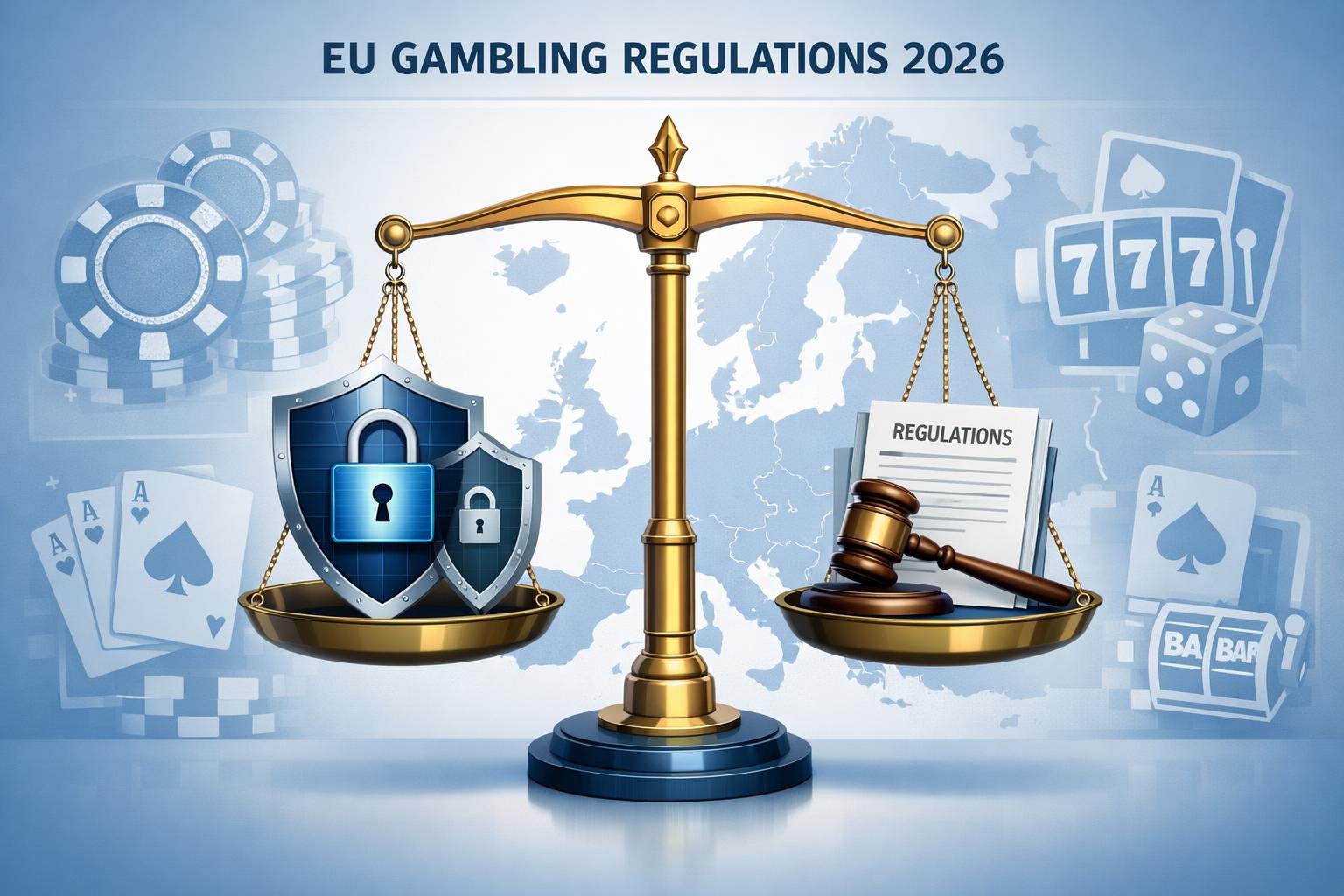
EU member states strengthened player protection requirements in 2026. New tools now target problem gambling and unauthorized platforms, requiring operators to monitor player behavior more closely and intervene earlier when risks arise.
Deposit Limits and Affordability Checks
Deposit limits are now mandatory across most regulated EU markets. Players set daily, weekly, or monthly deposit caps during registration.
Some jurisdictions require operators to conduct affordability checks when players exceed certain spending thresholds. These checks verify that players can afford their gambling activity without financial harm.
Operators may request proof of income, bank statements, or other financial documents. Thresholds vary—some countries trigger checks at €2,000 in monthly deposits, while others set lower limits.
Affordability checks remain controversial. Some say they create friction and push players to unlicensed sites, while others see them as a way to prevent financial harm before it happens.
Risk Detection Technologies
AI-powered risk detection systems have become standard compliance tools in 2026. These systems analyze player behavior in real time to flag warning signs of problem gambling.
Operators track metrics like session duration, betting frequency, deposit patterns, and chasing losses. When the system flags at-risk behavior, operators must intervene.
Common interventions include:
-
Pop-up messages reminding players of time spent gambling
-
Mandatory breaks after long sessions
-
Temporary account restrictions
-
Direct contact from customer support
Regulators expect operators to keep detailed logs of all risk detection activities. Platforms that fall short face fines or license suspensions.
Self-Exclusion Systems and Cooling-Off Periods
Self-exclusion programs now operate at both national and cross-border levels. Players can block themselves from all licensed operators in their jurisdiction through centralized registries.
Some EU countries have set up data-sharing agreements to extend exclusions across borders. Cooling-off periods offer a temporary alternative, letting players suspend their accounts for 24 hours to several weeks.
During cooling-off periods, operators must block all marketing communications and prevent account access. Self-exclusion usually lasts at least six months, while cooling-off periods provide short-term breaks.
Both tools are now licensing requirements, not optional features.
Combating Unlicensed Operators
EU regulators increased enforcement against unlicensed operators in 2026. National authorities now coordinate to block unauthorized gambling sites by several means:
-
Payment blocking: Banks and payment processors must refuse transactions with blacklisted operators.
-
ISP blocking: Internet service providers block access to unlicensed domains.
-
Search engine restrictions: Major platforms delist unauthorized gambling sites from results.
-
Advertising bans: Media outlets face penalties for promoting unlicensed operators.
Several countries raised fines for unlicensed activity, with penalties now reaching millions of euros per violation. Regulators also target affiliates and advertising networks that promote unauthorized platforms, expanding accountability beyond the operators themselves.
Sector Impact and Future Outlook

The 2026 regulatory changes triggered major operational shifts for gambling businesses and strengthened player safeguards in EU markets. I see immediate compliance pressures and ongoing strategic adjustments as the industry responds to stricter oversight.
Implications for Licensed Operators
Licensed operators now pay substantially higher compliance costs to implement enhanced verification systems and responsible gambling tools. The European Gaming and Betting Association (EGBA) estimates that mid-sized operators spend 15–20% more on compliance infrastructure than they did in 2025.
Advertising restrictions in countries like the Netherlands and Italy have pushed operators to focus marketing budgets on retaining existing customers. This shift increases customer acquisition costs and squeezes profit margins.
Operators active in multiple jurisdictions must maintain separate compliance frameworks for each market. For example, Germany’s €1,000 monthly deposit limit requires different systems than Sweden’s approach, adding operational complexity.
Key operational changes include:
-
Mandatory affordability checks at lower thresholds
-
Enhanced anti-money laundering procedures for crypto payments
-
Real-time reporting requirements to regulatory authorities
-
Cross-border data sharing for self-exclusion programs
Smaller operators with limited resources often consolidate or exit certain markets. Higher licensing costs and the ongoing compliance burden tend to favor larger, well-capitalized companies.
Effects on Players and Market Safety
Player protection improved measurably under the 2026 regulatory framework. I see stronger fund segregation requirements, mandatory dispute resolution mechanisms, and broader access to self-exclusion tools in licensed markets.
Enhanced verification processes add friction to the user experience. Players must now provide more documentation for deposits above specific thresholds—some find this intrusive, others see it as necessary.
Licensed markets offer better consumer safeguards than unregulated alternatives. For example, players at MGA or UKGC-licensed sites benefit from regular game audits and fair payout guarantees, plus recourse options for disputes.
Player protection improvements:
-
Mandatory session time reminders and reality checks
-
Improved access to gambling support resources
-
Standardized responsible gambling messaging
-
Better fraud detection and account security
Expected Regulatory Trends Beyond 2026

Regulatory harmonization across EU markets seems likely to continue, though I doubt we’ll see full unification. The EGBA keeps pushing for baseline standards on player verification and responsible gambling tools.
Pan-European self-exclusion systems could emerge by 2027 or 2028. Several member states are already talking about cross-border exclusion databases that would work across multiple licensing jurisdictions.
Artificial intelligence governance is becoming central to compliance. The EU AI Act’s requirements for algorithmic transparency will require operators to document how they identify problem gambling patterns and trigger interventions.
Cryptocurrency regulation will probably tighten further. Most major licensing authorities are expected to require the same KYC standards for crypto transactions as for traditional payments, which would eliminate anonymous gambling in licensed markets.