Live roulette brings the thrill of a real casino right onto your screen. You watch a professional dealer spin an actual wheel, all streamed in real time. It’s nothing like those cold computer-generated games—here, you see every moment happen live, and it’s honestly the closest thing to sitting at a plush casino table without leaving your couch.
When you play live roulette, you’re connected straight to a studio where real dealers spin genuine wheels. You place your bets using digital chips, but the rest feels completely real—especially with the crisp, high-definition video feed that pulls you right into the action.
It’s the same classic roulette, but the live format adds a social buzz that digital versions just can’t match. The chat feature lets you talk with the dealer and other players, and there’s a genuine sense of being part of something happening right now. All the familiar bets, payouts, and odds are here—just with a lot more atmosphere.
Honestly, once you’ve experienced live roulette, it’s tough to go back to standard RNG games. The difference is night and day.
If you’re new, understanding how the live setup works makes it easier to pick the right table. I’ll show you what goes on behind the scenes in those studios and how to use bonuses. I’ll also point out the different roulette variants you’ll find online.
Key Takeaways
-
Live roulette features real dealers and physical wheels, streamed in real time to your device
-
European roulette keeps the house edge at 2.70% for every bet—so no magic bet beats the odds
-
You get to pick from European, French, and American roulette, each with their own quirks and odds
How Live Roulette Works
In live dealer roulette, real croupiers spin actual wheels and the whole thing gets streamed right to you. The studios use multiple cameras, so you never miss a detail.
Live Dealer vs Online RNG Roulette
When I play live dealer roulette, I’m watching an actual croupier spin a real wheel. HD cameras capture every angle, and you see the ball land for yourself. It’s all physical, not just numbers on a screen.
With RNG roulette, the computer spits out results instantly—no wheel, no dealer, just code. It’s fast, but honestly, it feels a bit sterile to me.
Here’s how they stack up:
-
Live dealer: Real wheel, human croupier, spins you can watch in real time
-
RNG roulette: Virtual wheel, automated, instant outcomes
-
Speed: RNG games move fast—no waiting for the spin
-
Trust: With live dealer, you see the ball drop, so there’s no guessing
Bets and payouts stay the same, but live dealer roulette just feels more genuine. If you’re using a welcome bonus, it’s a much more memorable experience.
The Live Roulette Table and Wheel

The table layout is where you drop your chips—pick numbers, colors, or groups. European wheels have 37 pockets, 0 through 36. American wheels add a double zero, making 38 pockets in total.
Live dealer studios set the wheel up in a slick, professional space. Cameras catch every detail, from the dealer’s hands to the ball spinning. Watching the croupier release the ball and seeing exactly where it lands—there’s nothing quite like it.
Your screen’s betting grid matches the real table. Red and black numbers alternate around the wheel, with that green zero standing out. The camera work is so sharp, you can almost hear the ball clattering into place.
Role of the Croupier in Live Dealer Games
Croupiers really make or break the live roulette experience. They spin the wheel, release the ball, and announce the winning numbers with a bit of flair. After each spin, they clear the table and pay out winners right there in front of you.
What I love is the chat—dealers actually interact, respond to your messages, and keep the table lively. They control the betting timer, so you know exactly when it’s time to stop placing bets.
These pros go through serious training to keep things fair and smooth. They work in shifts, and you can tell the difference when you get a croupier who really enjoys their job. That human touch is what sets live roulette apart from the digital stuff.
Live Roulette Rules and Gameplay
Live roulette is pretty straightforward: you’re trying to guess where the ball will land on the spinning wheel. The game flows through clear stages—betting, spinning, then payouts. Each wheel type has its own odds and house edge, so picking the right table matters.
Game Objectives and Flow
Your main goal? Predict the pocket where the ball will settle. The dealer spins the wheel one way and launches the ball the other. You watch it bounce around, slow down, and finally drop into a numbered slot.
European wheels have 37 pockets (0-36). American ones bump it up to 38 with the double zero. Red and black alternate, and the zeros are always green.
Each round starts when the dealer opens up betting. You’ve got a short window to place your chips. When the dealer calls “no more bets,” it’s hands off the table. The wheel spins, the ball drops, and the winning number gets marked. Then, payouts happen and the table resets for the next round.
Betting Procedure and Placing Bets
When it’s time to bet, you pick your chip value and click right on the layout. The digital interface makes it easy to see all your options, from single numbers to big groups. That’s the real heart of playing live roulette online.
Inside bets let you target specific numbers or small clusters:
-
Straight up: Bet on a single number
-
Split: Bet between two adjacent numbers
-
Street: Three numbers in a row
-
Corner: Four numbers meeting at one point
-
Line: Six numbers across two rows
Outside bets cover bigger chunks of the wheel, giving you better odds:
-
Red/Black: 18 numbers each
-
Even/Odd: 18 numbers each
-
Dozens: Groups of 12 numbers
-
Columns: 12 numbers in a column
-
High/Low: 1-18 or 19-36
You can drop as many bets as you want until the dealer closes betting. I like mixing things up and spreading my chips around for more excitement.
Payouts and House Edge in Live Roulette
Payouts depend on how many numbers you cover. Hit a straight-up bet and you get 35:1. Split bets pay 17:1. The big group bets—red/black and so on—pay even money because they cover nearly half the wheel.
The house edge comes from the payouts not quite matching the true odds. On a European wheel, you’ve got a 1 in 37 shot at a single number, but only get paid 35:1. That’s where the 2.70% house edge sneaks in.
American roulette bumps the house edge up to 5.26% thanks to the double zero. The odds get worse, but the payouts stay the same. Every bet on the same wheel type has the same house edge—no sneaky tricks. If you find a table with la partage, though, your even-money bets get a little extra help if zero lands.
Live Roulette Bet Types and Odds
Live roulette splits bets into two main categories: inside bets (targeting specific numbers or small groups) and outside bets (covering bigger chunks of the wheel). Each type comes with its own odds and payout, so you can pick your risk level.
Inside Bets in Live Roulette
Inside bets go right on the numbered grid. They’re riskier, but the payouts can be huge if you hit.
The straight up bet is the most daring—one chip on one number. If you nail it, you get 35 to 1. Odds are slim (just 2.7% on a European wheel), but the rush is real.
Split bets cover two numbers side by side and pay 17 to 1. Street bets give you three numbers in a row for an 11 to 1 payout.
With corner bets, you cover four numbers at once and get paid 8 to 1. Line bets stretch across six numbers (two rows) and pay 5 to 1. I like mixing a few of these in just for the suspense.
Outside Bets: Red or Black, Odd or Even, and More
Outside bets sit around the edge of the betting table. They’re safer, but the payouts are smaller.
Red or black is as simple as it gets. Bet on the color, and if you’re right, you double your money. Same goes for odd or even and high or low (1-18 or 19-36).
Dozen bets cover 12 numbers at a time—1-12, 13-24, or 25-36—and pay 2 to 1. Column bets also cover 12 numbers, just in a vertical column on the layout, with the same payout.
These bets give you almost a 50/50 shot every spin, but don’t forget the zero (or double zero) tips the odds slightly in the house’s favor.
Roulette Odds and Strategies
Knowing the odds helps you play smarter. On a European wheel, the house edge is always 2.7%. American wheels, with their double zeros, push that up to 5.26%.
Inside bets give you long odds but big rewards. Straight up bets only win 2.7% of the time, but the 35:1 payout is tempting. Outside bets like red or black win just under half the time (48.6%), but only pay even money. On French tables, la partage can soften the blow if zero lands, protecting half your stake. Some players even hunt for en prison rules to cut their risk.
People love to talk about roulette strategies—Martingale, for example, where you double your bet after every loss. It sounds good in theory, but you need a fat bankroll and nerves of steel. The house edge always wins in the end, so don’t expect miracles.
I like spreading my bets across different types for more action. Some folks cover several outside bets, others mix inside and outside for a shot at both steady wins and big payouts. That’s the beauty of live roulette—you can play it your way, and there’s always a bit of suspense in the air.
Popular Live Roulette Variants
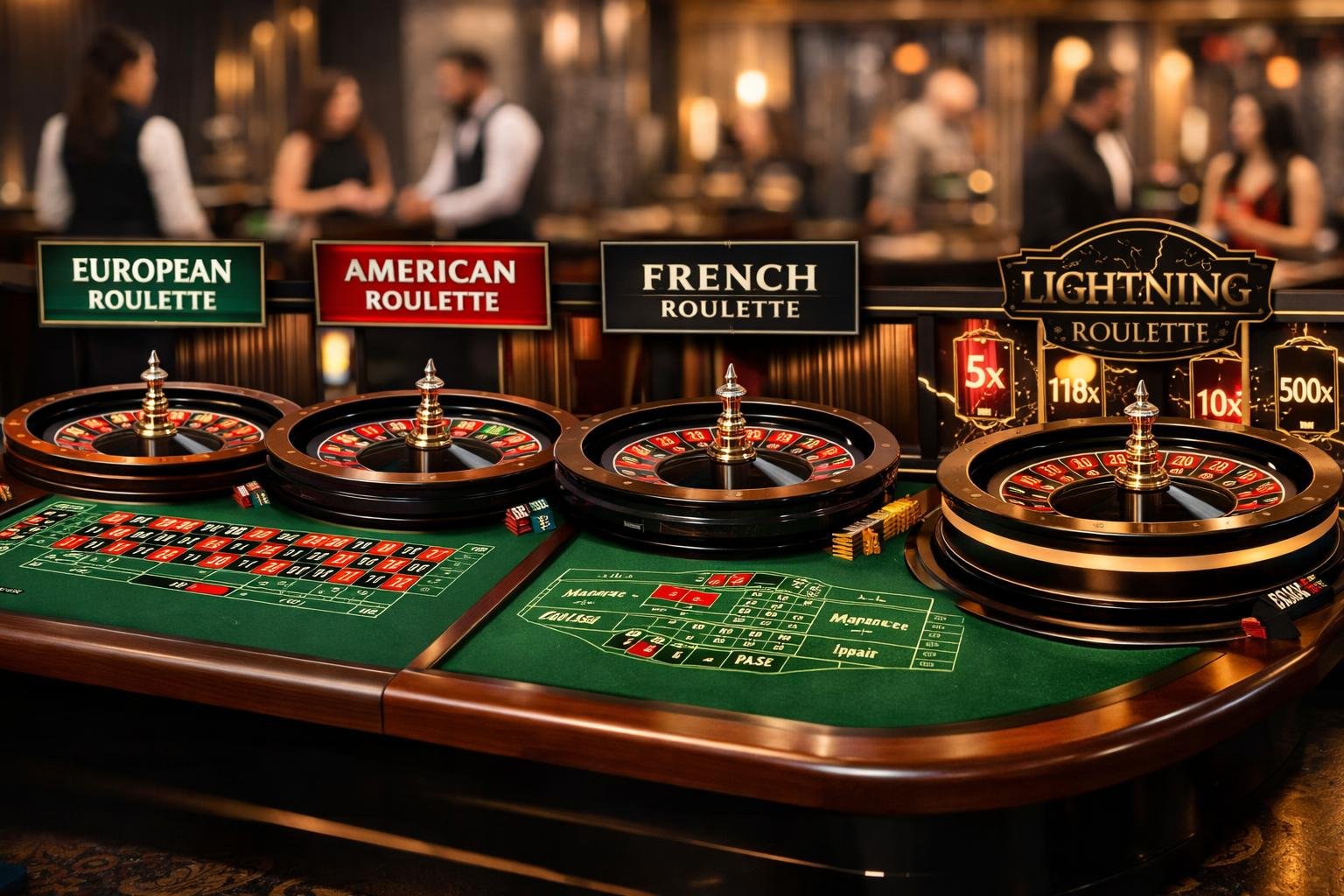
Live roulette offers several distinct versions, each with its own vibe, rules, and house edge. You’ll find the classics—European, American, and French roulette—plus some wild, modern takes with crazy multipliers and bonus twists that really shake things up.
European Live Roulette
European roulette spins with 37 pockets, numbered 0 to 36. With just a single zero, the house edge drops to 2.70%, which feels kinder than the American version.
This is the table I see most often when I log in. The betting layout’s familiar—inside bets like straight up, split, and street, and outside bets like red/black or odd/even.
Dealers usually keep the pace steady, around 40 to 50 spins an hour. It’s relaxed but never drags, so newbies don’t feel rushed and veterans don’t get bored.
American Live Roulette
American roulette throws in a 00 pocket, bumping the total up to 38. That extra zero? It nearly doubles the house edge to 5.26%—not exactly player-friendly.
If you ask me, I’d skip American roulette if there’s any other option. The second zero doesn’t do players any favors and just cuts into your returns.
Some brick-and-mortar casinos love American roulette, but online you can usually pick something better. The rules and layout match European, except for that sneaky extra 00.
French Live Roulette and Special Rules
French roulette uses the same 37-pocket wheel as European, but it adds rules that really tilt things in your favor. With la partage, if the ball lands on zero, you get half your stake back on even-money bets. Suddenly, the house edge drops to 1.35% for those bets—honestly, it’s a dream for anyone who cares about the math.
Then there’s en prison. Instead of losing half your bet right away when zero hits, your bet just sits there for another spin. If you win on the next spin, your stake returns. These rules make French tables a magnet for strategy lovers.
French live roulette tables often display terms like Voisins du Zéro and Tiers du Cylindre for special bets. You’ll usually hear dealers explain these in multiple languages, making the tables feel super welcoming and international.
Innovative Live Roulette Games
Modern variants really spice things up. Lightning Roulette zaps the table with random multipliers—sometimes as high as 500x—on up to five numbers per round. Straight-up wins pay 29:1 instead of 35:1, but those lightning strikes can be electrifying.
Immersive Roulette takes visuals to the next level. Multiple HD cameras, slow-motion ball drops, and dramatic close-ups make you feel like you’re starring in a casino movie. The rules stick to European, but the atmosphere is something else.
With Double Ball Roulette, the dealer releases two balls at once. If both land on your number, you’ll feel like you hit the jackpot—though the payouts adjust for the odds, of course.
Some games, like XXXtreme Lightning or Mega Fire Blaze, push multipliers even higher—sometimes up to 2,000x. They’re wild, unpredictable, and honestly, they feel more like slots with a live dealer twist. Not everyone’s cup of tea, but if you love volatility, you’ll be glued to these tables.