

Cryptocurrency gambling sits at the intersection of digital assets and old-school gaming laws. The United States? No single federal law covers crypto gambling, so every state writes its own playbook. Some states allow it—but only under strict conditions. Others ban it outright. Players and operators have to navigate this maze of overlapping, sometimes contradictory rules.
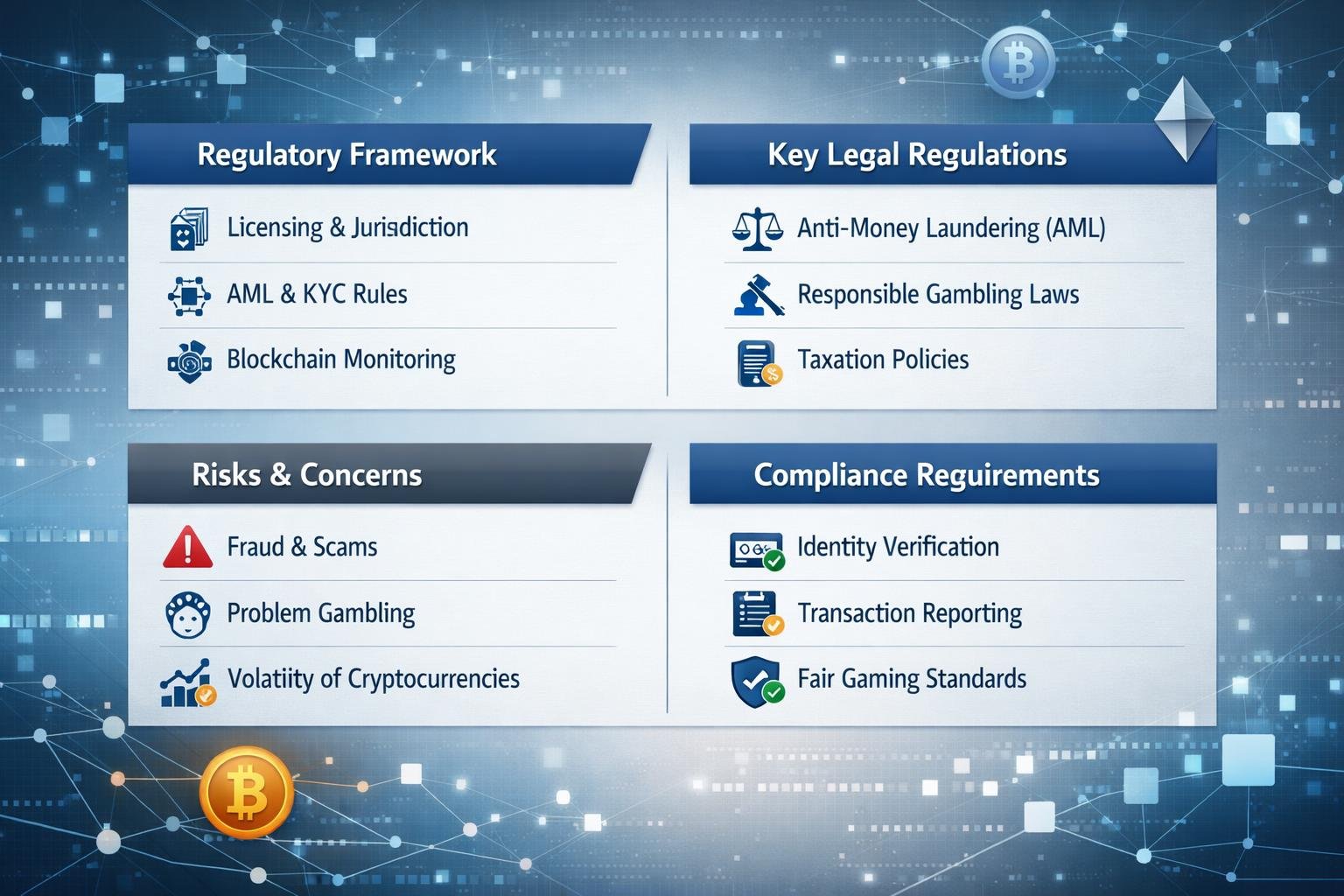
Globally, the regulatory patchwork is just as tangled. Countries pick their own paths—some roll out clear systems that protect players and encourage innovation, while others slam the door shut. If you’re tracking this space, you know there’s no one-size-fits-all approach.
I’ve pulled together this guide to break down how these laws work and what they mean for anyone eyeing crypto gambling—whether you’re a player, an operator, or just curious about where the industry’s headed. Regulations touch everything from licensing and taxes to consumer safety. As crypto and online gambling keep growing, governments scramble to draw clearer lines between innovation and risk.
Key Takeaways
-
Regulations for crypto gambling are all over the map—state by state in the US, country by country worldwide. There’s no universal rulebook.
-
Players need to stick to licensed sites, report gambling income, and watch for legal risks if they try to sidestep geographic blocks.
-
The regulatory landscape is still shifting. Governments are hustling to keep up with consumer protection, licensing, and compliance standards.
-
The SEC keeps an eye on digital asset offerings for federal securities law compliance, while the FTC targets deceptive marketing. Both play a role in shaping the space.
Core Principles of Cryptocurrency Gambling Regulation

Regulators set out frameworks for crypto gambling that focus on licensing, consumer safety, and anti-money laundering (AML). These rules tweak traditional gambling oversight to fit the quirks of digital assets and blockchain transactions.
Regulatory Landscape and Legal Framework
I’ve watched countries like Malta and Curacao carve out specific licensing systems for crypto assets. Others just bolt crypto onto existing gambling laws. The US? Still a patchwork—New Jersey, for example, has legalized online casinos and sports betting, but hasn’t spelled out how crypto fits in. Hawaii bans all gambling, digital or not. Meanwhile, the EU expects crypto gambling sites to hit the same compliance marks as their fiat counterparts.
Regulatory bodies like the Malta Gaming Authority or Curacao eGaming grant licenses and enforce standards. They check for fairness, data protection, and AML compliance. My advice? Always look for valid licensing credentials from a recognized authority before using any crypto gambling platform.
Distinction Between Crypto and Traditional Gambling
Crypto gambling stands apart from traditional gambling mainly because of how transactions work. Blockchain networks speed things up and cut out middlemen, which means lower fees and no banks in the way.
There’s more anonymity, and sometimes lower costs, but volatility is a wild card—your $100 in Bitcoin or Ether might not be worth the same when you cash out. Regulators still expect crypto casinos to follow the same rules as traditional ones: responsible gambling, identity checks, and transparent payouts.
Role of Blockchain Technology in Gambling
Blockchain brings transparency and security that legacy gambling systems just can’t match. Smart contracts automate payouts based on pre-set conditions, so you don’t have to trust a human to process your win.
Platforms use Ether to support these transparent, programmable bets. The blockchain ledger keeps a permanent, auditable record of every transaction. That’s a big plus for both regulators and players.
DeFi platforms are pushing things further, using liquidity pools and automated protocols to run betting without a central operator. But these innovations raise fresh regulatory questions—especially around oversight and consumer protection. Jurisdictions are still figuring out where to draw the line.
Key Regulatory Bodies, Laws, and Global Approaches

Crypto gambling isn’t just a legal gray area—it’s a web of different frameworks, depending on where you look. Multiple agencies oversee everything from financial compliance to player protection. Countries swing between open licensing and outright bans.
Overview of Major Regulatory Authorities
The UK Gambling Commission leads with tough frameworks. Operators there have to clear AML hurdles and verify customer identities before they can even accept crypto deposits. Plus, they have to convert crypto to fiat to shield players from price swings.
The Malta Gaming Authority (MGA) has made Malta a magnet for crypto gambling. In 2023, the MGA doubled down with the Virtual Financial Assets Act and a blockchain sandbox, giving operators a place to test new products under regulatory watch.
Curaçao eGaming offers easier entry—less oversight, but that’s why so many offshore crypto casinos set up shop there.
In the US, the SEC decides if certain cryptocurrencies are actually securities, especially those from ICOs. The CFTC handles crypto derivatives and futures. The Federal Reserve keeps tabs on systemic risks from digital assets entering the mainstream financial system.
Noteworthy Jurisdictional Differences
Regulations jump wildly from one country to the next. In the US, it’s a state-by-state scramble—Nevada’s building frameworks for Bitcoin casinos, while Utah bans gambling across the board. This patchwork sends plenty of US players to offshore sites.
Japan’s Financial Services Agency is still refining its stance, working on laws that could give crypto assets formal status. Thailand’s cabinet greenlit a draft bill to legalize casinos for tourism, but it’s unclear if crypto gambling will make the cut.
India hasn’t passed sweeping crypto laws yet, despite crypto holdings topping $4.5 billion. According to the Atlantic Council, out of 75 countries, crypto is legal in 45, partially banned in 20, and totally banned in 10.
International Laws, Treaties, and Enforcement
Cross-border enforcement? Still a headache. The EU’s Markets in Crypto-Assets (MiCA) regulation sets unified rules for licensing, consumer protection, and market integrity. MiCA brings some much-needed clarity for crypto service providers in the EU.
Money transmitter laws apply to lots of crypto gambling sites, so they have to register and play by financial rules. In the US, the Unlawful Internet Gambling Enforcement Act blocks payment processors from handling illegal gambling transactions—but decentralized crypto makes this tough to police.
AML protocols are the backbone here. Operators must run KYC checks and report anything suspicious. The market’s expanding fast—global crypto casino revenue hit $81.4 billion in 2024, up fivefold since 2022. That’s a signal regulators can’t ignore.
Emerging Legal Trends and Regulatory Clarity
Lawmakers are hustling to make things clearer. The Clarity Act aims to sort out which digital assets count as securities versus commodities in the US. The GENIUS Act would set out rules for stablecoin issuers and exchanges.
Debates over central bank digital currencies (CBDCs) and the proposed digital dollar are shaping the broader crypto conversation. The Anti-CBDC Surveillance State Act responds to privacy worries, though it mostly targets government-issued digital money—not private crypto used for gambling.
Regulatory clarity is the game-changer. Countries that lay down clear, balanced rules attract serious operators and protect consumers. Malta, the UK, and Gibraltar are leading by example. But where laws stay fuzzy, operators keep exploiting the gaps and the market just keeps growing.
Licensing, Compliance, and Consumer Protection
Crypto gambling operators need licenses, AML programs, and player protection systems to stay legal. These measures protect consumers from fraud and help regulators keep tabs on the industry’s financial health. No shortcuts here—regulators are watching.
Licensing Requirements for Operators
To run a legal crypto casino or sportsbook, operators have to get a license from a recognized authority. Malta Gaming Authority and Curacao eGaming are two of the big names here. Each jurisdiction sets its own requirements, but everyone expects proof of financial stability, secure payments, and solid policies.
The process includes background checks on the operator and their partners. Regulators dig into the platform’s tech, fairness of games, and financials. Licensed operators have to keep enough capital on hand to pay out winners.
Some places offer separate licenses for sports betting versus casino games. Operators have to renew their licenses and submit to regular audits to stay compliant.
AML and KYC Obligations
Licensed crypto gambling sites can’t skip anti-money laundering rules. Operators verify player identities with KYC checks before withdrawals—usually asking for government ID, proof of address, sometimes even source of funds.
AML programs include transaction monitoring to spot anything fishy. Operators have to report big or suspicious transactions to authorities. Payment processors working with these sites face the same scrutiny.
KYC checks also help block underage gambling and identity theft. Crypto might offer more privacy than banks, but licensed sites can’t promise total anonymity. Some places allow smaller anonymous bets, but serious gambling always triggers full verification.
Player Protection and Responsible Gambling
Operators must roll out responsible gaming tools—deposit limits, self-exclusion, and reminders about time spent gambling. Licensed sites have to put these tools front and center, making them easy to use.
They also keep player funds separate from company money, so players aren’t left stranded if the business runs into trouble. Dispute resolution and timely responses to player complaints are mandatory.
Responsible gambling means age checks and systems to spot risky behavior. Many regulators require operators to support addiction treatment programs or post helpline info. It’s about balancing access with safety.
Taxation and Auditing Standards
Tax rules change depending on where you are, but most places tax operators on gross gaming revenue. Sometimes the operator pays, sometimes players do. Crypto doesn’t get you off the hook for taxes.
Operators have to keep detailed records and file regular reports. Independent auditors check random number generators, payout rates, and financials to make sure everything’s fair and above board.
Game developers and payment processors might face tax obligations too. Some countries dangle tax breaks to attract crypto gambling businesses, but reporting is always required. No one’s flying under the radar for long.
Risks, Challenges, and the Future of Crypto Gambling Regulation

Crypto gambling platforms operate where regulatory uncertainty collides with rapid tech shifts. That intersection brings a whole new set of risks for operators and users alike.
You've got cryptocurrency volatility mixing with the unpredictability of gambling itself. Law enforcement faces real headaches here, while the sector's growth is forcing everyone to rethink consumer protection and financial crime prevention.
Regulatory Uncertainty and Legal Status
The legal landscape for crypto gambling is a patchwork—wildly inconsistent from one country to the next. Some governments treat these sites like classic gambling outfits, others see them as financial services, and plenty just leave them in regulatory limbo.
This confusion comes down to how hard it is to pin down what crypto gambling actually is. Are we talking about digital commodities, securities, or just another form of currency? Honestly, the answer shifts depending on the jurisdiction. Projects that launched with ICOs now face a lot more scrutiny than they probably expected.
Meanwhile, many crypto casinos use the chaos to their advantage. They set up shop in loosely regulated places and serve users worldwide, often leaning on VPNs and mirror sites to dodge geographic blocks.
When regulators crack down with fines or cease-and-desist letters, these platforms just rebrand or move on. The white-label model only muddies the waters further, separating the public-facing brand from the actual license holder and making enforcement a game of whack-a-mole.
Money Laundering and Financial Crime Risks
Crypto gambling platforms attract serious money laundering risks that traditional casinos rarely see. Crypto transactions are pseudonymous, which makes tracing the source of funds a major challenge for authorities.
Criminal groups increasingly favor these platforms because they operate outside the formal banking system. They can move hefty sums across borders without the usual reporting red tape that comes with fiat transfers.
Most crypto gambling sites have pretty weak KYC enforcement compared to regulated operators. Some ask for barely any info, while others let you play totally anonymously. That makes it tough to stop underage gambling or help people with gambling problems.
Self-exclusion programs are almost nonexistent on these platforms. If someone's trying to quit, there's no real way to block themselves across all the different brands and domains out there.
Impact of Technological Innovation
Tech innovation in fintech simply moves faster than regulators can keep up. The sector's expanding at a breakneck pace—global crypto casino revenue hit about $81.4 billion in 2024, a fivefold jump since 2022. That's wild growth by any measure.
Decentralized platforms and smart contracts bring new headaches regulators never had to consider with traditional gambling. These tools can automate betting and payouts with no central authority, so who's responsible when things go sideways? Nobody seems to know for sure.
Stablecoins have made crypto gambling a lot more accessible, since they remove some of the volatility that used to scare off would-be players. Now, folks can gamble without stressing about their bankroll's value swinging wildly overnight.
Influencer marketing and partnerships with big sports brands blur the lines between real endorsement and the promotion of questionable platforms. When Premier League clubs team up with crypto casinos, it gives those sites a sense of legitimacy—even if they're not properly licensed. That's a trend worth watching.
Future Directions for Regulation
Effective regulation, in my view, will need cooperation from a lot of players—not just blanket bans. Banning crypto gambling doesn't kill demand; it just pushes it deeper underground where protections are even weaker.
Market indicators suggest that future frameworks will zero in on verified KYC, transparent ownership, and mandatory responsible gambling tools. Regulators may soon require crypto gambling sites to hit the same standards as traditional operators—think regular audits and player fund safeguards.
Comprehensive stablecoin regulation is going to play a central role in shaping the industry. If authorities set strict rules for stablecoins, they can help stabilize the gambling ecosystem as a whole. With the Federal Reserve exploring a central bank digital currency, it could become easier to regulate platforms that accept these digital assets.
International cooperation is a must, since crypto gambling is borderless by design. No single country can tackle an industry that lives everywhere and nowhere at the same time.
The strategic implications are clear: bringing crypto casinos into the regulated fold is the only way forward. That means licensing, taxes, and consumer protection standards that match what's already expected from traditional gambling operators. Looking ahead, that shift could finally bring some much-needed clarity to the space.