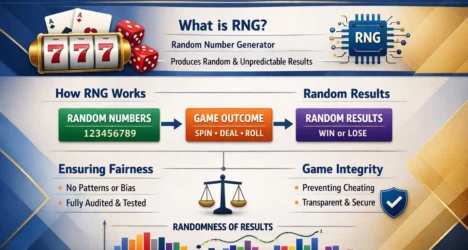


Ever wondered if online casino games are really random, or if there’s some hidden trick at play? RNG (Random Number Generator) is a certified computer program that creates unpredictable results for every spin, card deal, or dice roll, ensuring no one can predict or manipulate the outcome.
After years spent digging into the world of online casinos, I can say that RNG technology pretty much forms the backbone of digital fair play. It’s changed the game, literally and figuratively.
Getting a handle on how RNGs work and how experts test them helps you make more informed choices about where to play. Independent testing labs use complex math to check that these systems actually deliver random results.
When you see a casino with a valid RNG certificate from a respected agency, that’s a good sign. It means their games have passed some pretty strict fairness standards.
I’m here to break down how RNG systems operate, what makes them trustworthy, and how certification helps protect players. You’ll get a sense of what regulators look for, how to spot legit casinos, and why some operators go the extra mile to earn your trust.
Key Takeaways
-
RNG technology relies on complex algorithms to generate unpredictable game results that neither casinos nor players can manipulate.
-
Independent testing labs certify RNG systems using statistical analysis to verify fairness before games launch.
-
Licensed casinos must keep valid RNG certification and undergo regular audits to protect players and follow gaming regulations.
How RNG Ensures Fairness in Casino Gaming
Random number generators set the stage for digital casino games. They generate outcomes that are just as unpredictable as what you’d see with real cards or dice.
Industry-wide, these systems stick to certain standards to keep things fair. That’s not just marketing—regulators really do care about integrity.
What Is a Random Number Generator in Online Casinos
A random number generator is software that spits out number sequences with no pattern you can guess. In online casino games, the RNG runs nonstop in the background, pumping out thousands of numbers every second.
When you hit spin or ask for a card, the game grabs the RNG’s output at that instant. That number then turns into your game result—maybe a certain reel stops, a card appears, or the roulette ball lands somewhere.
The RNG doesn’t have a memory. It doesn’t track wins or losses. Each number stands alone, totally separate from past or future results. This makes it impossible for anyone to “rig” the game beyond the built-in house edge.
Pseudo-Random vs True Random Number Generators
Most online casinos use pseudo-random number generators (PRNGs). A PRNG follows a mathematical formula that starts with a seed—usually something like system time or a user’s click. From there, it creates a long sequence of numbers that look random and pass statistical tests.
True random number generators (TRNGs) are a bit different. They pull data from physical randomness, like electrical noise or radioactive decay. That gives them real unpredictability, not just a good simulation.
Some casinos mix both methods. They’ll use a TRNG to make the seed for a PRNG. This combo gives you strong randomness plus the speed needed for online games.
How RNGs Determine Game Outcomes
The RNG spits out raw numbers that don’t mean much on their own. The game software maps those numbers to actual outcomes.
For slots, the RNG picks a number that matches a certain combo of reel positions. In a three-reel game with 64 stops per reel, you’re looking at 262,144 possible combinations. The RNG’s output lands you on one of these. In baccarat, the system ensures each card draw is random too.
Digital table games work in a similar way. In blackjack, the RNG’s number gets mapped to a specific card in the deck. The software assigns number ranges to each card, so when the RNG spits out a number in a certain range, you get that card.
|
Game Type |
RNG Application |
|---|---|
|
Slots |
Maps to reel positions |
|
Blackjack |
Determines card distribution |
|
Roulette |
Selects winning pocket |
|
Baccarat |
Determines card values and sequence |
Unpredictable Results and Independence of Events
No matter how many numbers an RNG produces, I can’t guess what’s coming next. That unpredictability is what keeps every spin, deal, and roll honest.
Each game round stands alone. The RNG doesn’t care what happened last round. If you lose ten hands straight, the next hand’s odds don’t change. There’s no “due” win lurking around the corner.
This independence holds true for every session. Whether you’re the first player today or the thousandth, whether the last spin hit the jackpot or not, your odds stay the same. The RNG treats every moment as a fresh start.
RNG Integrity, Testing, and Certification

Casino operators don’t get to just say their games are random—they have to prove it. Independent labs step in to make sure RNG systems really deliver unpredictable results. They do this with rigorous testing, source code checks, and ongoing monitoring, all following international standards.
The Role of Independent Laboratories
Independent testing labs exist to check RNG systems before anyone plays for real money. Their job is to make sure every bit of software runs without bias. These labs aren’t connected to casino operators or software companies, which helps keep things neutral.
Some of the most respected names in testing include Gaming Laboratories International (GLI), eCOGRA, iTech Labs, and BMM Testlabs. Many places require GLI approval before a casino can open its doors. These organizations hire experts in cryptography and statistics to dig deep into the numbers and look for any patterns.
Labs have to meet ISO/IEC 17025 accreditation standards. This ensures they really know what they’re doing and can be trusted. Without this, their certifications wouldn’t mean much to regulators.
Certification Bodies and Standards
RNG certification follows rules set by regulatory bodies and international standards. GLI standards, especially GLI-19, spell out what a certified RNG needs to do.
eCOGRA pays special attention to player protection and fair gaming. They look at both the RNG and how it works with the rest of the game. iTech Labs offers certification that’s accepted in places like Malta, the UK, and several US states.
BMM Testlabs works a lot with tribal casinos and new US markets. They check that the house edge matches what’s advertised and that the RNG stays consistent over millions of rounds.
Each certification body publishes compliance certificates that operators need to display. These documents list validation dates, covered games, and confirm that third-party testing happened.
Technical Testing and Fairness Verification
Statistical testing is the backbone of RNG verification. Labs run tons of number sequences through different tests to spot any weird patterns.
The frequency test checks that all possible outcomes show up as often as they should. A runs test looks for clusters of identical results. Chi-square analysis compares the numbers to what’s expected in theory.
Spectral tests look for links between values that could make things predictable. Long-run uniformity checks make sure that, over millions of rounds, the results don’t stray too far from what’s normal.
Labs also dig into the source code to check how the RNG seeds its numbers. Good seeds come from unpredictable sources like hardware noise or system time. If the seed isn’t random enough, even the best algorithm can become predictable.
RNG Certification Process and Documentation
Certification starts when a developer sends their RNG system to an independent lab. The lab gets full technical specs, usually under a non-disclosure agreement for security.
Testers review the algorithm, seed generation, and how the RNG ties into the game. They run standardized test suites like NIST SP 800-22, which has 15 different randomness tests.
Labs need millions of output samples for analysis. They compare these to expected probability distributions to spot any issues.
Once testing wraps up, the lab issues a certificate confirming the RNG’s integrity. This document lists which games and software versions passed. Operators need to re-certify if they update systems or add new games.
Regulators require operators to keep their certificates current to hold a license. Auditing doesn’t stop after launch—automated systems keep an eye out for any statistical oddities that might need a closer look.
RNG, RTP, and Game Fairness
RNG decides what happens in each round, while RTP (Return to Player) measures how much a game pays back over the long haul. Knowing how these work together can help you understand why short-term results can feel random or streaky, and how regulators check for fairness.
Return to Player and House Edge Explained
The return to player percentage (RTP) is the share of money a game pays back over time. For example, a slot with 96% RTP should return $96 for every $100 wagered, but only if you look at millions of spins.
House edge is just the flip side. If RTP is 96%, the house edge is 4%. That’s how casinos make a profit while still giving players a fair shot.
Common RTP ranges by game type:
-
Online slots: 94% to 98%
-
Blackjack: 99% to 99.5%
-
Roulette: 97.3% (European) to 94.7% (American)
-
Video poker: 95% to 99.5%
It’s important to remember that RTP is a long-term measure. You might double your money in one session or lose everything. The percentage only becomes meaningful after hundreds of thousands of rounds.
The Relationship Between RNG and RTP
RNG handles the random outcome for each round. RTP, on the other hand, describes how those outcomes add up over time. They go hand in hand, but they’re not the same thing.
The RNG doesn’t “know” about RTP targets. It just spits out random numbers. Game designers set up the probability of each outcome so that, over time, the results match the intended RTP.
For example, a slot maps RNG numbers to reel stops. The odds of winning combinations are baked into this mapping. When you run millions of spins, the overall payout matches the programmed RTP.
Key principle: Every spin, card, or dice roll stands alone. Previous results don’t affect what comes next. The RNG won’t “correct” short-term streaks to match RTP.
Testing labs confirm this independence. They check that the RNG produces truly random results and that the math behind the game delivers the advertised RTP over many rounds.
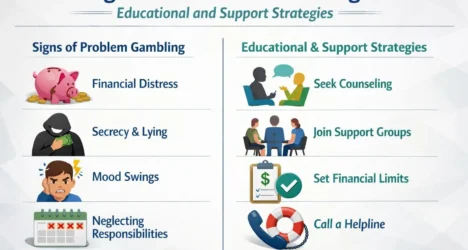
It’s important to play with healthy habits in mind. If you notice you’re chasing losses or feeling out of control, take a break and set limits. Most people gamble responsibly, but support is always available if you need it. Enjoy the entertainment, but keep your wellbeing first—because that’s what really matters.
Game Design, Probability, and Fair Play
Fair game design means the odds you see are the odds you get. Regulators check that games actually work as advertised.
Game designers rely on probability math to set up paytables and rules. They figure out how often each symbol pops up, what each combo pays, and how all that shapes the RTP.
Transparency requirements include:
-
Published RTP percentages
-
Clear paytable information
-
Accurate rule descriptions
-
Disclosed volatility ratings
Volatility changes how wins and losses play out. High volatility games might pay less often but offer bigger wins, while low volatility games pay out more frequently, just in smaller amounts.
Both types can have the same RTP, which can be confusing at first. If you notice long losing streaks, it doesn't mean the game is unfair—it's just how high-volatility games roll.
Protection Against Manipulation and Regulatory Oversight
Licensed online casinos can't just alter RNG systems on a whim. If they do, they lose their certification, plain and simple.
This oversight helps keep the global online gambling market safer for everyone. Any changes force operators to go through re-testing and get approval from regulators.
Certified RNG systems use technical safeguards to stop tampering. Secure code deployment, access controls, and audit logging all play a part.
Regulators can review full game histories to catch anything odd or out of place.
Ongoing compliance measures:
-
Periodic re-certification of RNG systems
-
Regular statistical analysis of game results
-
Independent third-party audits
-
Secure version control for all game software
Testing labs like GLI, iTech Labs, and BMM Testlabs check both the RNG and the game math. They make sure outcomes are unpredictable and that real-world results match the theoretical RTP.
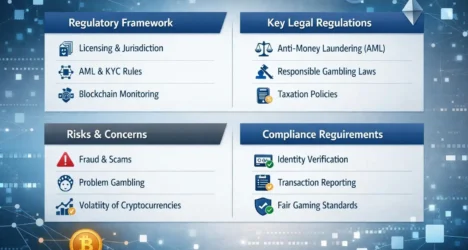
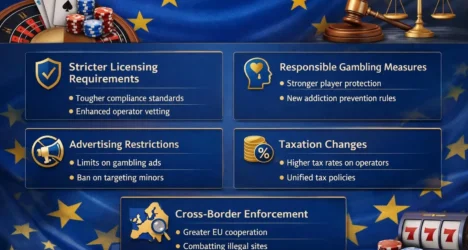
Regulatory bodies in places like the UK, Malta, and Gibraltar set strict fairness standards. If operators break the rules, they can get fined, suspended, or lose their license. This oversight protects players and keeps the industry honest. Standardized RNG testing is a big part of how software gets validated across different platforms.
Compliance, Player Trust, and Industry Best Practices
Regulatory compliance lays the groundwork for legitimate online casinos. Transparent RNG practices and strong security help build the kind of player confidence that keeps people coming back.
High standards in the gaming world mean constant audits of digital systems. Responsible gambling policies and oversight from groups like the UKGC and MGA help keep things fair and ethical.
Regulatory Compliance in Major Markets
Major licensing authorities really do enforce strict RNG certification. The UKGC requires online casinos to use RNG systems tested by independent labs, with full audit trails.
The MGA asks for similar checks through accredited labs. Licensed operators have to keep their certifications up to date, usually renewing them every year.
Testing covers RNG algorithms, seed generation, and how game outcomes are distributed. Regulators also expect operators to store game logs for at least five years, which is a pretty good safety net if you ask me.
Key regulatory requirements include:
-
Independent RNG certification from labs like GLI or eCOGRA
-
Monthly RTP reporting to licensing authorities
-
Immutable audit logs with cryptographic signatures
-
Regular compliance audits covering seed value generation and entropy sources
If operators don't comply, they can face fines, license suspension, or even lose their license entirely. I've noticed that oversight keeps getting stricter as online casinos spread across the globe.
Building Player Confidence and Trust
Player trust really depends on transparency and being able to check fairness for yourself. I encourage casinos to publish RTP percentages right on the game pages.
When casinos display certification logos from recognized testing labs, it adds instant credibility. Modern platforms often let players access their own game history, which helps with self-awareness and keeping track of play.
Some operators even offer hash verification tools. These tools let you confirm that your game outcomes weren't changed after the fact, which is a great step for peace of mind.
The "Provably Fair" concept goes a step further. It mixes server seed values with ones you generate, so you can check randomness independently if you want.
Trust-building practices:
-
Public RTP disclosure on all games
-
Links to current certification documents
-
Accessible fair play policies
-
Responsive complaint resolution systems
When casinos show technical integrity through third-party validation, player confidence grows. It's not just about flashy marketing—it's about real, verifiable fairness.
Security Measures for RNG Protection
RNG isolation sits at the top of my security checklist. The core RNG should run in a separate environment, away from operator access, to block any chance of tampering.
Cryptographic protection helps ensure seed generation uses true entropy sources. Hardware security modules (HSMs) and Trusted Execution Environments (TEE) add extra layers of defense, keeping seed values safe in tamper-resistant spaces.
Auditors use hash functions to verify binary file integrity. Each game version gets a unique hash, and any file change triggers an alert. That means even tiny modifications get caught right away.
API security controls stop unauthorized RNG calls or result changes. With rate limiting and authentication, only real game sessions can access the random number generator.
Responsible Gambling and Transparency
Responsible gambling goes well beyond RNG fairness—it's really about protecting you as a player. Good operators offer tools like deposit limits, self-exclusion, and reality checks to help interrupt those marathon sessions.
When casinos publish information about game variance alongside RTP, it helps players set realistic expectations. High-volatility games can have long dry spells, even with fair RNGs, so it's important to know what you're getting into.
Staff training in responsible gambling practices helps customer support spot warning signs. Many places now require operators to support gambling addiction research and treatment, which I think is a positive move.
Responsible gambling tools:
-
Customizable deposit and loss limits
-
Session time reminders
-
Self-exclusion periods (from 24 hours up to permanent)
-
Links to support organizations like GamCare or BeGambleAware
Combining technical fairness with player protection creates a healthier gambling environment. It's important to remember that most people play responsibly, but if you notice your habits changing, support is always available.