

Online casino gambling isn’t what it used to be. Digital currencies have crashed the party, and now you get to pick: old-school cash like dollars and euros, or the new kids on the block—Bitcoin, Ethereum, Litecoin, and their crypto cousins.
Let’s be real, crypto casinos usually throw out bigger bonuses, more games, and lightning-fast payouts. Of course, you’ll have to stomach wild price swings and a bit of a tech learning curve.
How you fund your account is just the tip of the iceberg. The choice between crypto and fiat affects everything—speed, privacy, fees, and even which games you can play.
Crypto casinos often ditch annoying country restrictions and let you deposit tiny amounts. But if you want stability and familiar payment methods, fiat casinos still have your back.
I’ve dug through both options, so you don’t have to. I’m covering security, regulations, bonuses, and game selection—basically, all the stuff you actually care about.
Key Takeaways
-
Crypto casinos usually serve up more games and juicier bonuses than their fiat rivals
-
Crypto payments mean faster withdrawals and more privacy, but volatility is the price of admission
-
Your best bet depends on whether you prioritize speed and privacy, or crave stable prices and tight regulation
Key Differences Between Crypto and Fiat in Online Casinos
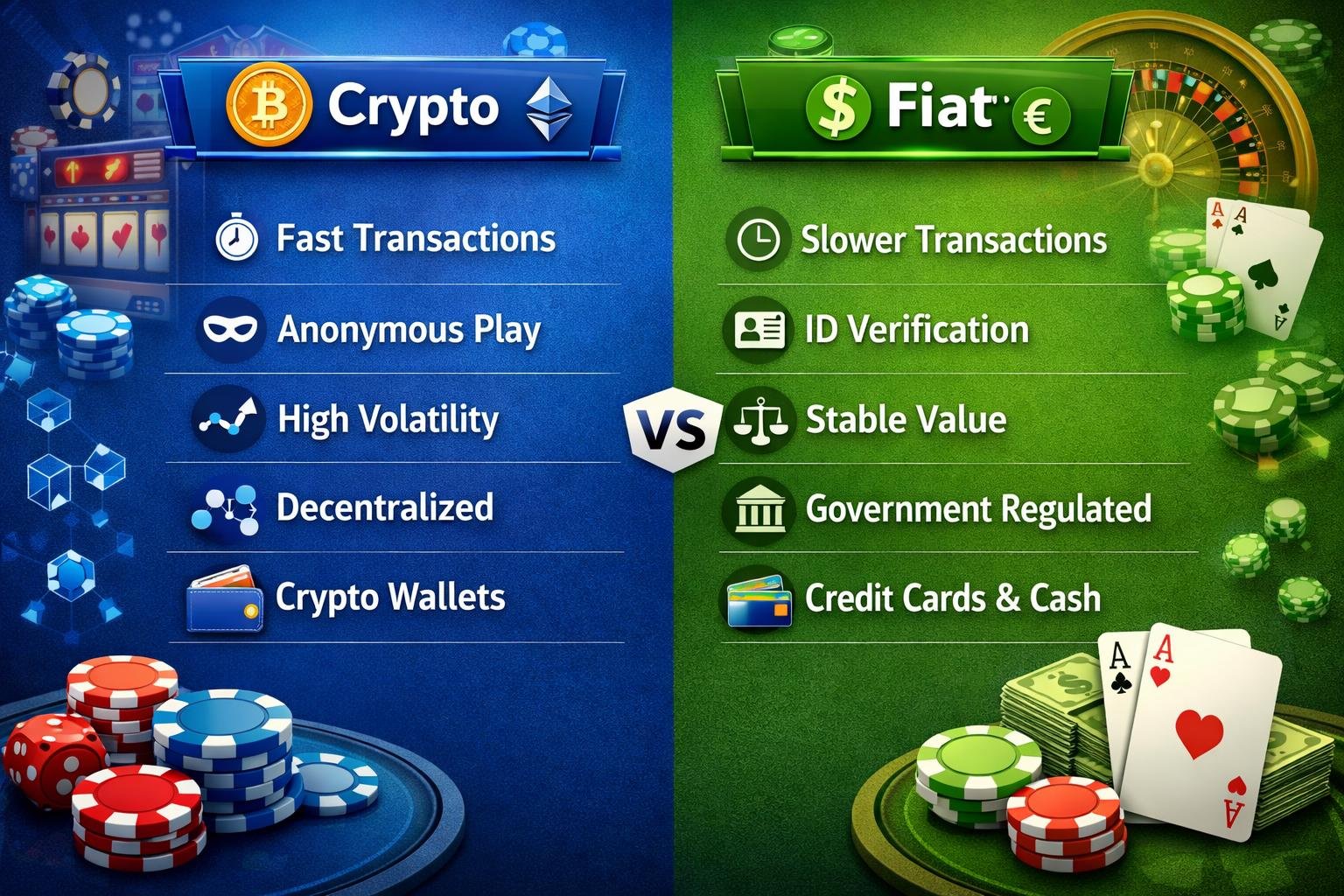
Crypto casinos and fiat casinos play by different rules. Everything from transaction speed to privacy, deposit limits, and payment options can flip your experience upside down.
Transaction Speed and Fees
Here’s the truth: crypto blows fiat out of the water on payout speed. When I use Bitcoin or Ethereum, I usually see my winnings in my wallet within minutes. That’s a game-changer if you hate waiting.
Fiat casinos make you wait—sometimes up to five business days—while your money crawls through the banking system. No wonder people are jumping ship.
Crypto transaction fees? Usually peanuts—often under 1%. Some crypto casinos don’t even bother charging you for deposits or withdrawals.
But try cashing out at a fiat casino and you’ll feel the sting. E-wallets can charge 2-5%, credit cards 3-10%, and bank wires? Don’t get me started—$15 to $50 per pop.
Since the blockchain processes payments directly between wallets, banks and middlemen don’t get a cut. That’s how crypto keeps things fast and cheap.
Privacy and Anonymity
Privacy is a whole different ballgame. Crypto casinos barely ask for personal info—sometimes just an email and a wallet address. If you’re privacy-obsessed, this is a breath of fresh air.
Fiat casinos, on the other hand, demand everything short of your blood type. You’ll need to upload government ID, proof of address, and sometimes even bank statements before you see your cash.
Blockchain transactions don’t tie directly to your real-world identity. Sure, the public ledger is there for all to see, but your wallet address isn’t screaming your name.
Paying with credit or debit cards at fiat casinos exposes your banking info. E-wallets are a bit better, but you’ll still fork over personal details during signup.
Deposits and Withdrawals
Crypto casinos love big spenders. They let you deposit or withdraw $100,000 or more in a single shot at some sites.
Fiat casinos? Not so much. Most cap you around $5,000–$10,000 per deposit, and withdrawals get hit with daily or weekly limits that can feel downright stingy.
Minimum deposits are a toss-up. Some traditional casinos let you in for $10. Crypto sites sometimes set higher minimums, mostly because network fees can eat up small transactions.
Pulling out small amounts at a crypto casino can be a pain, especially with Bitcoin’s higher fees. Stablecoins like USDT make small withdrawals easier, but you’ll still want to check the fine print.
Payment Methods and Accessibility
Fiat casinos stick to what they know: cards, bank transfers, and e-wallets like PayPal or Skrill. If you’re old-school, that’s probably fine.
Crypto casinos go all-in on digital coins. Bitcoin, Ethereum, Tether—some even accept dozens of altcoins. You’ll need a crypto wallet, but setup isn’t rocket science.
Access is where crypto really shines. Decentralization means you can play from places where banks block gambling payments. With fiat, your options depend on local banks and government rules.
Hybrid casinos are popping up, letting you pick your poison—crypto or fiat. Flexibility is nice, especially if you want to hedge your bets.
Security, Regulation, and Player Protection

Crypto and fiat casinos don’t play by the same security rules. Blockchain brings transparency and decentralization, while fiat casinos lean on banks and heavy-handed regulators.
Blockchain Security and Decentralization
Crypto casinos put every transaction on a public blockchain. That means it’s almost impossible for anyone to fudge payment records or mess with your data. No single company can freeze your funds or vanish with your cash—that’s the beauty of decentralization.
Multiple nodes verify each transaction, creating a permanent record. Anyone can check their deposits and withdrawals—no need to blindly trust the casino’s word.
The catch? If you lose your wallet’s private keys, nobody can help you. Crypto casinos use SSL encryption for website security, but your real protection comes from the blockchain itself.
Know Your Customer (KYC) and Compliance
Fiat casinos get policed hard. They have to run strict KYC and AML checks, so you’ll be handing over documents left and right. Regulators like the UK Gambling Commission keep them on a short leash.
Crypto casinos are all over the map. Some skip KYC entirely to keep things anonymous. Others make you verify your identity if you want to withdraw big sums. Fully licensed crypto casinos follow the same rules as fiat sites, but not all of them bother.
Unlicensed crypto casinos attract privacy seekers, but there’s a trade-off: less oversight means you’re on your own if things go sideways. Licensed sites have to meet certain standards, even for crypto payments.
Consumer Protection Measures
Fiat casinos offer real consumer protection. Licensed sites get audited, and you can complain to regulators or request a chargeback if something smells fishy.
Crypto casinos play a different game. They use provably fair algorithms so you can check the math yourself. Some stash funds in cold wallets to prevent hacks. The blockchain lets you track every transaction, which is great—until you realize you can’t reverse a payment if you get scammed.
Banks can undo fraudulent charges, but with crypto, what’s done is done. Responsible gambling features—like deposit limits and self-exclusion—show up on both types, but enforcement can be spotty, especially at unlicensed crypto sites.
Casino Experience: Game Variety, Fairness, and Bonuses

Crypto casinos don’t just talk a big game—they deliver. You’ll find more titles, fatter bonuses, and a gambling experience that feels different from the fiat crowd.
Game Variety and Provably Fair Games
Let’s talk numbers. Crypto casinos like BC.Game boast around 10,000 games. Cloudbet? 6,500. Jackbit? 7,000. Meanwhile, BetMGM clocks in at 3,500, Bet365 at 900, and Caesars at a modest 800.
Slots, live dealer tables, blackjack—you’ll find them everywhere. But crypto casinos add a twist with provably fair algorithms. You can actually check the outcome of every bet using cryptographic hashes. No more blind trust in some mysterious RNG tested by a third party.
Casino Bonuses and Promotions
Bonuses? Crypto casinos aren’t shy. BC.Game throws up to $220,000 at you for your first four deposits. Cloudbet matches 100% up to 5 BTC (that’s around $325,000—yeah, you read that right). Wild.io offers up to $10,000 over four deposits.
Fiat casinos look stingy by comparison. BetMGM and Caesars cap their welcome bonuses at $1,000. Bet365 is even lower, with a $100 sign-up sweetener. Crypto sites can afford to be generous because they don’t have to pay banks and payment processors.
Free spins and cashback promos are everywhere, but crypto casinos often toss in extras—think point systems or quirky missions to keep you coming back.
Limits and Transaction Flexibility
Crypto casinos usually win on flexibility. Minimum deposits can be tiny, making them accessible for casual players. At the same time, whales can move huge sums without blinking.
Withdrawal limits? Crypto casinos let you take out more, and faster, than fiat sites. Sure, some fiat casinos offer lower minimum withdrawals, which is handy if you want to cash out pocket change.
Adjusting your bankroll is a breeze at crypto sites. No rigid tiers or hoops to jump through—just deposit or withdraw what you want, when you want.
Challenges and Risks: Volatility, Learning Curve, and Future Trends

Crypto gambling isn’t all sunshine and rainbows. You’re dealing with wild price swings, a steeper learning curve, and an industry that never sits still. New solutions keep popping up, but you’ll need to stay sharp.
Crypto Price Volatility and Bankroll Management
Here’s where things get spicy. Crypto price swings can make your $100 Bitcoin deposit worth $90 tomorrow—or $110 if you’re lucky. Your gambling results can change even if you never touch the tables.
When Bitcoin moons during a hot streak, you win twice. But if the market tanks, your winnings might be worth less than you expected. That’s a headache for bankroll management.
What does volatility do?
-
Turns your winnings into a moving target between deposit and withdrawal
-
Makes it tough to set consistent betting limits
-
Lets exchange fees nibble away at your profits when you cash out to fiat
-
Cranks up the risk factor beyond regular gambling
If you hate surprises, stablecoins like USDT or USDC are your friends. They stick to $1, so your bankroll won’t rollercoaster. Some crypto casinos even auto-convert your deposits to stablecoins to keep things predictable.
If you’re the adventurous type and want to ride the crypto waves, cash out your winnings when the market’s in your favor—or swap to stablecoins before things go south.
Learning Curve and Accessibility Issues
Let’s be real—managing cryptocurrency transactions isn’t for the faint of heart. Traditional banks don’t make you learn about private keys, crypto wallets, or blockchain confirmations just to toss in a deposit. But here? You’ve got to know your stuff or risk losing your shirt.
Common challenges include:
-
Setting up and securing a crypto wallet
-
Protecting private keys from loss or theft
-
Understanding transaction fees and confirmation times
-
Navigating different blockchain networks
If you lose your private keys, you can kiss your funds goodbye—permanently. There’s no “forgot password” button, no friendly support rep to bail you out. Unlike fiat banking, where you just reset a password or call someone, crypto demands you take responsibility. That’s a big ask for most folks.
Sure, it gets easier after you stumble through it a few times. But honestly, the setup alone scares off a lot of would-be gamblers. Most people just want to punch in a credit card, not solve a blockchain puzzle.
Trends and the Evolving Online Gambling Landscape
The online gambling world isn’t blind to crypto’s headaches. More platforms have started offering both crypto and fiat payments, which is a relief. Pick your poison—crypto if you’re adventurous, fiat if you’re not.
Stablecoins are everywhere now, and for good reason. Most players don’t want their bankroll riding Bitcoin’s rollercoaster. I’ve seen newer sites plaster USDT and USDC logos right next to Bitcoin and Ethereum, almost begging you to try something less volatile.
Real-time conversion? That’s becoming the norm. Some casinos now flip your wild crypto deposit into a stable value instantly. So you dodge price swings but still enjoy the blockchain’s perks. Not bad, honestly.
Governments keep tightening the screws with new rules for crypto gambling. It’s making things more legit, which is great—unless you came for the privacy. That edge is shrinking fast as regulations pile up.