

Live baccarat isn’t just another card game on your screen—it’s a rush of real-time casino action, complete with professional dealers and a vibe you can almost feel. Picture this: you’re watching a high-definition stream, cards sliding across the felt, and a dealer who’s as sharp as they are personable. If you’re new, the main goal is simple—bet on whether the Player or Banker hand lands closer to 9.
To play live baccarat, you pick Player, Banker, or Tie before the dealer deals two cards to each hand. Whoever gets closest to 9 wins, and you’ll know right away if you’ve hit it big or need to try again.
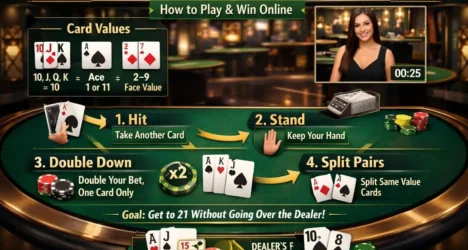
Most tables use 6 or 8 decks. Aces are worth 1, face cards and tens are zero, and everything else is face value. If your hand totals over 9, you just drop the first digit—so a 7 and 6 (which makes 13) becomes 3. Sounds weird at first, but it’s second nature after a few rounds.
I put this guide together because, honestly, live baccarat has a special place in my heart. The rules? Pretty straightforward. The betting options? Loads of ways to mix things up. There are even wild variants and side bets that can keep you on your toes. Whether you’re just starting or you’re curious about the live dealer scene, I’ll walk you through what you need to know to sit down at a table and actually feel like you belong there.
Key Takeaways
-
To play live baccarat, you bet on Player, Banker, or Tie. The Banker bet is king for odds, with a house edge of just 1.06%.
-
Variants spice things up: Speed Baccarat for a quick fix, Squeeze Baccarat for drama, and Lightning Baccarat if you’re chasing multipliers. Side bets (like either pair) let you customize your session and maybe get a little wild.
-
Side bets like Player Pair and Banker Pair can pay big but the odds aren’t great. I treat them as a bit of fun, not a core strategy.
How to Play Live Baccarat
Let’s talk about what makes live baccarat feel so different from the digital stuff. You’re not just clicking buttons—you’re part of a scene. Dealers are right there on camera, chatting, smiling, maybe even cracking a joke if you’re lucky. The energy from the studio is contagious, and you get to ride along from your couch.
The rules are simple: bet on Player or Banker and hope your side lands closer to nine points. But it’s the interaction, the banter in the chat, and the way the cards are revealed that really make it come alive.
Game Objective and Table Layout
Your job? Bet on which hand will get closest to nine. You’re not playing your own hand—just picking a side and letting the suspense build.
On your screen, you’ll see a slick betting interface. The dealer stands at a real table, cards fanned out under crisp studio lighting, and multiple camera angles show you every detail. Place your chips on Player, Banker, or Tie. Want to get fancy? There are side bet spots too, usually around the main betting zones.
Above the betting area, digital scoreboards track previous hands. Some folks swear by these patterns, but each round is its own deal. Most tables use six to eight decks shuffled together in a shoe, so the action keeps moving.
Basic Gameplay Steps
Here’s how a typical round goes for me: I put my chips down before the timer runs out—usually you get 10-15 seconds, but at speed tables, it’s even quicker.
Once betting closes, the dealer draws two cards for Player and two for Banker. The reveal is always face-up, so you see everything as it happens. Sometimes the dealer adds a little flair, especially at squeeze tables.
They call out the totals for both hands. If either side lands an eight or nine, that’s a “natural”—no more cards. If not, the third card rule kicks in, and the dealer handles all the drawing, no decisions needed from you.
Winners get paid right away. Then it’s on to the next round, with the timer resetting and the anticipation building all over again.
Player, Banker, and Tie Bets
Player bet pays even money (1:1) if the Player hand wins. At live baccarat tables, this bet has a house edge of 1.24%. Not bad, but not the best.
Banker bet pays 0.95:1 because the house takes a 5% commission. But here’s the kicker: it’s got the lowest house edge (1.06%). The Banker side acts last, so it’s got a slight edge—one of those little quirks that make baccarat unique.
Tie bet pays either 8:1 or 9:1 if both hands tie. Sounds tempting, but don’t get too excited—the house edge can run from 4.84% to a whopping 14.4%. Ties are rare, so I don’t chase them often.
|
Bet Type |
Payout |
House Edge |
|---|---|---|
|
Banker |
0.95:1 |
1.06% |
|
Player |
1:1 |
1.24% |
|
Tie |
8:1 or 9:1 |
4.84% - 14.4% |
Third Card Rule Explained
The third card rule is set in stone, and you don’t have to memorize a thing. The dealer always handles it, and it’s kind of nice not having to sweat decisions—just sit back and watch the cards fall.
Player hand third card: If Player’s first two cards add up to 0-5, the dealer gives Player a third card. If it’s 6 or 7, Player stands. With 8 or 9, that’s a “natural”—no more cards.
Banker hand third card: Banker’s move depends on its total and whether Player took a third card. If Player stands on 6 or 7, Banker draws on 0-5 and stands on 6-7. If Player draws a third card, Banker follows a more detailed chart based on both totals. You’ll see the dealer check the rules, but it’s all automatic.
I never stress about the third card—dealers know the rules by heart, and the game runs like clockwork. Whether you’re at a dramatic squeeze table or a fast-paced speed game, every round plays out the same way, and that’s part of the appeal.
Popular Live Baccarat Variants and Table Types
Live dealer baccarat isn’t just one game—it’s a whole world of variants, each with its own twist. From classic punto banco to lightning-fast speed tables, there’s always something new to try. Some versions throw in multipliers or special payouts, so you can chase bigger wins or just shake things up when you want a change of pace.
Punto Banco and Standard Baccarat
Punto banco is the bread and butter of live baccarat. This is the version you’ll find at most tables, and honestly, it’s where I feel most at home. The rules are fixed—just pick your bet, and the dealer does the rest.
I usually bet on Player, Banker, or Tie, and let the dealer handle the cards. Banker bets have that 5% commission because they win a bit more often, which is fair enough. Most standard tables have higher minimum bets—think $5 to $25, though VIP tables can get wild with $100+ minimums. The pace is steady, with each round lasting about 48 seconds. There’s time to chat, soak up the atmosphere, and maybe root for your favorite dealer.
Speed Baccarat and Mini Baccarat
Sometimes, I just want action—no long waits, no drawn-out drama. That’s where speed baccarat shines. Cards hit the table face-up, betting closes in a flash, and rounds wrap up in 15 to 30 seconds. It’s perfect when you want to play more hands and keep the adrenaline pumping.
The rules are the same as punto banco, but there’s no slow card squeeze. Some studios run several speed tables at once, so you can bounce between games and dealers if you’re feeling restless.
Mini baccarat is the casual cousin—same rules, just a smaller table and lower limits. It started in brick-and-mortar casinos to make baccarat more approachable, and live dealer versions keep that spirit alive. Minimums can be as low as $1 or $5, which makes it great for trying out strategies or just playing for fun without breaking the bank.
No Commission, Super 6, and Lightning Baccarat
No commission baccarat is a neat twist—there’s no 5% fee on Banker wins. But if Banker wins with a total of 6, you get paid 0.5:1 instead of even money. It changes the math a bit, but it also speeds things up because the dealer doesn’t have to track commissions.
Super 6 is a similar vibe. There’s even a side bet that pays 12:1 or 20:1 if Banker wins with exactly 6. Otherwise, Banker wins pay even money, except for that quirky 0.5:1 payout when it lands on 6. I like the extra tension it adds—you’re never quite sure what’s coming next.
Lightning baccarat is a whole different beast. Before the cards are dealt, random cards get multipliers (2x to 8x). If your winning hand includes one, your payout gets a serious boost. There’s a 20% fee on all bets to cover those multipliers, which changes the RTP a bit, but the potential for big wins keeps things exciting.
Other Variants: Peek, Golden Wealth, and Squeeze Baccarat
Baccarat squeeze is pure theater. The dealer slowly bends and peels the cards, drawing out the suspense until the last second. It’s the same game underneath, but the ritual makes every round feel special. If you love the drama of a real casino, this is the table for you.
Peek baccarat gives you a sneak peek at up to four cards before you decide whether to bump up your bet. It’s a little more interactive, and I find it adds an extra layer of strategy—sometimes you just get a gut feeling and go for it.
Golden Wealth Baccarat is a visual feast—lots of Asian-inspired flair and random multipliers that can hit Player, Banker, or Tie bets. Multipliers can go as high as 88x, so you get these wild swings that keep things unpredictable. It’s similar to lightning baccarat, but with its own unique style and payout system.
Understanding Bets, Payouts, and Side Bets
At the end of the day, live baccarat is about picking your bet, soaking up the atmosphere, and maybe chatting with some fellow fans along the way. The main bets are straightforward, but side bets can add a little spice if you’re in the mood for risk. Every table has its own energy, and finding the right dealer or the perfect chat crowd can turn a good session into a great one.
Main Bets and Odds
The player bet pays 1:1, and the house edge sits at 1.24%. When you bet on player, you're simply hoping that hand lands closer to 9 than the banker.
The banker bet also pays 1:1, but the casino takes a 5% commission from your winnings. Even with that little deduction, this bet actually gives you the best odds—just a 1.06% house edge. If you're playing for the numbers, it's usually the way to go.
The tie bet pays 8:1 if both hands finish with the same total. But, wow, does it come with risk—a steep 14.36% house edge. Some baccarat versions boost the tie payout to 9:1, which feels a bit better, but honestly, it's still a long shot compared to the main bets.
Side Bets: Pair, Perfect Pair, and Dragon Bonus
Want a little extra thrill? You can try side bets like player pair or banker pair. These hit if the first two cards dealt to either hand match in rank. They pay 11:1, but the RTP is only 89.64%. I usually play these alongside my main bets for a bit of spice.
The either pair bet wins if the first two cards on player or banker make a pair. It pays 5:1, but the RTP drops to 86.29%. Since it covers both hands, it hits a tad more often. Perfect pair is even tougher; you need both rank and suit to match, but the payout jumps to 25:1. RTP here varies—sometimes as high as 93%, but usually closer to 87%.
Dragon bonus adds a fun twist. If your chosen hand wins by a natural (8 or 9) or by four or more points, you get paid extra. Payouts start at 1:1 for naturals and go up to 30:1 if you win by nine points. Player dragon bonus gives you a 97.33% RTP, while banker dragon bonus is lower at 91.63%. The player version edges out because that hand draws a third card more often, which can swing things in your favor.
House Edge and Payout Structures
Most baccarat side bets come with a house edge between 10% and 15%. That's a lot higher than the core bets. If you're hunting for safety, stick with banker at 1.06% or player at 1.24%—those are your best bets.
Baccarat squeeze and other variants don't really mess with the main payout structures. Super 6, though, gets quirky—it drops the banker commission but only pays 0.5:1 if banker wins with a 6. That bumps the house edge on banker bets up to 1.46%.
Live baccarat online uses the same odds as brick-and-mortar tables. RTP stays steady whether you're at your desk or in a fancy casino lounge.
Betting on Live Baccarat Online
Playing live baccarat online really captures the casino vibe. You place your bets during the betting window, right before each round. The interface lays out all the bet types and chip values, so you can move fast or slow, whatever suits your mood.
Every live table shows its bet limits, and you'll notice main bets usually allow higher maximums than side bets. Mixing main and side bets in one round? Totally doable, and each resolves separately.
The betting timer ticks down, building a bit of suspense before the dealer closes the round and starts dealing. Some online tables throw in features like bet history or stats, but honestly, those are just for reference—they don't change your odds or the house edge.
Tips, Strategy, and Responsible Play
Live baccarat is a wild mix of luck and a little bit of smart planning. I always say, set your limits before you start—just makes life easier. If you want a strategy, focus on the banker bet for its low house edge. Managing your bankroll is just as important, though. That’s what keeps the fun going without any stress.
Basic Live Baccarat Strategies
The banker bet is my bread and butter in live baccarat. With a house edge around 1.06%, it wins a hair more often than player. I stick with banker for most hands, though I’ll mix in a player bet now and then if I’m feeling it.
Player bets are my second pick—house edge is just a touch higher at 1.24%, but you skip the commission. It’s a nice break from banker without much downside.
I steer clear of tie bets. The 8:1 or 9:1 payout looks tempting, but the house edge is brutal—over 14% most times. Same goes for side bets like Banker Pair or Player Pair; they just don’t stack up against the main bets.
Some folks love betting systems like Martingale or Paroli. Martingale doubles your bet after a loss, while Paroli bumps it up after a win. They can add some structure, but honestly, the house edge doesn’t budge. No system can beat the math.
Flat betting is my go-to. I pick a bet size and stick with it, hand after hand. It helps smooth out the swings and keeps my bankroll alive way longer.
Bankroll Management Best Practices
Before I even sit at a live baccarat table, I set a session budget. This is money I can lose without sweating it—never dip into funds meant for bills or groceries.
I break my bankroll into units, usually 20 to 40 per session. That way, I get enough hands to ride out the ups and downs. With $200, for instance, I bet $5 to $10 per hand and just let the game flow.
Loss limits are a lifesaver. If I lose half my session budget, I walk away. Hitting a win goal? I might cash out if I’m up 50% or more. Keeps me from getting greedy or chasing losses.
Time limits are underrated. I set a timer—30 to 60 minutes is plenty. Live dealer games move fast, and breaks help me stay sharp and not get swept up in the action.
Chasing losses? Big mistake. I never raise my bets out of frustration, and I don’t up my stakes just because I’m on a hot streak. Stick to the plan, always.
Choosing the Right Live Baccarat Table
First thing I check is betting limits. Tables can go from $1 minimums to $10,000 or more. I stick to tables where the minimum is about 2% to 5% of my session budget—keeps things comfortable.
Commission rates can sneak up on you. Most live baccarat tables charge 5% on banker wins, but there are no-commission options out there. I compare the rules before jumping in, since the payouts shift.
Video quality and dealer professionalism make a huge difference. I want a crisp stream and a dealer who keeps things lively. The interface should be clean—showing bets, history, and stats, but not getting in the way.
Game speed matters, too. Some tables fly, others take their time. If I’m in the mood to chat or think over my next move, I’ll find a slower-paced table.
Honestly, stream reliability and chat features are what make live baccarat feel real. I test the connection first and usually stick with big-name providers like Evolution or Pragmatic Play—they rarely let me down. The chat can be a blast, especially when the dealer’s got personality and the players are friendly. It’s like sitting at a real table, swapping stories and rooting for the shoe to go your way.
Responsible Gambling and Playing Safely
For me, live baccarat is pure entertainment. I treat it like a night out, not a paycheck. No strategy guarantees wins, so I only play with money set aside for fun.
Deposit limits are my safety net. Most legit casinos let me cap how much I can add to my account each day, week, or month. That way, I never overspend by accident.
If I ever need a break, self-exclusion tools are just a click away. I can pause my account for a few days, a week, or even longer if I need to reset.
I keep an eye out for warning signs—playing longer than I planned, chasing losses, or getting anxious about results. If any of that pops up, I step away or reach out for help.
Good casinos link to organizations like BeGambleAware and the National Council on Problem Gambling. I keep those handy, just in case. If you ever feel things getting out of hand, don’t hesitate to use those resources.