Online casino advertising is everywhere in the United States these days, but wow, the legal rules behind it are way stricter than most folks realize. Here’s where things get interesting: all those flashy ads you see? They’re under a microscope, with laws specifically designed to protect people from getting misled or taken advantage of.
Every time you spot an ad for sports betting or online casinos, it’s following a web of federal and state laws crafted to shield consumers from false promises. State gaming commissions handle most of the regulating, while federal agencies like the FTC jump in to make sure ads are honest.
These rules decide what casinos can say, how they say it, and even where those ads can pop up. Major platforms now treat compliance as a non-negotiable—nobody wants to risk getting yanked offline.
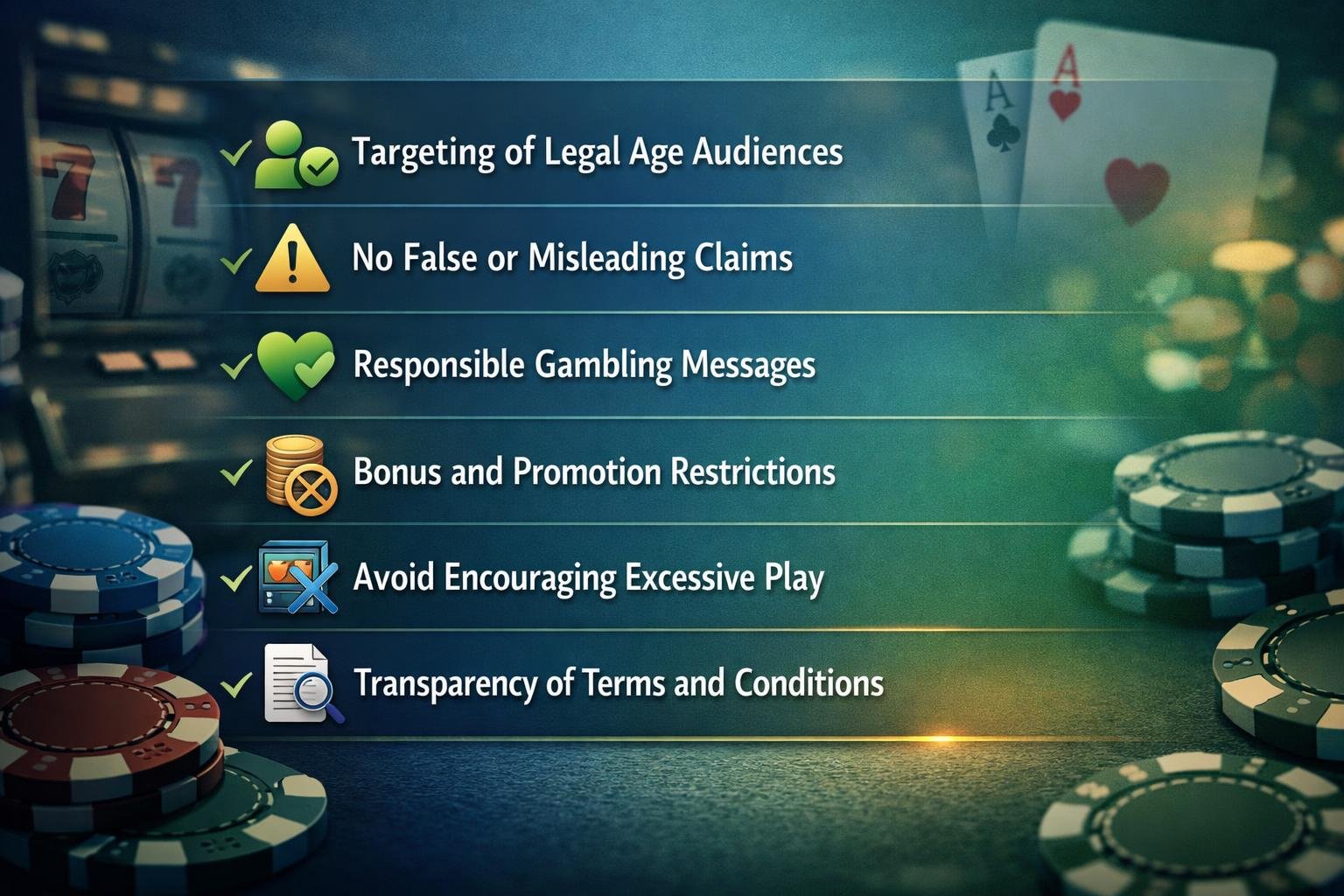
If you’ve noticed that gambling ads all seem to have the same vibe, there’s a reason for that. They must include basic protections, like avoiding anything that targets kids, spelling out bonus terms in plain English, and always showing a responsible gambling helpline number.
Mess up these rules, and the consequences are brutal—think massive fines and even losing your license. That’s not a gamble anyone wants to take.
Once you understand these regulations, you’ll start spotting sketchy offers from a mile away. It also explains why some ads feel extra cautious or packed with fine print—turns out, those details really matter.
Key Takeaways
-
Gambling ads have to follow both federal truth-in-advertising laws and unique state gaming rules, which can change a lot depending on where you are.
-
It’s strictly forbidden to target minors, and every ad needs clear responsible gaming messages and honest bonus terms—no sneaky language allowed.
-
Break the rules and you’re looking at huge fines and license trouble, especially as regulators double down on misleading promos online.
Fundamental Principles of Online Casino Gambling Advertising
Online gambling ads have to play by some core rules to protect people and keep the industry’s reputation from going down the drain. These standards decide how ads get shown to different groups, who can see them, and what they can (and can’t) say.
We’re talking about requirements for honesty, tough protections for minors, bans on shady or manipulative claims, and those ever-present responsible gambling reminders.
Truthful Advertising and Transparency
Honestly, truthfulness is the backbone of gambling ad rules pretty much everywhere that actually regulates the industry. Some places, like India, are still figuring things out, but in established markets, you’ve got to be straight with people about odds and terms.
Online casinos have to lay out the real odds, the terms and conditions, and what you’re actually getting into—no sugarcoating. Ads can’t hype up your chances of winning or pretend gambling is less risky than it is.
Regulators make operators spell out all those bonus terms, wagering requirements, and withdrawal rules before you even think about signing up. If they try to hide restrictions in tiny print, that’s a big no-no in most places.
The UK Gambling Commission even says ads must be “socially responsible” and never misleading. If you break these standards, you’re risking big fines or losing your license entirely.
Age-Gating and Minor Protection
Online casinos have to work hard to keep underage folks away from gambling content. Most regulated countries (and all the big ad platforms) say you can only show gambling ads where you’re pretty sure at least 71.6% of the audience is old enough to play—yeah, that’s a weirdly specific number, but it’s the industry standard.
Age-gating isn’t just a checkbox anymore. Sites and apps need solid verification systems, sometimes even requiring you to upload documents before you ever see a gambling ad.
Ads can’t use cartoon mascots, young celebrities, or anything that looks like it’s for kids or teens. States like New Jersey won’t let you run gambling ads near schools or youth-focused media. Social media companies have to use age filters on every gambling ad, too.
Prohibition of Misleading Claims
Here’s what surprised me: gambling ads can’t even hint that betting will fix your finances or guarantee a win. Operators aren’t allowed to say gambling is a legit career alternative either.
Talking about “hot streaks,” “due wins,” or any system that supposedly beats the odds? That’s off-limits everywhere with real regulation. Ads can’t pretend skill will somehow beat random number generators.
Sweden’s gambling authority even bans ads from suggesting gambling will make you look cooler or richer. Testimonials and endorsements have to be real, and nobody can promise specific results. Using phrases like “risk-free” is usually banned too, unless the offer is genuinely free of risk—and if that ever happens, all the conditions have to be front and center.
Mandatory Responsible Gambling Messaging
Responsible gambling messages aren’t just a suggestion—they’re required in regulated markets. Ads have to warn users about risks and share helpline numbers before anyone gets too excited to play.
The UK makes every gambling ad carry a responsible gambling reminder. It’s all about stopping excessive betting from becoming “just another thing.”
Some countries get even stricter with time and placement. Germany, for example, bans online casino and poker ads between 6 AM and 9 PM on TV, radio, and the web. When ads are allowed, they must include warnings about gambling risks.
New Jersey tells operators to only advertise where they know most of the audience is over 21 and to always include responsible gambling messages. Ontario insists these warnings be obvious and not hidden in the design. It’s all about making sure people really see the message.
Key Regulatory Bodies and Major Legal Frameworks

Regulators around the world keep a close eye on online casino ads, each with its own set of legal frameworks. In the US, there’s a mashup of federal laws like UIGEA and state gaming commissions making their own rules. Over in the UK, the Gambling Commission and the Advertising Standards Authority keep things tight under the Gambling Act 2005.
Gambling Advertising Regulations in the United States
In the US, online casino ads have to jump through a ton of hoops—federal and state. The FTC makes sure ads are honest, while the FCC handles what you can say on TV and radio. The Unlawful Internet Gambling Enforcement Act (UIGEA) and the Wire Act of 1961 pile on extra restrictions for interstate gambling and money transfers.
State gaming commissions create most of the day-to-day rules. New Jersey, for instance, says you can only advertise where most viewers are over 21 and you must include responsible gambling messages. Nevada focuses on honesty and keeping ads away from minors, while Pennsylvania cracks down on misleading promos the hardest.
The American Gaming Association offers advice, but states are the real enforcers. Step out of line, and you’re risking huge fines and losing your license.
UK and EU Online Gambling Advertising Oversight
The UK Gambling Commission calls the shots under the Gambling Act 2005. If you want to advertise or operate in the UK, you need a UKGC license—no exceptions.
The Advertising Standards Authority enforces rules made by the Committee of Advertising Practice. Ads need to be fair, open, and never target kids or suggest gambling will fix your finances. The law even decides what tone you can use and where ads can appear. Every ad must include responsible gambling messages and risk warnings.
Germany’s Interstate Treaty on Gambling 2021 lets you advertise, but not during certain hours. Sweden’s regulators ban ads from hinting that gambling will improve your social life or career.
Australia and Asia-Pacific Regulatory Environment
Australia’s Interactive Gambling Act of 2001 runs the show, with the ACMA enforcing tough rules on ad formats and inducements. States like New South Wales and Victoria add their own layers—NSW cracks down on inducement promos, and Victoria insists on responsible gambling messages and limits where you can advertise.
India’s a bit of a wild west, with no big federal laws for online gambling. Sikkim allows licensed ads under strict guidelines, but states like Tamil Nadu and Karnataka have tried to ban it outright. Japan only lets you advertise legal sports betting (like horse and bicycle racing), and those ads are tightly controlled by local authorities.
Influence of Global and Regional Guidelines
International rules shape how regions handle gambling ads. The UK’s approach influences a ton of Commonwealth countries and European markets. Australia’s tough stance on bonus ads is starting to spread across Asia-Pacific too.
Operators who want to advertise across borders need licenses in every country they target. Mess up in one market, and you might lose your right to advertise elsewhere. That’s a big incentive to play by the rules everywhere.
Platform-Specific Advertising Policies and Compliance

Every platform has its own set of hoops for online gambling ads. Google, for example, won’t even let you run ads unless you’re certified and licensed. Social media giants like Meta and TikTok are even stricter—most affiliates can’t advertise at all.
Google Ads Gambling Policies
Google only allows gambling ads in a short list of approved places, like the UK, Ireland, and select US states where online casino gambling is totally legal and regulated. Here’s where it gets tricky: casino and sports betting licenses aren’t the same, so you need the right one for each type of ad. Google bans casino ads in all Asian and Middle Eastern countries, no matter what the local laws say.
To get certified, advertisers need to:
-
Hold a valid gambling license in the target country
-
Prove they follow responsible gambling rules
-
Have age verification (21+ for US ads)
-
Partner with organizations like GambleAware for responsible marketing
Affiliates and influencers can still talk about online casinos in reviews or organic posts (as long as they follow state disclosure laws), but they’re banned from running paid ads on Google and Meta. Only licensed operators can do that—no exceptions.
Advertising on Social Media and Digital Platforms
Let’s dive in—Meta (Facebook and Instagram) doesn’t mess around when it comes to online gambling ads. They want written authorization before you can run anything, and their rules are way tighter geographically than what Google allows.
Meta usually only gives the green light to licensed operators in a handful of regulated markets worldwide. That often leaves affiliates out in the cold, since getting approved is tough and the process drags on for two to four weeks.
Here’s what surprised me about TikTok: they pretty much slam the door shut on gambling ads. They’ve carved out a tiny exception for state lotteries in a few places, but for regular online casino stuff—forget it, both paid and organic content are off-limits.
So, if you’re hoping to snag online casino traffic or build influencer deals on TikTok, you’re going to find it’s a non-starter in the regulated markets we’re talking about.
Now, Twitter/X is where things get interesting. They’re more flexible than the others, and while Google Ads completely bans casino ads in Asian and Middle Eastern markets, Twitter/X sometimes lets them through in more places—if you meet the legal and platform hoops.
The review cycle is way faster on Twitter/X, often just one to four weeks. Still, don’t get too excited—direct affiliate link ads hit a wall of their own.
Key platform restrictions:
|
Platform |
Auth Required |
Affiliate Ads |
Timeline |
|---|---|---|---|
|
Google Ads |
Yes |
No |
Several weeks to months |
|
Meta |
Yes |
No |
2 - 4 weeks |
|
TikTok |
N/A |
No |
Prohibited |
|
Twitter/X |
Yes |
Limited |
1 - 4 weeks |
Affiliate and Influencer Marketing Regulation
Affiliate marketers have to juggle three big compliance balls: platform rules, local laws, and the casino’s own terms. Most platforms slam the door on direct gambling affiliate ads, so pros get creative with organic content instead.
Influencers? They’ve got to play by the FTC’s rules—clear labels like "#ad" or "sponsored" are a must for any paid gambling promo. Instagram wants its own paid partnership tag, while YouTube wants a disclosure on videos. It’s a patchwork, honestly.
Working with influencers means you need self-exclusion tools and those responsible gambling messages. Influencer content has to stick to the same geo-restrictions and age targeting as regular ads, but even then, platform algorithms might clamp down on sponsored gambling stuff.
Podcasts and newsletters feel like the wild west by comparison. Promoters cut deals directly with creators, so there’s more freedom—but don’t forget, the law and disclosure rules still apply no matter where you’re advertising.
Best Practices, Enforcement, and Emerging Challenges

Casino operators walk a tightrope—trying to advertise effectively while keeping regulators happy. These days, enforcement isn’t just paperwork; it’s real-time monitoring and some pretty hefty fines if you slip up. New rules on retargeting and audience segmentation keep shifting the ground under marketers’ feet.
Responsible Marketing and Consumer Protection
Responsible marketing isn’t just a buzzword—operators have to build in real safeguards. The goal? Protect vulnerable people and keep those licenses safe.
Most places now make it mandatory to include problem gambling helpline info in every ad. It’s everywhere—can’t miss it.
Ads need links to resources like GambleAware, offering instant help. The messaging can’t dangle gambling as a fix for money troubles.
Self-exclusion programs are a big deal. If someone’s signed up for self-exclusion, operators must not advertise to them. Many platforms now plug these lists right into their ad targeting to block exposure automatically.
Before any gambling content pops up, age verification has to happen. Landing pages need more than just a checkbox—they need real proof, like ID checks. The UK Gambling Commission and others demand evidence that age checks actually work.
I’ve noticed responsible marketing also means dialing back the “win big” hype. Ads should highlight fun, not fantasy jackpots. Some places even ban odds or bonus promos during certain hours so kids aren’t exposed.
Compliance Monitoring and Penalties
Regulators use both smart tech and old-school reviews to keep tabs on gambling ads. The Gambling Commission, for example, runs audits and digs into ad campaigns, targeting, and responsible gambling tools. AI now scans ads for banned words, sketchy bonus claims, and dodgy targeting—right as they go live.
Mess up, and you could get anything from a warning to losing your license. Fines can hit millions, depending on how bad or often you break the rules. I’ve seen repeat offenders get banned from advertising, forced into compliance training, and stuck under extra scrutiny.
Platforms like Google and social networks add their own bite. They can suspend accounts, yank certifications, or block your ads instantly. Sometimes, these hits come way faster than anything from regulators and can shut down your marketing overnight.
Trends in Ad Restrictions and Targeting Controls
Remarketing rules just keep getting tighter. Google now blocks most gambling retargeting to stop those endless ads that might push problem gambling. If remarketing is allowed, operators have to exclude self-excluded users and stay far away from profiling that hints at risky behavior.
Geo-targeting’s gotten super precise. Ads must match the exact state or region where you’re licensed. Just because you’ve got a license in one U.S. state doesn’t mean you can advertise in another—even if it’s all under one campaign.
The 2025 reclassification of sweepstakes casinos is a wild twist. Platforms are shutting loopholes, and dual-currency models now face strict age checks and geo-compliance, just like real-money gambling. Regulators seem set on closing every gray area they find, and I doubt they’ll slow down anytime soon.