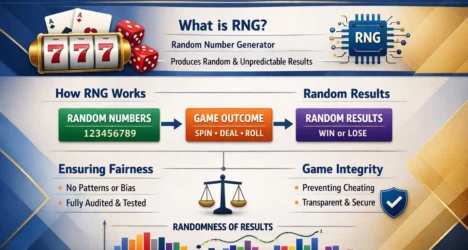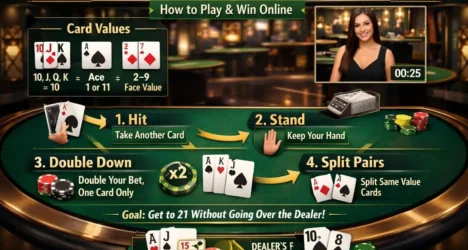


Slot machines might look complicated at first, but at their heart, it’s all about two things: reels and paylines. The reels are those spinning columns packed with symbols, and paylines are the lines or patterns that decide if you’ve actually hit a win. Once you get how reels and paylines work together, you’ll start to see exactly when and how you get paid—no more mystery spins. Honestly, once you nail these basics and realize a random number generator is running the show, everything else starts to click into place.
I can’t tell you how many new players just spin away without a clue about what they’re actually betting on—or how wins are formed. Some slots keep it simple with a few fixed lines. Others throw in hundreds or even thousands of ways to win, and that difference is huge for your betting strategy and your shot at a payout.
Let’s dig into how reels and paylines actually function in today’s slots. I’ll walk you through the different payline types, how to spot winning patterns, and what to check in a paytable before you even think about hitting “spin.”
Key Takeaways
-
Reels are the spinning columns with symbols; paylines are the patterns where matching symbols have to land for a win
-
Slots use all sorts of win systems: fixed paylines, ways to win, cluster pays, scatter pays, and more
-
The paytable shows you every active payline, symbol value, and special feature—always peek at it before betting
Slot Paylines: Mechanics, Types, and Winning Patterns
Paylines are where the magic happens—they decide if those matching symbols you’re eyeing actually pay out. Let’s break down how these patterns work, the main types you’ll run into, and the wild new systems that have shaken up the slot world.
How Paylines Work and Their Importance
A payline is just a specific path across the reels where you need matching symbols to land for a win. When I spin, the game checks each active payline to see if I’ve lined up enough matching symbols from left to right.
Usually, you’ll need at least three matching symbols on a payline to win, but some classics only need two. Classic slots tend to keep things simple with fewer reels and straightforward wins.
Paylines are the backbone of traditional slots—they tell you exactly how you can win. If you don’t know which paylines are active, you might wonder why some spins pay and others don’t. I always check the paytable before playing to see all the patterns and options.
Various Types of Paylines: Fixed, Adjustable, and All-Ways
Fixed paylines mean you’re betting on every available line, every spin, no exceptions. You can’t turn any off, and honestly, that’s a good thing—you never want to miss a win just because a line wasn’t active. Most online slots use fixed lines now, so you’re always in the game for every possible win.
Adjustable paylines give you a bit of control. You can pick how many lines to play, which lowers your total bet, but here’s the catch: if a winner lands on a line you didn’t activate, you get nothing. I always recommend playing all paylines if you can swing it—it just feels better knowing you’re not missing out.
All-Ways slots (think 243 ways, 1,024 ways, etc.) toss out traditional lines altogether. Here, matching symbols just need to land on adjacent reels from left to right, no matter where they are vertically. If you’ve got a 5-reel, 3-row slot, that’s 243 ways to win—every spin feels packed with potential. These all-ways games give you that modern, “anything can happen” vibe that I love.
Some slots even pay both ways—left to right, right to left. It’s a sweet little twist that doubles your chances and keeps you on your toes.
Payline Patterns and Number of Paylines
Classic slots usually stick with 1 to 5 paylines—just simple straight lines across the reels. If you’re playing a single-line slot, you’ll only get paid when symbols line up dead center.
Multi-line slots blew the doors off that idea. Video slots now offer 10, 20, 25, even 50 paylines. You’ll see:
-
Horizontal lines on different rows
-
Diagonals snaking from corner to corner
-
Zig-zags, V-shapes, and all sorts of weird, winding patterns
-
Complex shapes that jump all over the reels
The more paylines you play, the higher your total bet per spin. If you’re betting $0.10 per line on a 25-line slot, that’s $2.50 a spin. More lines mean more chances to win, but also more risk—so plan your bankroll accordingly.
Ways to Win, Cluster Pays, and Megaways
Ways to Win slots ditch fixed lines. You just need matching symbols to land on adjacent reels, starting from the left. It doesn’t matter where they show up on each reel. This can mean hundreds or thousands of ways to win, and it really changes the rhythm of the game.
Cluster Pays slots are a different beast. Instead of reels and lines, you’ve got a grid. Win by landing a cluster—usually five or more matching symbols touching horizontally or vertically. When you hit a cluster, those symbols vanish and new ones drop in, giving you another shot at a win in the same spin. It’s fast-paced, and the action can really snowball.
Megaways is where things get wild. Each reel shows a random number of symbols every spin—sometimes two, sometimes seven. That means the number of ways to win changes constantly, and it can hit up to 117,649. Megaways slots are high-volatility, so you’ll have dry spells, but when those reels come alive, the wins can be huge.
Reels, Symbols, and Paytables: Understanding Slot Foundations
Slot machines are all about spinning reels, different symbols, and the paytable that tells you how it all pays out. Let’s get into how reels build the grid, what the symbols actually do, how to read a paytable, and what RTP and volatility mean for your session.
How Reels and Rows Structure Slots
Reels are those vertical columns that spin, and rows are the horizontal lines crossing them. Together, they make up the grid where all the action happens.
Old-school slots usually have 3 reels and 3 rows. Most video and online slots go with 5 reels and 3 rows, but you’ll see plenty with 4 or even 6 reels, or extra rows for a bigger grid.
The number of reels and rows decides how many symbols you see on every spin. For example, a 5x3 slot gives you 15 spots for symbols. A 6x4? That’s 24.
More reels and rows usually mean more ways to win and bigger potential payouts. They also add layers of complexity, which is great if you love variety like I do.
Symbol Types: Regular, Wilds and Scatters
If you’re just starting out, wilds and scatters are the first special symbols you should learn about. Regular symbols are your bread and butter—they show up the most and pay out when you match enough of them. Each has its own value, and you’ll see all of this laid out in the paytable.
Wild symbols are the real MVPs. They substitute for regular symbols to help you complete wins—think of them like a joker in poker. Some games go further with expanding wilds, sticky wilds that stay put for a few spins, or wilds that boost your win with multipliers. These twists make every spin feel like anything can happen.
Scatter symbols are the rule-breakers. They pay out no matter where they land, not just on paylines. Get enough scatters, and you’ll usually trigger bonus rounds or free spins. You don’t have to line them up—just get them anywhere on the reels.
Bonus symbols unlock special features or mini-games. Hit the right combo, and you might get free spins or a bonus round that plays totally differently from the base game. Some slots have progressive jackpot symbols that can set you up for a life-changing win—if you’re lucky enough to hit it, it’s pure adrenaline.
Paytables and How to Read a Slot Machine
The paytable is your best friend. It shows you everything you need to know before you spin—how much each symbol pays, which features are in play, and how to actually trigger those bonuses.
Usually, you’ll find the paytable by clicking an “i” or a “paytable” button. It’ll tell you if the game uses fixed or adjustable paylines and list the symbols from highest to lowest value. Payouts are shown as coin multipliers or straight-up cash, depending on your bet.
The paytable also explains how the paylines or ways to win work, the minimum symbols you need for a win, and all the bonus triggers. You’ll even see what the free spins or bonus rounds offer—so you know exactly what you’re chasing.
Most paytables include the RTP (Return to Player) percentage. This tells you the theoretical payout over the long run. If a slot has a 96% RTP, it pays back $96 for every $100 wagered, on average, over millions of spins. It’s not a guarantee, but it’s a good stat to check.
Volatility, RTP, and Slot Features
Volatility is all about the slot’s personality. Low volatility means you’ll see lots of small wins—good for longer sessions and smaller budgets. High volatility? You’ll have more dry spells, but the wins can be massive when they hit. Medium volatility sits somewhere in between.
I pick volatility based on how I’m feeling and what my bankroll looks like. If I want a chill session, I go low. If I’m feeling lucky and want to chase a big payout, I’ll go high volatility and hope for that rush.
RTP works together with the random number generator (RNG) to decide your outcomes. The RNG makes sure every spin is random and independent. I always look for slots with RTP above 96%—that’s the sweet spot for most online games.
Modern slots are packed with features—cascading reels, multipliers, gamble options, pick-and-click bonuses, you name it. You can usually adjust your coin value and bet size, too, so you can play at your own pace.
I always check RTP and volatility in the paytable before I start. It helps me know what to expect and pick the right game for my mood and style.