

Gambling at casinos can be a great way to unwind and have fun. Still, it's important to set clear rules for yourself so you don't end up spending more than you meant to.
Setting casino gambling limits means deciding ahead of time how much money and time you'll spend, then using tools like deposit limits, loss limits, and session timers to stick to those boundaries. Healthy habits like these help you keep gambling as entertainment, not a source of stress or regret.
Learning how to set gambling limits is a big step toward responsible play. If you follow a practical guide like this one, you give yourself the best shot at enjoying the games while keeping things safe and manageable.
Most regulated casinos make it pretty easy to set these limits in their responsible gaming sections. You can choose daily, weekly, or monthly caps on deposits, losses, or total bets.
Some sites even let you set time limits, so you don't get caught up in marathon sessions that last longer than you planned.
I put this guide together to walk you through the different types of limits you can use, how to set them up on casino sites, and some practical tips for sticking to your boundaries.
Whether you're just starting out or want to take more control over your habits, these steps can help you play safely and keep things fun.
Key Takeaways
-
Gambling limits protect your finances by capping deposits, losses, wagers, and playing time before you start.
-
Most casino platforms give you easy responsible gaming tools in your account settings to create and update these limits.
-
Review your limits monthly and adjust them as your financial situation changes to keep your gambling habits in check.
Why Setting Gambling Limits Matters
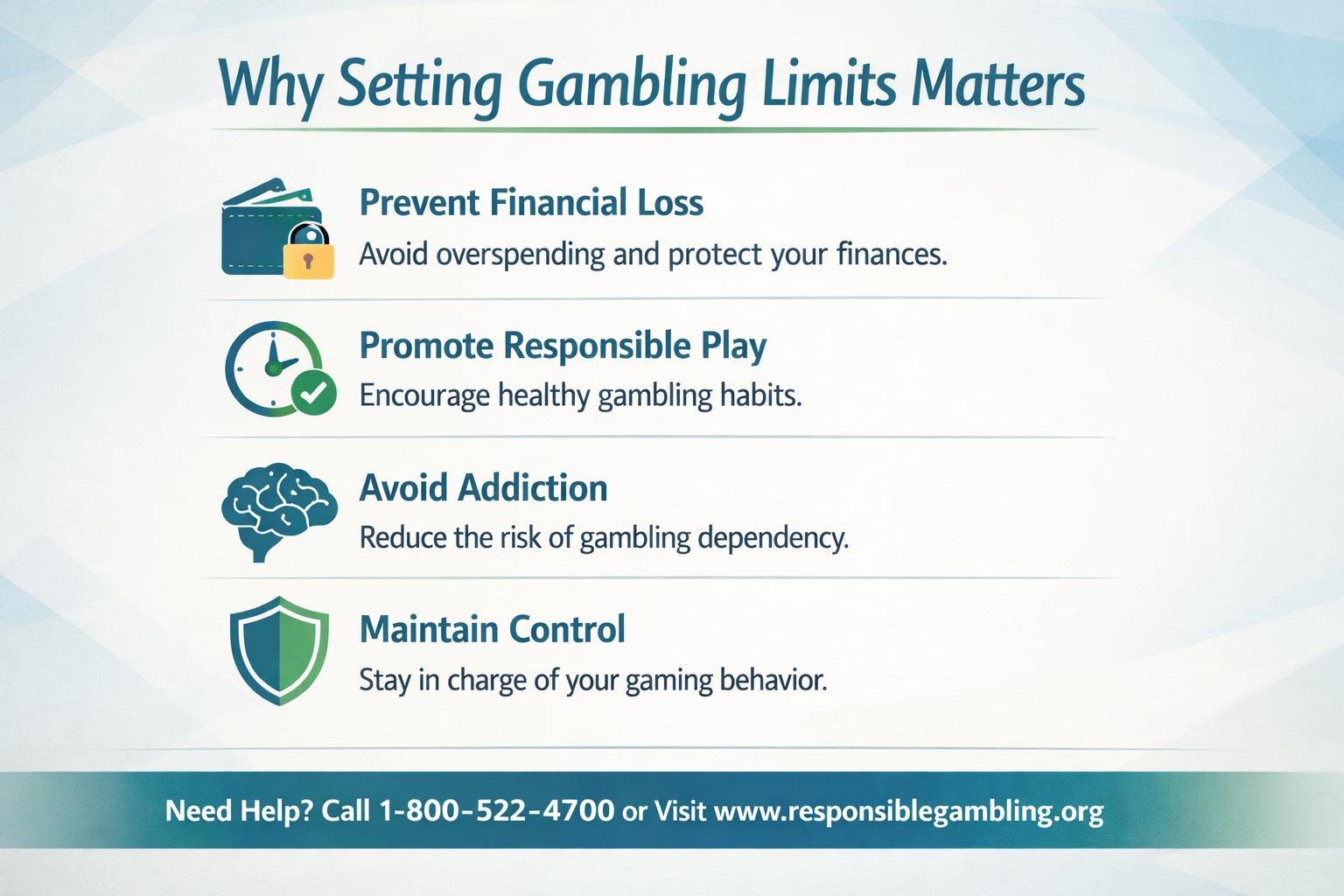
Setting clear gambling limits protects your money, your time, and honestly, your peace of mind. This approach helps you keep casino games in the entertainment zone, where they belong.
By deciding on limits, you can prevent play from turning into something that causes financial or emotional harm. It's a simple but powerful way to look after yourself.
Benefits of Responsible Gambling
I've seen firsthand how responsible gambling habits make play more enjoyable and sustainable. When I set deposit limits and time boundaries, I treat casino games like any other entertainment—like going to the movies or out for dinner.
Financial protection is the most obvious benefit. I usually set a monthly cap around 1% of my household income, which keeps things affordable. I never touch money meant for rent, groceries, or bills. That's non-negotiable.
Emotional stability is another big plus. Knowing my limits ahead of time means I avoid the stress of surprise losses or the shame that can come from overspending. Planning my budget before I play helps me leave when it's time, without second-guessing myself.
Time management gets so much easier with session limits. I use alarms to remind myself when it's time to stop, which protects my work, relationships, and even my sleep. Most casino sites have tools to help lock in those boundaries for you.
Risks of Not Setting Limits
If you skip setting limits, things can spiral faster than you'd think. I've watched players who don't bother with boundaries end up with mounting losses and tension at home.
Financial harm usually shows up first. Chasing losses can wipe out savings, leave bills unpaid, and rack up debt. Some folks even borrow money or use credit cards, which just adds interest and hurts your credit score.
Relationship damage often follows. Hiding losses, getting irritable, or breaking promises chips away at trust with family and friends. Problem gambling can create real conflict and isolation.
Mental health decline is tough to ignore. Anxiety, depression, and shame can pile up when you feel out of control. Some people gamble to escape stress, but that just deepens the cycle.
How Limits Support Safer Gambling
Limits work like guardrails—they keep small risks from turning into big problems. Using these tools is a proactive way to protect yourself. I use deposit caps, loss limits, and time-outs to help me stick to the rules I set for myself.
Deposit limits stop me from adding more money than I planned. Most casinos let me set daily, weekly, or monthly maximums right in my account settings. That way, I can't just top up on a whim during a losing streak.
Loss limits protect my bankroll by pausing play if I hit my set threshold. I decide what I'm willing to lose, and the system makes sure I don't go past it.
Time-outs and self-exclusion are there when I need a bigger break. A 24-hour cooling-off period helps me reset after a rough session. If I spot warning signs, I can use self-exclusion to block access for weeks or even months.
Types of Casino Gambling Limits
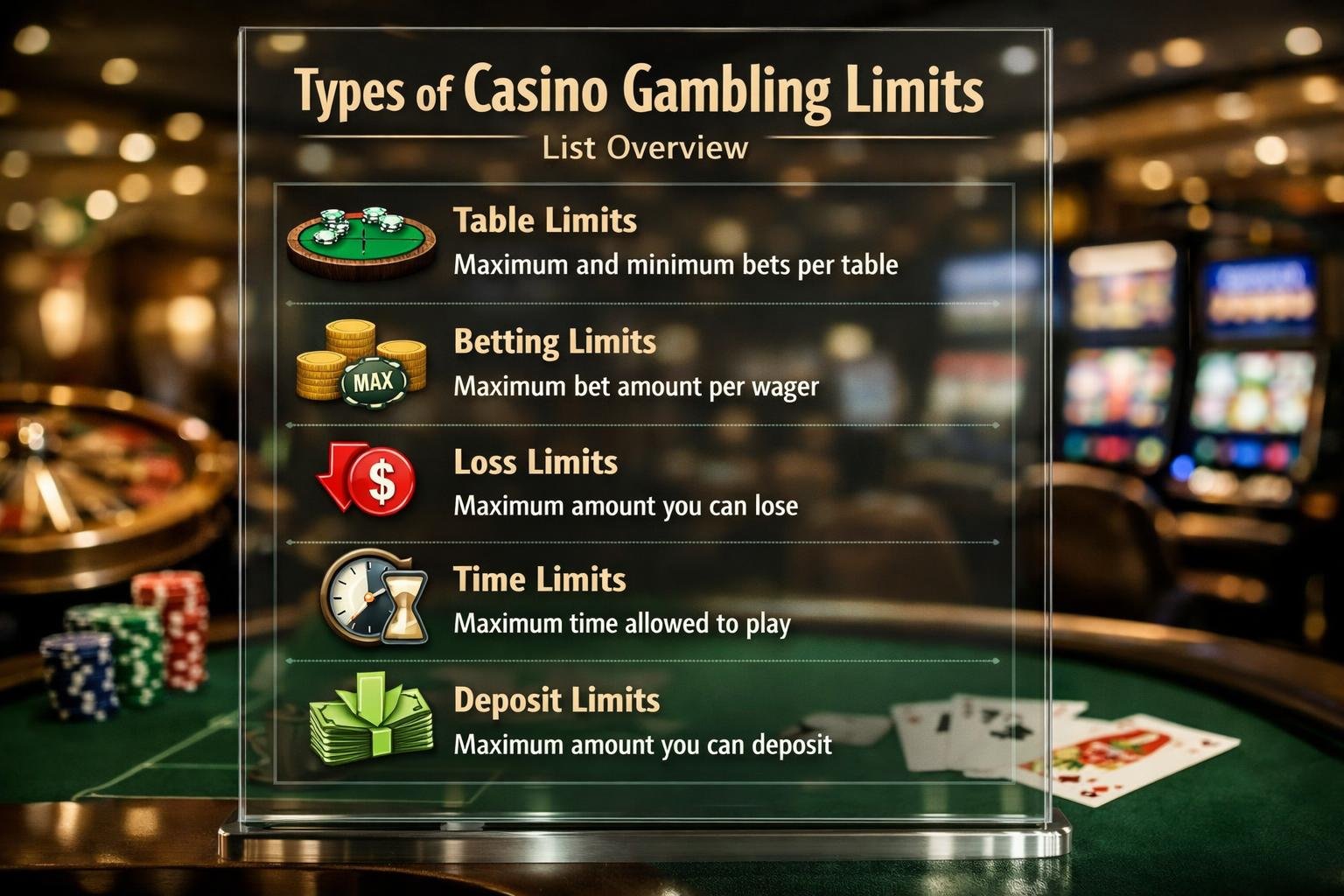
Casino sites offer a handful of limit-setting tools that each target a different part of your play. Understanding your options means you can tailor your experience to fit your needs.
Mastering these tools is a big part of managing your bankroll in the long run. It's not about stopping the fun—it's about making sure it stays fun.
Deposit Limits Explained
Deposit limits control how much you can add to your casino account over a set time. I pick daily, weekly, or monthly caps, depending on what fits my budget.
Once I set a deposit limit, the casino blocks any transfer that would put me over that amount. For example, if I set a $200 weekly limit and deposit $150 on Monday, I can only add $50 more until the week resets.
Most sites let me lower deposit limits right away. If I want to raise them, I usually have to wait 24 to 72 hours. That pause helps protect me from making snap decisions after a loss.
Deposit limits are my first line of defense—they stop overspending before it starts.
Loss Limits for Casino Play
Loss limits cap how much I can lose during a certain period. Once I hit that number, the casino blocks more bets until the time resets.
This is different from deposit limits because it tracks actual losses, not just the money I put in. If I deposit $300 and win back $100, I've only lost $200 toward my loss limit.
Loss limits are a lifesaver when I'm tempted to chase losses. If I'm down, it's easy to think "just one more spin," but my loss limit forces me to pause and step away.
Most casinos let me set daily, weekly, and monthly loss limits. Increasing them comes with a waiting period, but lowering them works instantly.
Betting Limits: Wager and Stake Limits
Wager limits restrict the total amount I can bet across all games in a set period. Stake limits cap how much I can bet on a single round or hand.
These work differently than deposit or loss limits. For example, I might set a $1,000 weekly wager limit, so my total bets can't go over that, no matter if I win or lose.
Stake limits are less common, but they're really handy for high-risk games. If I set a $25 stake limit, I can't put more than that on any single bet. It helps me avoid risky, impulsive moves.
Both types help me pace myself and avoid aggressive betting. I use them to keep my gambling steady, no matter which games I play.
Session Time Limits and Reality Checks
Session time limits cap how long I can play in one go or over a set period. Reality checks are pop-up reminders that tell me how long I've been playing and how much I've spent.
If I set a two-hour session limit, the casino logs me out when time's up. It's way too easy to lose track of time, especially when I'm in the zone.
Reality checks show up at intervals I choose, like every 30 or 60 minutes. They display how long I've been playing and my net wins or losses. These reminders help me decide if it's time to wrap up.
I like using session limits and reality checks together. The limit enforces a hard stop, while reality checks give me a heads-up before I get there.
How to Set and Adjust Casino Gambling Limits
Setting gambling limits starts with figuring out what you can afford to lose, turning on controls in your casino account, and checking in with yourself if things change. I always treat my gambling budget as a fixed entertainment expense—like tickets to a show or a night out.
Platform tools make it easier to stick to that discipline. Honestly, knowing how to set betting limits matters just as much as picking the right games.
Assessing Your Gambling Budget
I start by working out my monthly entertainment budget after covering all the essentials—rent, utilities, groceries, and savings. Most experts suggest gambling shouldn't take up more than 1% of your monthly household income, but I go even lower if I've got debts or tight funds.
Separating gambling money into its own account or envelope helps me avoid mixing it with bill money. This kind of bankroll management keeps me from dipping into cash I can't afford to lose, especially when things aren't going my way.
For each casino trip or online session, I break my monthly limit into a session budget. If I've set aside $50 for the month and plan to play twice, that's $25 per session. I write that number down before I even log in or walk through the door.
Tools like YNAB make it easier to track my spending and flag when I'm getting close to my limit. I check my statements every month to see how my actual spending compares to my plan, and I adjust if I see any drift.
Implementing Limits on Casino Platforms
Most online casinos and betting platforms let me set deposit limits right when I sign up or later in the settings. I pick daily, weekly, or monthly caps based on my session budget and usually stick to the shortest period that matches how often I play.
Loss limits help me stop automatically when I lose a set amount in one session. Many platforms also let me set wager limits, which slow down my spending and keep me from making impulsive bets.
Reality checks show up as pop-ups that tell me how long I've been playing and how much I've spent. I set these for every 30 or 60 minutes so I can check in with myself and decide if I want to keep going or call it a day.
Removing stored payment methods from my account adds a bit of friction before each deposit. That extra step gives me a moment to think—am I still within my budget, or am I just chasing losses?
Adjusting Limits and Cooling-Off Periods
If I want to increase a limit, most sites make me wait 24 to 72 hours. That pause helps me avoid raising my cap in the heat of the moment, especially after a tough loss.
Lowering limits works instantly, so I do that right away if my financial situation changes or if I notice I'm spending more than planned. Every few months—or whenever I have a big expense—I revisit my gambling budget and adjust as needed.
Cooling-off periods let me pause my account for a few days or weeks without closing it for good. I use this feature if stress or tough emotions make it hard to stick to my limits. During the break, I can't deposit or play, no exceptions.
If I need a longer break, I consider temporary self-exclusion for up to six months. This locks my account and doesn't let me change my mind until the period ends, giving me space to think about my relationship with gambling.
Maintaining Discipline and Seeking Support

Sticking to your limits takes practical strategies and a willingness to reach out for help when you need it. Building strong self-control can help you avoid chasing losses, but there are also tools like self-exclusion programs and gambling helplines for backup.
These resources really do make a difference for safer gambling. It's important to know they're available if things ever start to feel out of hand.
Avoiding Chasing Losses and Emotional Decisions
I get it—the urge to chase losses can feel almost impossible to resist sometimes. When you're down, it's natural to want that money back right away.
But that impulse usually leads to bigger bets and, honestly, even deeper losses. Losing is part of gambling, and it's important to accept that from the start.
Healthy habits include walking away once you hit your loss limit, no matter how strong the urge is to keep going. If you notice yourself struggling, that's a good moment to pause.
Try to avoid gambling when you're:
- Upset or angry
- Stressed about money
- Drinking alcohol
- Feeling overly excited or desperate
Emotions can cloud judgment. I often suggest taking a 10-minute break every hour to check in with yourself. Are you still having fun, or are you just trying to win back what you lost?
Keeping a simple play diary helps too. Write down your spending and losses—seeing it on paper can make patterns clearer and harder to ignore.
Enforcing Limits with Self-Exclusion Tools
You can use self-exclusion programs to block yourself from gambling for a set time. Nearly every casino or betting site offers these in their responsible gaming sections.
A time-out lets you step away for 24 hours up to six weeks, giving you some space without a huge commitment. Self-exclusion goes further, locking your account for months, years, or even permanently.
It's a good idea to use these tools proactively, not just during a crisis. If you keep breaking your own limits, self-exclusion can break the cycle and give you a real break.
Some regions even have exclusion registries that block you from multiple gambling venues at once. That can add an extra layer of protection if you need it.
These tools work because they take away access during your cooling-off period. You can’t just change your mind and log back in, and the waiting period helps protect you from impulsive decisions.
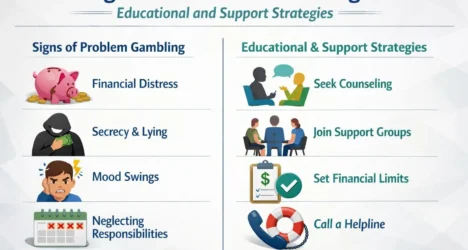
Recognizing Signs of Gambling Addiction
Catching problems early really does help prevent more serious issues. Here are some warning signs that gambling might be shifting from fun to something riskier.
Financial signs:
- Borrowing money to gamble
- Hiding gambling expenses from family
- Neglecting bills to fund betting
Behavioral signs:
- Gambling longer than planned, over and over
- Trying to cut back but not managing to do it
- Lying about time spent gambling
- Using gambling to escape problems
If you notice these patterns in yourself or someone else, it could be time to reach out. Support is available—services like the National Council on Problem Gambling (1-800-522-4700) offer free, confidential help.
You can talk to counselors who really understand what you're going through. They can guide you toward treatment options if you need them.
Support systems matter. Let someone you trust know about your limits. Having a bit of accountability makes sticking with your plan feel less lonely.