CASINO PAYMENT METHODS VAULT™
Payment Methods 2026

All Payment Methods
Online casino payment methods are essential for players to deposit and withdraw funds securely and conveniently. These methods allow players to make transactions quickly and easily, ensuring a smooth gaming experience. From traditional options like credit cards and bank transfers to modern e-wallets and cryptocurrencies, online casinos offer a variety of payment methods to cater to different preferences. Players can choose the method that best suits their needs, whether they prioritize speed, security, or anonymity. Understanding the available payment options is crucial for players to make informed decisions and enjoy a seamless online casino experience.

Written by: Natalie Stone
Updated: September 25, 2026

Fact Checker: Rachel Summers
Checked: September 2026


BONUSES
& FREE SPINS
CASINOS & SLOTS
More than 500 bonuses and free spin offers.
TRUSTED &
VERIFIED
If you find inaccurate,
outdated, or incorrect
information, please let us
know by reporting it below.
UNBIASED
REVIEWS
CASINOS & SLOTS
+350 unbiased casino and
slot reviews.

Instadebit
Interac

Jeton
Jeton Wallet

Litecoin

MasterCard

MasterCard Maestro

MobilePay
MuchBetter

MultiBanco

Neosurf

Neteller

Nordea
PaySafeCard

Poli
Rapid by Skrill

Rapid Transfer

Revolut

Ripple

Skrill

Sofort

Trustly

Venmo

Visa

Visa Electron

Wire Transfer

Zelle

Zimpler

POP Pankki
Pay N Play
What Are Online Casino Payment Methods?
Essential Guide for Players
- Understanding Online Casino Payment Methods
- Types of Online Casino Payment Options
- Card Payment Methods: Credit, Debit, and Prepaid
- E-Wallets and Digital Wallets for Casino Transactions
- Bank Transfers, E-Checks, and VIP Preferred
- Cryptocurrency and Blockchain-Based Payments
- Cash Deposit and Withdrawal Alternatives
- Picking the Best Casino Payment Method

Written by: Ryan Chen
Updated: September 25, 2026
Fact Checker: Rachel Summers
Checked: September 2026
BONUSES
& FREE SPINS
CASINOS & SLOTS
More than 500 bonuses and free spin offers.
TRUSTED &
VERIFIED
If you find inaccurate,
outdated, or incorrect
information, please let us
know by reporting it below.
UNBIASED
REVIEWS
CASINOS & SLOTS
+350 unbiased casino and
slot reviews.
When you play at an online casino, you’ll need a way to get money in and out of your account. Online casino payment methods are the different ways you can deposit funds into your casino account and withdraw your winnings, including options like credit cards, e-wallets, bank transfers, prepaid cards, and digital currencies like ETH.
Picking the best casino payment method can make a huge difference in how smoothly your money moves. Each method comes with its own speed, limits, and fees, and those details really shape your gaming experience.
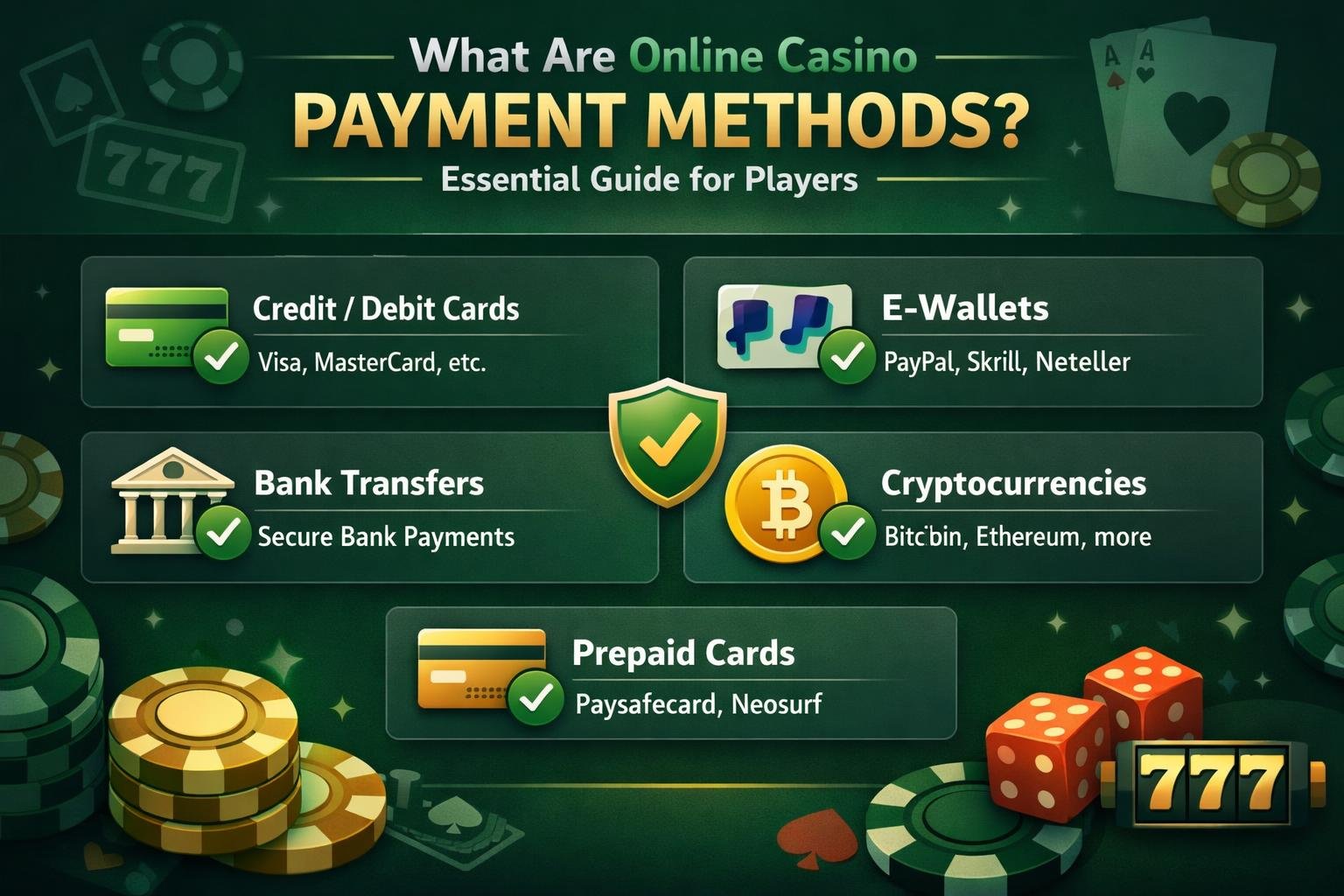
Your payment choice controls how fast you can start playing and how quickly you get paid. Some methods process instantly, while others might keep you waiting for days.
I’ve seen plenty of players pick the wrong option and end up stuck waiting for their cash. The upside? Legal US online casinos actually offer a lot of safe choices to protect your info and your money.
Let’s dig into the major casino payment options you’ll find at regulated sites. I’ll break down the pros and cons of each, and explain how they really work under the hood.
By the end, you’ll know how to pick the best deposit method for your situation—and how to keep your money moving safely and efficiently.
Key Takeaways
- Online casino payment methods include cards, e-wallets, bank transfers, prepaid options, and cash deposits at physical locations.
- Processing speeds vary: some methods offer instant deposits and withdrawals within hours, while others take several days.
- Your ideal payment method depends on what matters most—speed, security, deposit limits, or avoiding fees from the casino or provider.
Understanding Online Casino Payment Methods
Online casino payment methods dictate how you move money into and out of your gaming account. The method you pick affects transaction speed, security, and how well you can manage your bankroll.
What Defines an Online Casino Payment Method
Technically speaking, an online casino payment method is any financial tool that lets you deposit funds to play real money games and withdraw your winnings. These include e-wallets like PayPal, debit and credit cards, bank transfers, prepaid cards, and sometimes cryptocurrency or cash at a casino cage.
Each option connects your finances to the casino cashier through secure processing channels. Licensed US casinos partner with third-party payment processors, so the casino itself never directly touches your banking info.
This setup protects your data and keeps everything compliant with state regulations. It also means you can maintain a clear record of your gaming activity.
Processing speed, transaction limits, and fees are the big technical features that define any casino banking method. Some methods let you deposit and withdraw, while others only go one way.
Finding a reliable US casino deposit method is step one for any new player. Many folks also look for deposit options that let them claim a no deposit bonus.
Role and Importance in Player Experience
Payment methods shape your casino experience way beyond just moving money. If I use an instant method like PayPal, I’m playing in seconds. If I choose a wire transfer, I might be waiting days for my funds to clear.
The withdrawal method you pick determines how fast you see your winnings. E-wallets usually pay out in hours; checks by mail can take weeks.
Limits matter too—especially if you hit it big or want to deposit more than usual. Security and reliability? Absolutely crucial. I want strong fraud protection and encryption so I can relax and focus on the games.
Honestly, if a casino doesn’t offer my preferred banking option, I’ll probably just play somewhere else.
Deposit vs. Withdrawal Methods
Deposits and withdrawals might use the same channel, but they work differently. Most casino payment methods—cards, e-wallets, bank transfers—let you deposit instantly. The casino confirms your funds right away so you can get started.
Withdrawals, though, take longer. Casinos have to verify your identity and follow anti-money-laundering rules. This “KYC” process usually means sending in an ID and proof of address before you cash out.
Even after approval, every method has its own speed. Many casinos only let you withdraw with a method you’ve already used to deposit. This keeps things secure and helps prevent fraud.
Credit cards are mostly deposit-only, while PayPal and ACH usually support both sides.
Types of Online Casino Payment Options
Online casinos accept a variety of payment methods, each serving different player needs. The options range from classic cards and bank transfers to modern e-wallets and in-person cash solutions.
Cards and Prepaid Solutions
Credit and debit cards are still the go-to deposit method at regulated US casinos. Most sites accept Visa, Mastercard, Discover, and American Express for instant deposits.
Big names like Borgata Casino and Horseshoe Casino offer plenty of card options. Visa casinos are especially popular because of high acceptance rates and solid security. American Express is a favorite for high-rollers, thanks to its reliability and big transaction caps.
Prepaid cards are a good pick if you want more control over your spending. The Play+ prepaid card is everywhere at US casinos. You load it up and use it to deposit—no need to link your bank account, which adds some privacy.
VanillaDirect is another prepaid choice. These work like gift cards: buy one with cash, use the card number to deposit. Play+ cards have become popular partly because they can process withdrawals faster than most other methods—sometimes in just a few hours.
Bank Transfers and E-Checks
Bank transfers move money straight from your checking account to the casino. A wire transfer takes anywhere from one to five business days—sometimes less, sometimes more, depending on your bank.
Most casinos don’t charge fees for bank transfers, but your bank might tack on a charge. VIP Preferred is a popular e-check service that links to your checking account and moves funds using secure eCheck tech.
For larger sums, eChecks are often the safest bet. Deposits are usually instant, but withdrawals can take up to 72 hours to hit your bank.
Online banking through services like Trustly connects your bank account to the casino without sharing your details directly. I like this system—it acts as a middleman, keeping sensitive info away from the casino.
Bank transfer methods are great for moving big amounts. Some casinos set transaction caps as high as $100,000 per move.
E-Wallets and Digital Wallets
E-wallets keep your payment info in one secure spot. PayPal is the big name here, and about 78% of Americans who use online payments have PayPal accounts.
Venmo and Skrill are also accepted at some casinos. Apple Pay works too, but only if you use Safari.
E-wallets are fast—deposits hit instantly, and withdrawals can land in your account in as little as an hour. PayPal is usually the quickest, while Venmo might take up to 48 hours.
One major perk is privacy. The casino only sees your e-wallet account, not your bank details. Some e-wallets charge small fees, usually under 5%.
Alternative and In-Person Methods
Cash at casino cage lets you deposit in person at a retail casino. You’ll need a government-issued ID. This is ideal if you don’t want to share financial info online.
PayNearMe generates a barcode you can take to stores like 7-Eleven, CVS, or Walgreens. Show the barcode, pay cash, and the funds land in your casino account soon after. There’s usually a $500 deposit limit.
Paysafecard is a prepaid voucher system. Buy a voucher with cash, enter the code online, and you’re good to go.
These options are perfect for players without bank accounts or credit cards, or anyone who wants to keep gambling separate from their main finances.
Card Payment Methods: Credit, Debit, and Prepaid
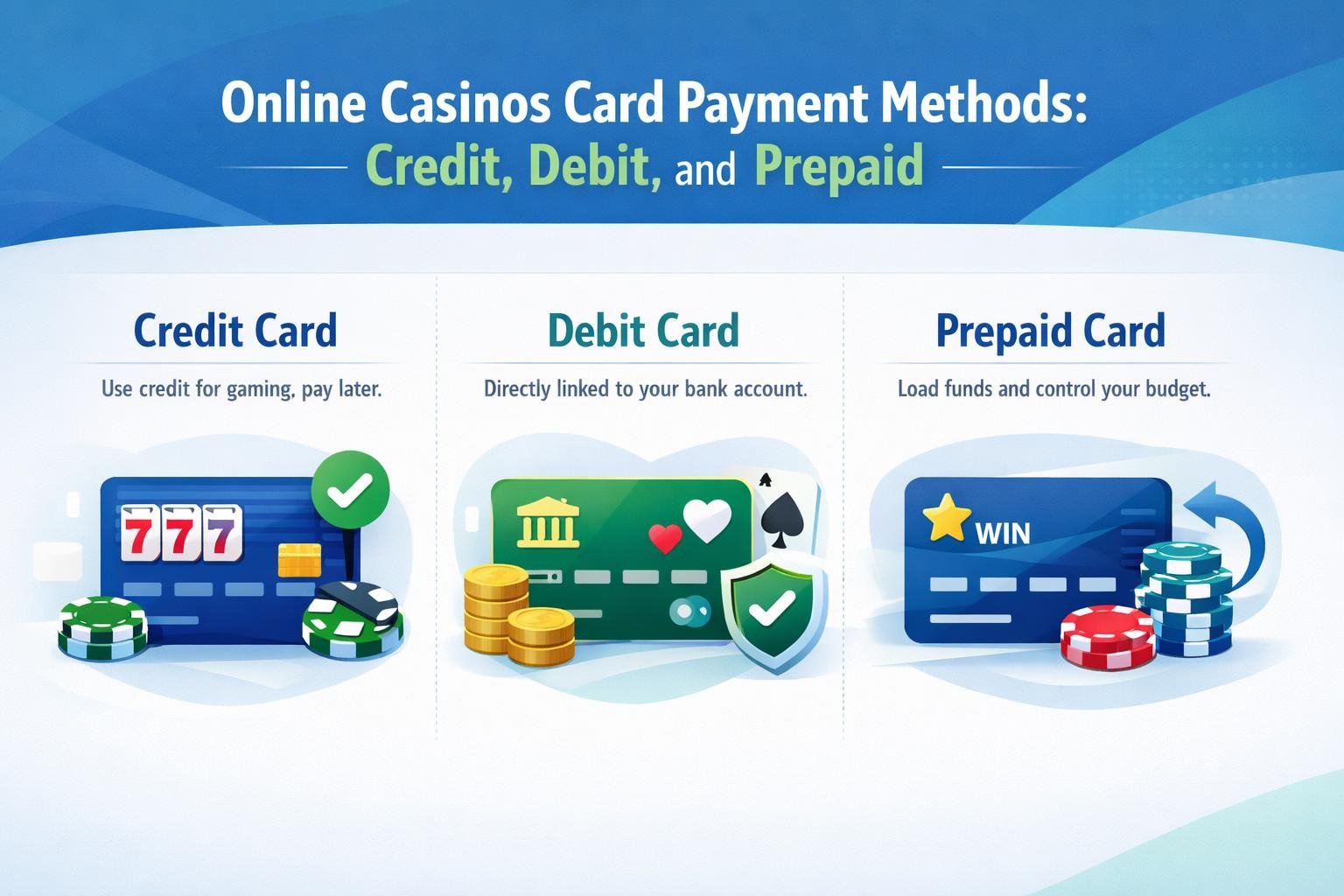
Cards are still the most widely used payment option at online casinos. They offer broad acceptance, familiar interfaces, and different levels of spending control, depending on whether you use credit, debit, or prepaid formats.
Popular Credit and Debit Card Brands
Visa and Mastercard really dominate the online casino scene. I’ve seen them accepted at nearly every licensed site in the US and around the world.
Visa handles both credit and debit transactions smoothly. Most casinos prioritize Visa for its reliability and processing networks. Visa Electron, a debit-only version, appears at some international sites but isn’t common in the US.
Mastercard works much the same way as Visa. It processes deposits instantly and accepts both credit and debit formats. Some US banks block gambling transactions on Mastercard, so you might need to call your bank if a deposit doesn’t go through.
American Express is less common. Higher processing fees make it less attractive for casinos, but if you find a site that takes it, it’s great for deposits—just don’t expect to withdraw with it.
Discover cards are even less accepted. I rarely see them as an option at US casinos.
Prepaid Card Solutions for Online Casinos
Prepaid cards give you strict spending control without linking to your bank. Load funds ahead of time and use only what’s available.
The Play+ card is the standout casino-specific prepaid option. Many US sites offer branded Play+ cards that work just for their platform. You can load funds via bank transfer, debit card, or even cash at a retail spot.
Withdrawals back to Play+ are usually faster than traditional bank payouts. Generic prepaid cards like Vanilla Visa work for deposits at some casinos, but they almost never support withdrawals. You’ll need another method to cash out your winnings.
Prepaid cards are perfect if you want to keep gambling funds separate from your main banking. They also add a layer of privacy since these transactions don’t show up on your regular bank statement.
Card Processing Times and Fees
Deposits with cards are basically instant. I’ve never had to wait more than a few seconds for the money to show up in my casino account.
Withdrawals? That’s where it slows down. Credit and debit card payouts usually take 2–5 business days. Some casinos add an internal review window of up to 48 hours before they send your money.
Most reputable casinos skip deposit fees for card transactions, but your card issuer might treat a gambling deposit as a cash advance. That can mean a 3%–5% fee. Debit cards usually dodge these charges.
Withdrawal fees depend on the casino. Some cover the cost for you, others pass it on. I’ve seen fees anywhere from $0 to $25 for a withdrawal.
Bank Card Security Features
Licensed casinos use SSL encryption for card transactions. This keeps your details safe as they travel between your device and the casino’s payment processor.
I always check for the padlock icon in my browser before typing in card info. That’s my quick way of confirming the connection is secure.
Most card issuers now monitor gambling transactions for fraud. They might flag weird activity or block deposits to unfamiliar casinos. A quick call to your bank usually clears things up.
Visa and Mastercard both include zero-liability protection. If someone uses your card without permission, you’re not on the hook for fraudulent charges—even at casinos.
Some banks now offer virtual card numbers for online shopping. These are temporary and link to your main account, shielding your real card number from the casino. I’ll use them at new casino sites for added peace of mind.
E-Wallets and Digital Wallets for Casino Transactions
E-wallets work like a digital shield between your bank account and online casinos. They let you deposit or withdraw funds without ever exposing your banking details to the gambling site.
Technically speaking, PayPal is the big name here, but Skrill and Neteller have carved out a huge chunk of the market worldwide. Mobile wallets like Apple Pay and Google Pay are catching up, especially for folks who want quick, tap-and-go deposits.
PayPal: Trusted Online Casino Option
PayPal is probably the most recognizable e-wallet out there. I appreciate its buyer protection and the way it connects with major banks in dozens of countries.
You’ll mostly find PayPal at casinos that operate in tightly regulated markets. In the US, for example, only state-licensed casinos offer PayPal—offshore sites just don’t make the cut.
When you use PayPal, deposits hit your casino balance right away. Withdrawals usually land in your account within one to three business days after approval.
Privacy is the main perk here. Casinos never see your card or bank details, which is a relief in my book.
Some casinos tack on a small fee for PayPal deposits, often around 2-3%. I always check the cashier page before sending any money, just to be sure.
Skrill, Neteller, and Venmo
Skrill and Neteller are purpose-built for online payments. Both support multiple currencies and work at hundreds of casinos around the globe.
Deposits with these wallets are instant, and withdrawals can be lightning-fast—sometimes as quick as one to twelve hours after approval. You’ll need to verify your account before you can withdraw larger sums, though.
Here’s a snag: many casinos block Skrill and Neteller users from claiming welcome bonuses. Apparently, the ease of creating accounts makes it too tempting for bonus hunters to game the system.
Venmo is everywhere in the US, but most online casinos don’t touch it. Their policies just don’t play well with gambling transactions.
Apple Pay and Google Pay in Online Gaming
Apple Pay and Google Pay are showing up more often at online casinos. These wallets link right to your credit card or bank account for a super streamlined experience.
Apple Pay only works on Apple devices. Google Pay is a bit more flexible, running on Android and some desktop browsers.
Both rely on fingerprint or face recognition for security, so payments are quick and safe. Deposits show up instantly, but most casinos still don’t let you withdraw through these wallets.
You’ll probably need to cash out using a different method. I find these mobile wallets perfect for fast deposits on the go—just a few taps and you’re set.
Cash App and Pay by Phone Solutions
Cash App is another big name, but online casinos rarely accept it. Company policies and banking rules make it a tough sell for gambling sites.
Pay by phone methods, like Boku and Siru Mobile, let you charge deposits to your mobile phone bill. The charges show up on your monthly statement.
There are some real limits here. Deposit caps are low—usually $10 to $30 per transaction—and you can’t use these options for withdrawals at all.
I see pay by phone as a backup when nothing else works. Digital wallets overall give you more privacy than cards and usually get your money moving faster than old-school bank transfers.
Bank Transfers, E-Checks, and VIP Preferred
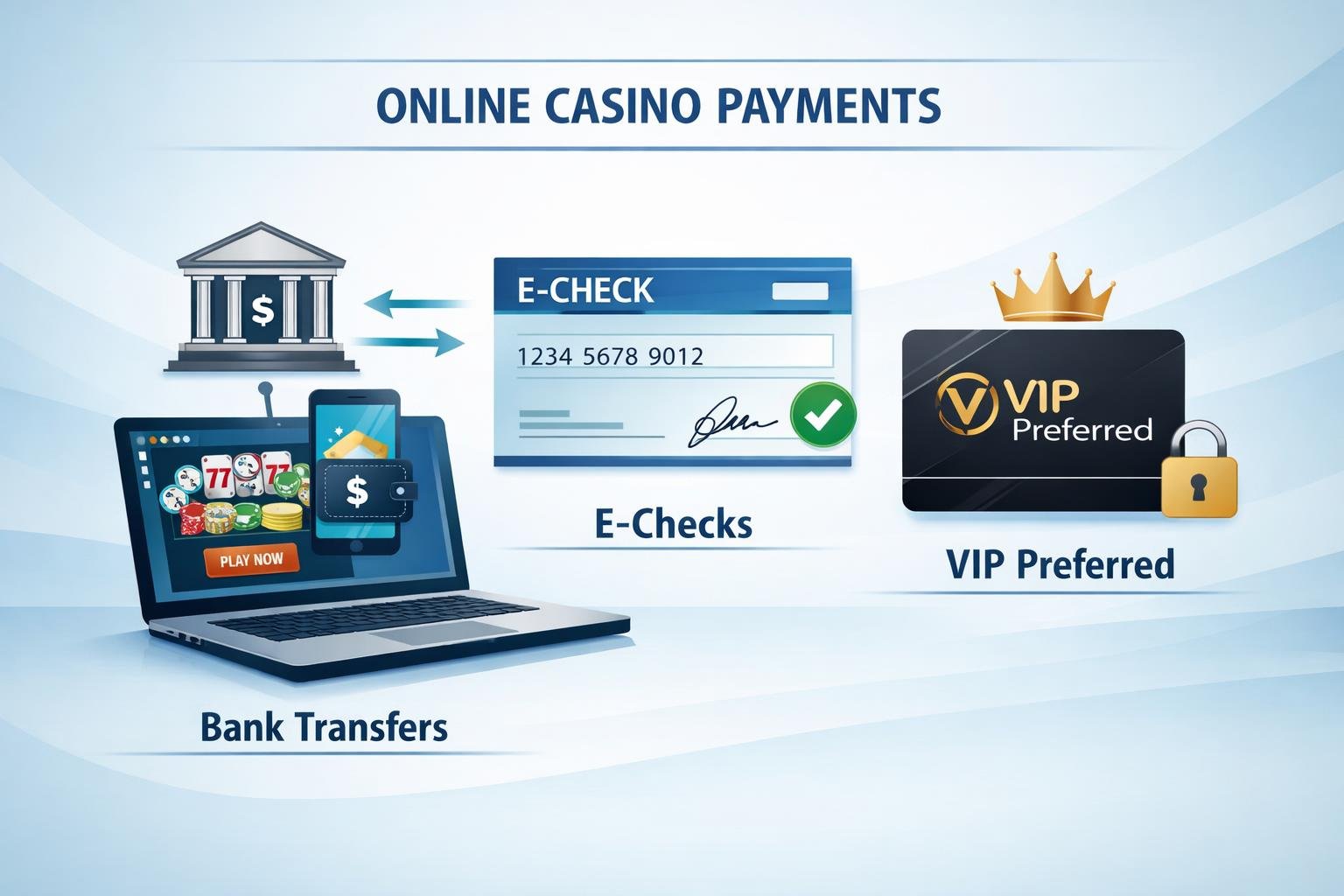
Bank-based payment methods move money straight from your checking account to the casino, usually over secure networks. These include classic wire transfers, e-checks (handled by ACH), VIP Preferred, and instant bank transfer platforms that connect your account in real time.
Traditional Bank Transfer Methods
Traditional bank transfers let you send funds directly from your checking or savings account to the casino. These use long-established banking systems—think of it as the old-school way to move money.
The most common approach is the wire transfer. It sends your money right from your bank to the casino’s account, and you can use it for deposits and withdrawals at most regulated online casinos.
From my experience, these transfers are reliable, but they’re not quick. Processing usually takes two to five business days.
Banks might charge anywhere from $15 to $50 per wire, depending on your institution.
Key features of traditional bank transfers:
- Direct movement between banks
- Higher withdrawal limits than cards
- Processing time: 2-5 business days
- Potential fees from your bank
- Accepted at most regulated casinos
Wire Transfer and E-Check Essentials
Wire transfers and e-checks both draw from your bank account, but they work differently under the hood. A wire transfer is a direct, almost old-fashioned bank-to-bank payment. An e-check is a digital spin on the classic paper check.
E-checks use the ACH (Automated Clearing House) network—the same backbone banks use for payroll and bill pay. When you use an e-check at a casino, you authorize them to pull funds electronically from your checking account.
Speed and cost set these two apart. Wire transfers move money faster but cost more, while e-checks are slower and usually cheaper or free.
Most regulated casinos accept e-checks with low minimums—often starting at $10. Withdrawal limits can reach $100,000 or more, which is pretty wild compared to cards.
The casino credits your balance instantly when you deposit, but your bank may take one to three business days to actually move the money.
VIP Preferred Overview
VIP Preferred is a payment processor built for casino transactions. It runs on the same ACH network as e-checks, but with a few extra perks for regular casino players.
You’ll need to verify your bank account once. After that, VIP Preferred remembers your details for faster deposits and withdrawals down the line.
Major casinos like BetMGM and DraftKings use VIP Preferred for ACH deposits. If you plan to play regularly, I suggest looking into it.
This service usually comes with higher limits than regular e-checks. You can often cash e-checks up to $500 instantly, which beats waiting days for traditional methods.
Benefits of VIP Preferred:
- One-time account verification
- Higher transaction limits
- Faster than regular ACH
- Accepted at 350+ casinos
- Direct access to your checking account funds
Instant Bank Transfers
Instant bank transfer services like Trustly hook your bank account to the casino in real time. Unlike wires or e-checks, these platforms credit your casino balance immediately.
Here’s how it works: you log in to your bank through a secure third-party platform, approve the payment, and your casino account updates right away. The actual bank transfer still uses ACH, but you don’t have to wait for the funds to clear before you can play.
I’ve tried instant bank transfers at several casinos. They’re faster than e-checks and just as secure, at least from what I’ve seen.
Platforms like Plaid (used by DraftKings) connect to over 12,000 banks, so odds are your bank is covered. The big win here is speed—you get instant access to your funds, but the casino still gets a verified payment.
Cryptocurrency and Blockchain-Based Payments
Cryptocurrency has exploded as a payment method at online casinos. Bitcoin, Ethereum, and stablecoins now power fast, low-fee transactions that put old banking to shame.
By 2024, over 30% of global casino transactions ran through digital currencies. If trends hold, that number’s only going up in 2026.
Bitcoin and BTC Casinos
Bitcoin is still king when it comes to crypto casinos. Deposits usually process within minutes, and I’ve seen withdrawals take just a few hours—way faster than most traditional options.
These casinos run on blockchain tech, which means every transaction leaves a permanent, public record. I can double-check my deposits and withdrawals myself, which is honestly pretty reassuring.
Many platforms now use the Lightning Network, which speeds up Bitcoin transfers and slashes fees even further.
The main cryptocurrencies you’ll see accepted include:
- Bitcoin (BTC) – Most common, widely supported
- Bitcoin Cash (BCH) – Faster confirmations
- Litecoin (LTC) – Lower fees
Ethereum and Other Altcoins
Ethereum (ETH) is the clear runner-up for online gambling. ETH transactions usually move faster than Bitcoin, but gas fees can spike if the network gets busy.
Plenty of users pick ETH for its speed and efficiency, especially on modern gaming platforms. Some sites even toss in special crypto bonuses for ETH users.
Beyond Bitcoin and Ethereum, crypto casinos often support a bunch of altcoins:
| Cryptocurrency | Network | Main Advantage |
|---|---|---|
| USDT | ERC-20/TRC-20 | Stable value, no volatility |
| Litecoin | LTC | Low fees, fast confirmation |
| Dogecoin | DOGE | Very low transaction costs |
Stablecoins like USDT are a lifesaver for avoiding wild price swings. Since they’re pegged to the US dollar, your balance won’t suddenly drop (or spike) while you’re playing.
Crypto Wallet Setup and Security
Before you can use crypto at a casino, you need a cryptocurrency wallet. Hardware wallets like Ledger or Trezor are the gold standard for storing big balances safely.
For everyday casino play, software wallets on your phone or computer do the job. Setting up a wallet means generating a unique address and locking down your private keys.
Whatever you do, never share your private keys—not even with the casino. Most crypto casinos don’t hold your funds until you actually deposit, which cuts down on hacking risks.
Important security practices:
- Enable two-factor authentication on wallet apps
- Write down your recovery phrase and keep it offline
- Only send crypto to verified casino addresses
- Start with a small test transaction before moving big money
Pros and Cons of Using Cryptocurrency
Crypto payments have some real upsides for gamblers: near-instant deposits, withdrawals in minutes or hours (not days), and lower fees than cards or banks. Privacy is better too, since you never hand over banking info.
There are trade-offs. Crypto prices can swing wildly, so your balance might change before you cash out. Blockchain transactions are final—send money to the wrong address and it’s gone for good.
Some countries still haven’t figured out how to regulate crypto gambling, which leaves things a bit murky. You also can’t reverse or dispute a crypto transaction like you could with a credit card chargeback.
Cash Deposit and Withdrawal Alternatives
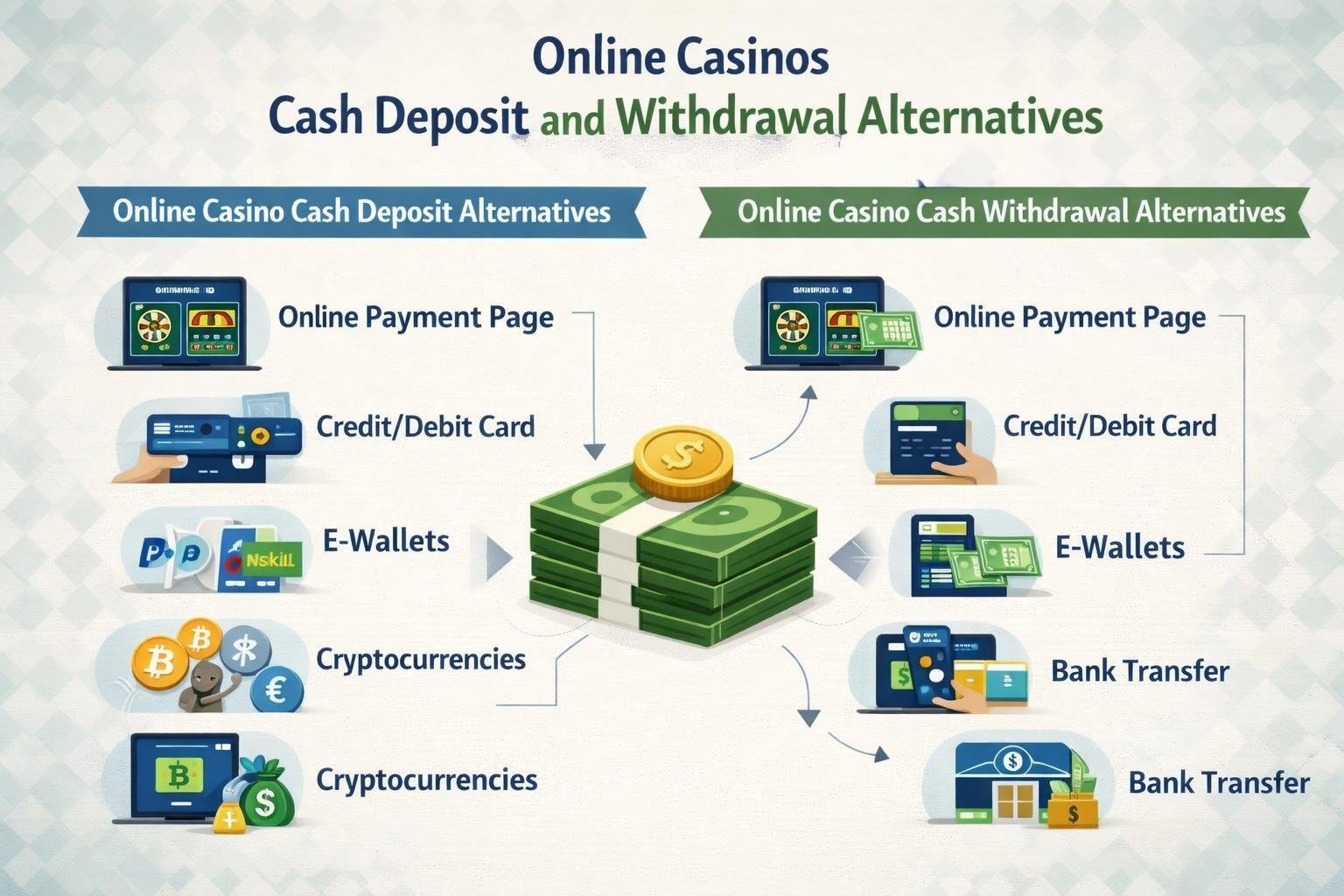
Some players want to keep their banking details private or just don’t have access to standard payment methods. Cash-based alternatives let you fund your casino account without using a bank account or credit card, and there are several ways to connect physical cash to your online casino balance these days.
Cash at Casino Cage
Here’s something you might not expect: you can walk into a physical casino and hand over cash at the cage, which then credits your online casino account. This only works at casinos that run both land-based and online operations in states like New Jersey, Pennsylvania, and Michigan.
The steps are refreshingly simple. Bring your cash to the casino cage, give your online account info, and the cashier deposits the funds for you.
The money usually appears in your account within minutes, so you can start playing almost immediately. For withdrawals, you can request a payout to the casino cage through your online account.
After that, visit the physical location to pick up your cash. Withdrawals take longer than deposits since the casino needs to approve the request, usually within a day or two.
PayNearMe and VanillaDirect
PayNearMe lets you deposit cash at big-name retail stores like 7-Eleven, CVS, and Family Dollar. You generate a barcode through your casino account, take it to a participating store, and hand the cashier your cash along with the barcode.
The deposit hits your casino account within minutes. VanillaDirect works about the same way but uses a different network of stores, like Walmart or Walgreens.
Both services tack on small fees, typically $3 to $5 per deposit. Deposit limits range from $20 to $500, but neither service handles withdrawals, so you’ll need another method to cash out.
Retail Vouchers and Paysafecard
Paysafecard is a prepaid voucher you can buy with cash at thousands of retail locations. Each voucher has a 16-digit PIN code you enter at paysafecard casinos for instant deposits—no bank account or personal info required.
You can buy vouchers in amounts from $10 to $100 at gas stations, convenience stores, and supermarkets. If you want to deposit more, you can combine multiple vouchers. The system is huge in Europe and Canada, but honestly, it’s harder to find in the US.
Paysafecard only works for deposits. You can’t withdraw casino winnings back to a voucher, so you’ll need to pick something else for cashouts, like a bank transfer or e-wallet.
Physical Casino Partnerships
Some online casinos team up with retail locations to offer cash deposit services through kiosks or customer service desks. These partnerships give you a physical spot to deposit—and sometimes withdraw—cash for your online account.
The setup depends on the location and casino. Some use branded kiosks where you scan a QR code and feed in cash, while others have retail staff process the transaction at the register. Fees and limits vary depending on the specific partnership.
Picking the Best Casino Payment Method
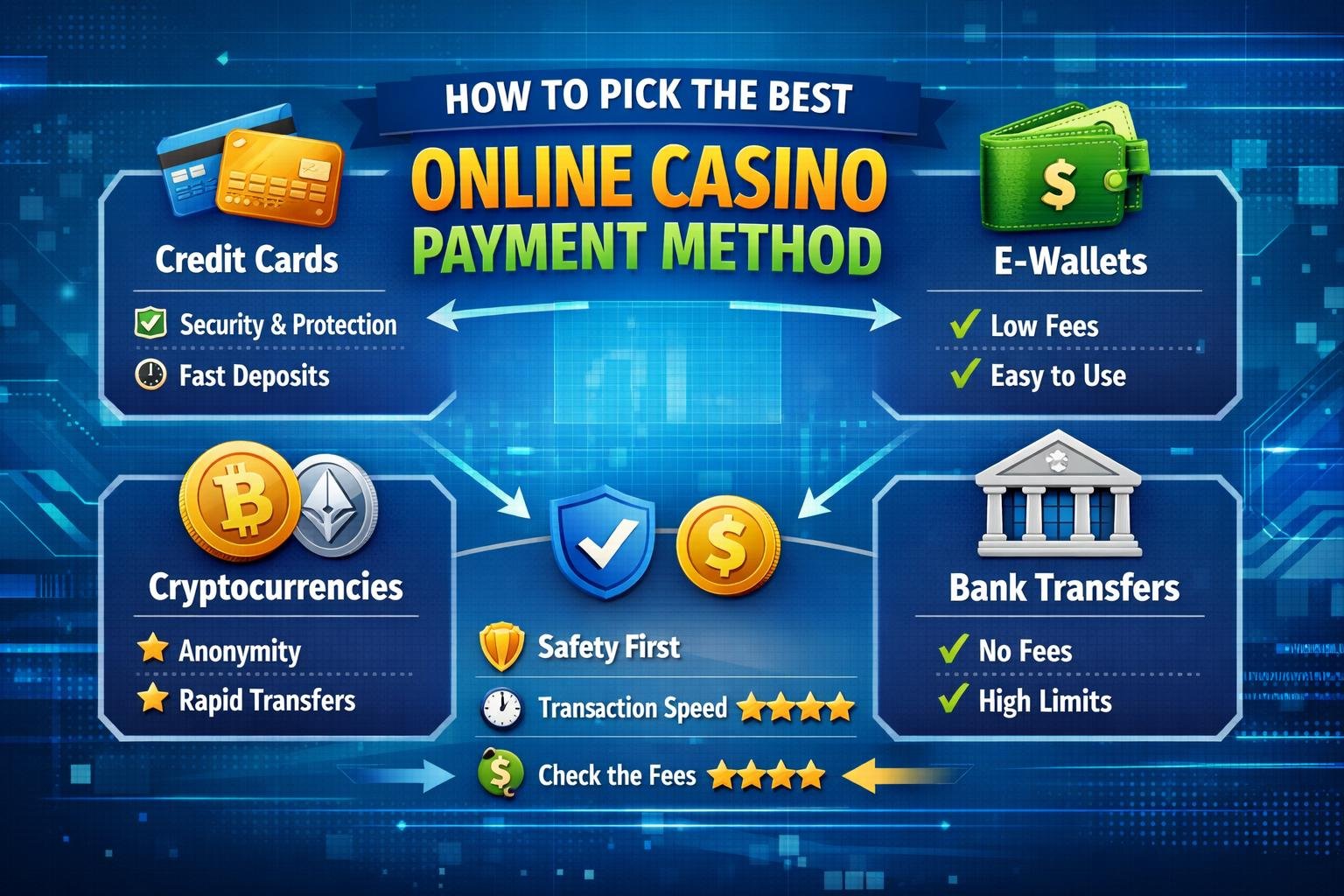
Finding the right payment method really comes down to what you care about most: speed, fees, security, or even just where you live. Let’s break down the main factors that actually make a difference when you’re comparing your options.
Speed of Deposits and Fastest Withdrawals
Technically speaking, payment speed jumps all over the place depending on what you use. E-wallets like PayPal, Skrill, and Neteller usually process deposits instantly and handle the fastest withdrawals.
Choosing a site known for quick payouts means you won’t be left waiting for your money. Most e-wallet withdrawals clear within 24 hours at instant withdrawal casinos.
Credit and debit cards also give you immediate deposits, but withdrawals can drag on for 3-5 business days. Bank transfers are even slower—sometimes 2-7 business days depending on your bank and the casino.
Cryptocurrency transactions usually process within hours. It’s a nice middle ground if you want speed but don’t want to mess with e-wallets.
If fast payouts are a big deal for you, check each casino’s processing times before signing up. Some regulated online casinos approve withdrawals within hours, while others might hold them for review for a day or two. The method you pick can really affect how long you wait after the casino hits “approve.”
Security, Privacy, and Responsible Gambling
Security is always my first concern when moving money online. I always double-check that a casino uses SSL encryption and secure payment gateways before I deposit a cent.
Credit cards offer solid fraud protection through your bank, but you do have to hand over your card details to the casino. E-wallets add a layer of security by keeping your banking info separate from the casino—you’re only sharing e-wallet credentials, not your actual bank or card numbers.
Prepaid methods like Paysafecard take privacy further since you use a prepaid voucher instead of a personal account. For responsible gambling, prepaid cards and e-wallets help you stick to a budget by letting you set hard deposit limits.
I find these helpful because you can only spend what you’ve loaded up front. Credit cards, on the other hand, can be risky—they make it easy to gamble with borrowed money, and nobody needs that kind of headache.
Fees, Limits, and Bonus Eligibility
Transaction fees can sneak up on you and shrink your bankroll. Most credit and debit cards don’t charge deposit fees at US online casinos, though your bank might hit you with foreign transaction fees if the casino’s based overseas.
E-wallets sometimes charge 1-3% for deposits or withdrawals, depending on the provider and casino. Bank transfers are pricier, often costing $10-$30 per transaction. Cryptocurrency can be cost-effective for big deposits, but network fees (especially on busy blockchains) can jump around a lot.
Common Fee Structures:
- Credit/Debit Cards: Usually free, possible bank fees
- E-wallets: 0-3% per transaction
- Bank Transfers: $10-$30 flat fee
- Cryptocurrency: Variable network fees
Deposit and withdrawal limits are another thing to watch. Bank and wire transfers support high limits for high-rollers, while e-wallets might cap you at $5,000-$10,000 per transaction. Some casinos also block certain payment methods—like Skrill or Neteller—from being used for bonuses, so always check the fine print before you deposit if you’re chasing promos.
Geographical and Regulatory Considerations
Your location shapes which payment methods you can actually use. US online casinos have a different menu of options than international sites thanks to banking regulations.
Some states even restrict credit card gambling deposits, so you might need to use e-wallets or bank transfers instead. Regulated casinos in different regions partner with specific payment providers—European casinos love Trustly and bank transfers, while Asian markets favor UnionPay and similar options.
Casinos licensed by strict authorities like the UKGC or MGA usually offer more reliable payment choices with stronger consumer protections. Currency conversion is another practical thing to consider if you play at international casinos.
Using a payment method that supports your local currency saves you from conversion fees. Some e-wallets handle multiple currencies smoothly, while others charge 2-4% to convert your money.

Popular Payment Methods
Instant Bank Payment Casino Payment Method
Instant bank payment connects your bank account directly to an online casino—no cards, no e-wallets, no hassle. Deposits clear in seconds, your banking details stay private, and most casinos count these deposits toward bonuses. It's fast, secure, and widely supported across regulated markets. Here's everything you need to know before using it.

iDebit Casino Payment Method
iDebit is a Canadian bank-linked e-wallet that keeps your banking details private while delivering fast, two-way casino payments. Launched in 2013 by Acceptance Technologies Inc., it supports both deposits and withdrawals at licensed casinos. If you want bank-level security without handing over your credentials, iDebit is worth a close look.

Diners Club Casino Payment Method
Diners Club has been a trusted payment option since 1950, and it still holds up for online casino deposits today. Instant funding, Mastercard-level security, and no revolving debt make it worth considering — if you can find a casino that accepts it. Here's everything you need to know.
CashtoCode Casino Payment Method
CashtoCode lets you fund your online casino account with cash — no bank details, no card info required. Just generate a barcode at the casino cashier, pay at a local store, and your balance updates in seconds. It's a private, fee-free deposit method operated by Funanga AG. Here's everything you need to know.

Payz Casino Payment Method
Payz — formerly ecoPayz — is a trusted, FCA-regulated digital wallet that's been serving casino players for over twenty years. It offers instant deposits, two-way transactions, and multi-currency support across 50+ currencies. Before you use it, though, check bonus terms — e-wallet deposits are often excluded from promotions.
Paytm Casino Payment Method
Paytm is India's go-to mobile payments app—and it's a popular choice at online casinos too. But there's a key distinction to understand: most casinos use Paytm as a UPI method, not a wallet. Discover how deposits, withdrawals, fees, and security really work before you play.

Unlock Exclusive Casino Perks
Join the club to grab unbeatable bonuses, secret promotions, and expert tips to boost your winnings. It's your lucky day—every day!