












Let’s talk about Giropay—a once-popular online banking system that German banks put together for folks in Germany and Austria. It let casino players move money straight from their bank accounts into their casino balance, all without needing a credit card.
Back in the day, finding a reliable Giropay casino was just part of the gaming routine. People loved that you could skip the credit card and still deposit safely and quickly.
Before Giropay closed up shop, players spent time hunting for the best casinos that supported it. Reputable sites with Giropay felt like a safe bet for anyone wanting a direct, bank-to-casino transfer.
Honestly, a lot of users trusted this system because of its speed and reliability—it just worked. Giropay is scheduled to be discontinued on June 30, 2024, and won’t be available for online casinos anymore.
If you were eyeing this payment option, it’s time to check out alternatives like PayPal, Skrill, Trustly, or even old-school bank transfers. Change can feel annoying, but there are solid options out there.
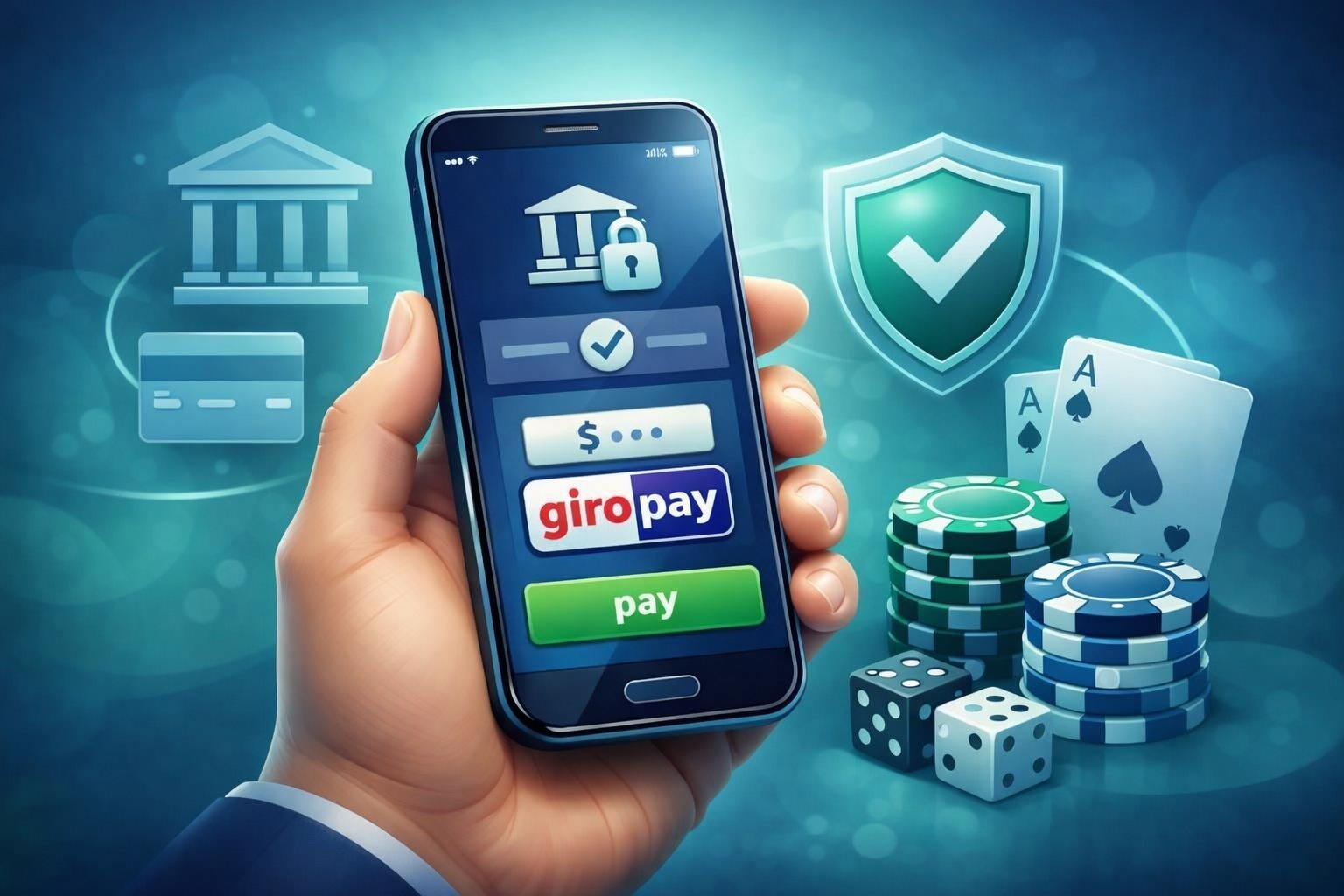
Before its closure, Giropay kept things simple and secure. You didn’t have to set up a new account—just use your regular online banking login and you could deposit in a few clicks.
They used a two-step security process. First, you entered your PIN, then a unique TAN code was sent to your phone for each transaction.
This extra step really helped keep your money safe from fraud. Don’t worry, we’ll explain exactly how this all worked, why casinos liked it, and what you can use now that Giropay is gone.
Understanding what made Giropay so useful can actually help you pick a solid replacement for your casino payments. Let’s break it down in plain terms.
Key Takeaways
-
Giropay is shutting down on June 30, 2024, so you can’t use it at online casinos anymore.
-
It used to let you make instant deposits with your regular online banking login, no extra account needed.
-
You can still find secure and convenient casino payment options like PayPal, Skrill, Neteller, Trustly, or just your usual bank transfer.
What Is This Payment Method?
Giropay was basically a way to send money straight from your German or Austrian bank account to online stores—including casinos. If you wanted to use it, you’d just check if your local bank was supported by the casino you picked.
Most casinos that offered Giropay made it easy to switch from shopping to playing. Even though Giropay is about to disappear, it played a pretty big role in the casino scene for nearly 20 years.
Platforms liked it because it made payments fast and easy for players. Back when it was at its peak, Giropay was the gold standard for safe gambling in Germany.
Payment Method Overview
Giropay worked as a direct transfer—you’d connect your bank account to the casino without creating a separate account or signing up for something new. I liked that you only needed your regular online banking login to move money.
This approach made life easier by linking straight to your bank. For security, you’d put in your bank account number and PIN, then get a TAN code on your phone to finish the payment.
Because of this, your financial info stayed private—casinos never saw your actual bank details. The two-step process made Giropay one of the safer ways to deposit money for online gaming.
Key Features:
-
No extra account needed
-
Direct bank-to-casino transfers
-
Instant deposits
-
PIN and TAN for security
-
Deposits only—you couldn’t withdraw with Giropay
At its busiest, Giropay supported over 1,500 banks in Germany and Austria. Most casinos set a minimum deposit of about €10, with the max usually around €5,000 per go.
History and Development
Giropay got its start in 2005, thanks to a few big German banks working together. Deutsche Postbank, the German Savings Banks Group, and the German Cooperative Financial Services Network teamed up to launch it.
Groups like Fiducia & Gad helped with the technical side so it would work with lots of different banks. The timing made sense—back then, people worried a lot about online payment security, and credit card fraud was a real headache.
Giropay gave folks a way to pay online without revealing their actual bank details to merchants. In 2014, they joined forces with Austria’s eps-Überweisung system, which opened the door to about 45 million users in both countries.
Later, they added a PSD2 interface (X2A), so even more banks could join the party. After almost 20 years, though, Giropay is shutting down as of June 30, 2024.
Now, you’ll find most players switching to PayPal, Trustly, Skrill, or just using a regular bank transfer. It’s a little bittersweet, but the alternatives work well.
Popularity Among Online Casino Players
People in Germany and Austria really took to Giropay because it was simple and backed by banks they already used. Casinos that accepted Giropay felt familiar, especially if you banked with Sparkasse or Postbank.
These casinos usually had all the popular slots and games like Roulette and Blackjack. The top Giropay casinos made things seamless, and players trusted them because they were tied to established banks.
The instant deposits were a big draw. Instead of waiting days for a bank transfer, your money showed up in your casino account right away.
The main downside? You could only deposit with Giropay, not withdraw. If you wanted to cash out, you had to pick another method.
That’s because Giropay worked more like a bridge for payments, not a wallet you could store money in. Still, people liked that they didn’t have to register or remember another login—just use their regular bank info and go.
Why Do Casinos Use This Payment Method?
Casinos liked Giropay because deposits landed instantly, payment failures were rare, and it appealed to German-speaking players. For high-volume transactions, it was a solid alternative to credit cards or e-wallets.
It helped bridge the gap between old-school banking and the digital casino world. I always thought it was one of the most trusted payment methods for this reason.
Key Benefits for Casinos Table
|
Benefit |
Description |
|---|---|
|
Instant Deposits |
Players can fund accounts immediately, leading to faster gameplay and higher engagement |
|
No Chargebacks |
Direct bank transfers eliminate chargeback risks that affect credit card transactions |
|
Lower Payment Failures |
Direct connection to banks results in fewer declined transactions |
|
Market Access |
Attracts German and Austrian players who prefer local payment methods |
|
Reduced Fraud |
Bank-level authentication minimizes fraudulent deposits |
|
No Intermediary Costs |
Direct bank integration can reduce fees compared to some payment processors |
Giropay reached over 1,500 banks in Germany, which meant casinos could serve almost every player in their target market. With that kind of coverage, they didn’t have to juggle a bunch of different payment processors.
Seamless Integration with Gaming Platforms
Casinos plugged Giropay right into their cashier systems using payment gateways they already had. Players picked Giropay at checkout, got sent to their bank’s secure login, and after confirming, came right back to the casino with their payment done.
This process barely took any extra work for the casino. The payment processor took care of everything between the casino, Giropay, and your bank.
When a deposit finished, the casino got an instant notice and credited your account right away. I always thought this automation saved casino staff a lot of time—they didn’t have to manually check payments.
Security and Fraud Prevention
Giropay brought serious bank-level security to the table. They used AES 256-bit encryption and two-factor authentication with TAN codes.
Players authenticated through their own bank, not on the casino’s site. This meant casinos never had to store sensitive banking info, which made data breaches less of a worry.
The bank also handled ID and age checks through Giropay-ID, so casinos didn’t have to stress as much about compliance. Since payments went straight from your bank to the casino, there wasn’t really a way to reverse them like with credit cards.
Plus, you needed an active bank account to use Giropay, which filtered out a lot of potential fraud before it even started.
Benefits for Players

For German and Austrian players, Giropay made it easy to fund casino accounts with direct bank transfers. You got instant deposits, strong security, and could grab all the usual casino bonuses.
Ease of Use and Accessibility
I always found Giropay refreshingly simple. No need to register for something new—if your bank was on board, you were good to go at any Giropay casino.
The top casinos made verification quick, which helped if you wanted to claim a no deposit bonus as a new player. The deposit steps were straightforward: head to the cashier, pick Giropay, enter your amount, and you’d get redirected to your bank’s secure portal.
From there, just log in with your usual credentials or use a TAN code, and your funds landed in your casino account almost instantly. No juggling e-wallets or extra passwords—just your regular bank login.
With over 100 million Girocard debit cards in Germany, Giropay was available to a huge chunk of the market. That’s part of why it felt so accessible and familiar to so many players.
Speed of Deposits and Withdrawals Table
|
Transaction Type |
Processing Time |
Availability |
|---|---|---|
|
Deposits |
Instant |
Yes |
|
Withdrawals |
N/A |
No |
Depositing with Giropay at online casinos happens almost instantly. Once I confirm the payment through my bank, the money lands in my casino account within seconds.
This means I can jump right into the action or grab a welcome bonus without waiting around. It’s a breath of fresh air if you hate delays as much as I do.
But here’s the catch: Giropay only works one way. I can’t pull my winnings back to Giropay because it only pushes payments from my bank to the casino.
So, when it’s time to cash out, I have to pick another withdrawal method in the casino’s cashier. It’s a bit inconvenient, but not the end of the world.
Enhanced Security Features
Giropay acts like a buffer between my bank and the casino, so I never hand over my sensitive info to the casino itself. My account numbers and personal data stay safely with my bank.
Every time I pay, I have to log in with my banking username and password or enter a one-time code (TAN) sent to my phone. This two-step check means only I can send money, even if someone sneaks into my casino account.
German financial and data protection laws keep Giropay on a tight leash, which makes me feel a bit more secure. Most Giropay casinos don’t leave this payment method out of their promos, either.
I’ve grabbed 200 free spins, welcome bonuses, cashback, and other perks with Giropay deposits. Just keep an eye on the wagering requirements—those can trip you up if you’re not careful.
How Does This Payment Method Work?

Giropay connects your online banking straight to the casino’s cashier, using secure bank transfers. Deposits hit your casino balance instantly if your bank is in Germany or Austria.
But remember, Giropay only sends money to the casino, not the other way around. If you want to withdraw, you’ll need a different method.
Step-by-Step Guide to Deposits
Depositing with Giropay is pretty painless. I pick Giropay in the casino’s cashier, type in how much I want to deposit (in euros), and the site whisks me off to the Giropay page.
From there, I pick my bank from a list. The next screen is my bank’s regular login page—just like I’m doing any other online banking.
The payment info pops up, already filled in with the amount, casino name, and reference. I check it over and confirm the payment using my bank’s security step, like a text code or app notification.
Once I hit confirm, my bank tells the casino the money’s on its way. My casino account gets credited within minutes, and I’m bounced back to the lobby to start playing.
No need to create a Giropay account. As long as my bank is in the network and I’ve got online banking set up, I’m good to go.
Step-by-Step Guide to Withdrawals
Unfortunately, Giropay doesn’t let you withdraw from casinos. It only moves money from you to the casino, not the other way around.
If I want to cash out, I have to choose something else—usually a regular bank transfer or wire. The casino asks for my bank account details and sometimes proof of identity (yep, the usual KYC stuff).
Then the casino sends the money as a normal bank transfer. How long it takes depends on the withdrawal method and the casino’s own rules, but bank transfers usually take 1-5 business days.
Transaction Fees and Limits
Giropay itself doesn’t slap on extra fees for transactions. My bank might treat the deposit as a regular euro transfer, which is usually free with German accounts, but it’s worth double-checking with your bank just in case.
Each casino sets its own deposit limits for Giropay. I’ve seen minimums as low as €10, and maximums between €5,000 and €10,000 per transaction, depending on the casino’s risk tolerance.
Since you can’t withdraw with Giropay, any fees or limits for cashing out depend on the method you pick instead. Some casinos eat the banking fees, while others pass them on, especially if you withdraw a lot or use certain methods.
Compatibility and Global Reach
Giropay focused on Germany and Austria, and didn’t really branch out internationally before shutting down on June 30, 2024. It only worked with banks in those two countries, and only for euro payments.
Availability in Different Countries Table
During its run, Giropay was only available in Germany and Austria. You needed an account at a participating bank to use it.
|
Country |
Availability |
Notes |
|---|---|---|
|
Germany |
Full support |
Worked with over 1,500 banks including Sparkasse and Postbank |
|
Austria |
Limited support |
Available through select Austrian banks and EPS integration |
|
United Kingdom |
Not supported |
Not a standard option at UK-licensed casinos |
|
Other EU countries |
Not supported |
Service did not extend beyond Germany and Austria |
|
Rest of world |
Not supported |
Geographic restrictions limited use to German/Austrian accounts |
Giropay’s shutdown on June 30, 2024, forced a lot of mobile casinos to drop it. Paydirekt, which owned Giropay, announced the closure earlier that year, and casinos quickly pulled it from their payment options.
Supported Currencies Table
Giropay only handled euros. If your bank account used another currency, you’d get hit with conversion fees from your bank.
|
Currency |
Support Status |
Conversion Required |
|---|---|---|
|
EUR (Euro) |
Fully supported |
No |
|
GBP (British Pound) |
Not supported |
Yes, if bank allowed |
|
USD (US Dollar) |
Not supported |
Yes, if bank allowed |
|
Other currencies |
Not supported |
Yes, if bank allowed |
Banks handled any currency conversion outside of Giropay. If you played at a casino with a non-euro account, your bank would tack on extra charges for the transfer.
Mobile Compatibility and Usability
Giropay worked on phones and tablets through browser redirects to your bank’s online portal. Most German banks, like Sparkasse and Postbank, made sure their mobile banking worked smoothly on iOS and Android.
To pay, I’d switch between the casino’s mobile site and my bank’s app or browser login. No special Giropay app needed—just use your usual banking credentials and codes.
Whether Giropay worked well on mobile depended more on your bank’s tech than on Giropay itself. After Giropay’s closure, services like Trustly, iDEAL, and Sofort stepped up to fill the gap with similar mobile-friendly, secure bank transfers for casino deposits.
Comparison with Other Payment Methods
Giropay made life easy for deposits—no extra account to set up, just use your bank login. But it definitely had some downsides compared to eWallets and other payment methods.
Advantages Over Other Options
Simplicity was Giropay’s big selling point. No registration, no fuss—just my bank login and a code sent to my phone. It felt faster than jumping through the hoops of setting up a PayPal, Skrill, or Neteller account.
Security was solid, too. Two-factor authentication with PIN and TAN codes meant that even if someone got my login, they couldn’t move money without my phone. The encryption matched what I saw from top eWallets. If you’ve used iDEAL or Sofort, the process will feel very familiar.
For folks in Germany and Austria, Giropay had the edge in coverage—about 1,500 banks supported it. Instant deposits meant no waiting around for your casino balance to update, just like with the best eWallets.
Disadvantages Compared to Competitors
The biggest headache with Giropay? No withdrawals. With PayPal, Skrill, or Neteller, I can deposit and cash out using the same method, but Giropay only lets me deposit.
Fees were another pain point. Giropay charged a flat fee plus a percentage (which shrank for bigger deposits), but most eWallets take their cut from the casino, not the player. For smaller deposits, Giropay could end up costing more.
And if you ever left Germany or Austria, you were out of luck—Giropay didn’t work anywhere else. After June 30, 2024, the service shut down completely, so everyone had to switch to something else anyway.
Best Use Cases
Giropay was a lifesaver for players in Germany or Austria who wanted to make deposits fast, without fiddling with new accounts. If your online banking was already set up with a participating bank, you could top up your casino balance in just a few minutes—no hoops to jump through.
This method worked nicely for casual folks who liked playing slots or table games and didn't mind using bank transfers when it came time to cash out. I liked that it kept my banking info private, plus I didn't have to juggle yet another account or password.
Now that Giropay's gone, don't worry—there are still solid alternatives. Trustly is a great pick for bank transfers, and if you want both deposits and withdrawals, eWallets like Skrill, Neteller, or MuchBetter do the trick. Some folks swear by Revolut or even trusty old Maestro cards. If the casino supports it, PayPal is also worth a look, though not as many sites offer it these days.
Licensing and Regulatory Compliance
Giropay followed strict German banking rules and had to meet European payment standards. This shaped how online casinos could use it, and it meant you got some extra layers of protection for your money and your personal info.
Any casino that took Giropay had to jump through a few hoops too. They needed the right licenses and had to set up strong security to keep your funds and data safe.
Licensing Requirements
To offer Giropay, online casinos had to hold a proper gambling license from recognized authorities. Giropay itself ran under paydirekt GmbH, which had all the right paperwork from the German banking world.
Casinos aiming at German players had to make sure their licenses matched local gambling laws. This kept everything above board and in line with European rules, including the PSD2 regulations for electronic payments.
From what I've seen, Giropay only showed up at casinos serving Germany and Austria. Because of this, operators had to get the right local licenses to legally offer Giropay as a payment option.
Anti-Money Laundering (AML) and Know Your Customer (KYC) Policies
Giropay's direct bank-to-casino transfers made it pretty airtight for anti-money laundering. You couldn't use Giropay unless you already had an account with a participating German bank, so there was always a paper trail.
The Transaction Authorization Number (TAN) system was like a built-in two-factor authentication. You'd get a PIN by text or app before you could finish any payment. This step confirmed it was really you and stopped anyone else from sneaking in.
Unlike e-wallets or prepaid cards, Giropay didn't offer any anonymity. Every payment linked straight back to your verified bank account, so the KYC boxes got ticked automatically. The banks did the heavy lifting on customer checks before you could even use Giropay.
Casinos still ran their own KYC checks, but Giropay's setup gave them an extra layer of identity verification. That helped them meet the rules without too much fuss.
Certifications and Third-Party Audits
Giropay had to play by some of the strictest financial and privacy rules in Europe. It followed PSD2 standards, which kept payments secure and customer info private across the EU.
All your sensitive details stayed between you and your bank. The casino never saw your full banking info, so your privacy got an extra shield, and casinos had less compliance hassle.
Independent audits checked that banks and payment processors met security standards. The German financial authorities regularly reviewed the banks supporting Giropay to keep everyone honest.
Common Issues and How to Resolve Them
For the most part, Giropay ran smoothly, but every now and then, something went sideways—a payment didn't go through, or it took longer than you'd expect. Don't panic; most fixes are simple once you know what to look for.
Transaction Delays
Usually, Giropay payments landed instantly. Still, I've seen a few hiccups when a bank's system had technical issues or was down for maintenance.
If your deposit doesn't show up in your casino account right away, check your bank account first—did the money actually leave? Sometimes the holdup is on the casino's end, not with Giropay itself.
Double-check that you finished every step of the payment process. If you closed your browser too soon, the payment might not have gone through. Look for a confirmation email from Giropay just to be sure.
Deposit or Withdrawal Errors
One snag I see a lot: Giropay doesn't appear as a payment option at checkout. This usually means your bank isn't in the Giropay network, or the casino doesn't offer Giropay to players in your region. You'll need a bank that's a registered partner to use it.
Failed transactions can happen if you don't have enough funds, hit your daily spending limit, or type in the wrong login info. I once had a payment bounced because I'd gone over my daily online transaction cap.
For cashing out, remember—most casinos didn't let you withdraw with Giropay. It was a one-way street, just for deposits. If you wanted to get your winnings, you'd need to pick another method, like a regular bank transfer.
Contacting Support
If I couldn't sort out a Giropay issue myself, I'd reach out to customer support—either at the casino or my bank, depending on where things got stuck. Casino support could check if they'd received the money on their end.
When I contacted support, I'd include my transaction ID, the amount, date and time, and a quick rundown of what happened. This info helped them track down my payment faster. Most casinos have live chat, which is hands-down the quickest way to get help when something's urgent.
Pros and Cons
Giropay had a lot going for it: instant transfers, strong security, but also a few downsides like transaction fees and limited availability if you weren't in Germany or Austria.
Four Advantages Table
|
Advantage |
Description |
|---|---|
|
Instant Transfers |
Once I made a deposit, the funds showed up in my casino account right away. No waiting around for hours or days—just instant access so I could start playing. |
|
High Security |
I never had to give my banking details directly to the casino. The system used PINs and TAN codes, so my personal info stayed protected throughout the whole process. |
|
No Registration Required |
I just used my regular online banking—no need to sign up for another payment service. That saved me time and meant I had fewer passwords to remember. |
|
Mobile Accessibility |
I could make deposits straight from my phone, using my bank's app or mobile site. No extra apps needed, and I could top up my account wherever I was. |
Four Disadvantages Table
|
Disadvantage |
Description |
|---|---|
|
Transaction Fees |
I had to pay a fee for every Giropay transaction. If I made a lot of deposits, those costs started to add up over time. |
|
Geographic Restrictions |
Only players with accounts at one of the 1,500 participating German or Austrian banks could use Giropay. If you lived elsewhere, you were out of luck. |
|
Non-Reversible Payments |
Once I confirmed a payment with my TAN code, I couldn't cancel it. The system protected payments up to €5,000, but there was no way to reverse a completed transaction. |
|
Bank Dependency |
I needed active online banking with a participating bank. If my bank had technical issues or didn't support Giropay, I'd have to pick something else. |
Conclusion and Final Thoughts
Here's the big news: Giropay stopped working on June 30, 2024. You can't use it for online casino payments anymore, which is a bummer if you relied on it.
If you used Giropay a lot, you'll need to pick a new payment method. I suggest looking into:
-
Bank transfers – Directly from your bank account
-
E-wallets – Like PayPal or Skrill
-
Credit and debit cards – The classics
-
Other local options – Especially in Germany and Austria
Before it closed, Giropay was a go-to for German and Austrian players at top casinos. Those sites earned their reputation with strong customer support, security, and often some nice welcome bonuses and cashback. The service stood out for its two-factor authentication and bank-level encryption, plus the direct link to your bank account—no extra cards or wallets to worry about.
The end of Giropay is just another sign of how fast online payments are changing. New services pop up all the time, each promising better security or faster transactions.
It's a good idea to check what payment options your favorite casino offers now. Look for ones that give you the same peace of mind and convenience. Most casinos have several choices, so you shouldn't have trouble finding a replacement. Some even throw in a no-deposit bonus for new users—always a nice perk.
Whatever you decide, make sure your new payment method uses proper encryption and works with your bank. Double-check that it supports your currency, too—you don't want any surprises at checkout.