











The EU SEPA Banking Casino Payment Method has become one of the most trusted ways to move money at SEPA casino sites across Europe.
This framework, part of the Single Euro Payments Area, makes cross-border payments and euro deposits smooth for millions of players.
Finding the best SEPA casinos gives you a secure gaming experience. SEPA, or the Single Euro Payments Area, lets you deposit and withdraw funds straight from your bank account.
You can do this in euros across 36 European countries, and you won't need to mess with third-party wallets.
I've watched this payment method get more popular, mostly because it comes with bank-level security. Players like the low fees and the fact that you can deposit or withdraw at casinos offering slots, roulette, and live dealer games.
Using a SEPA account feels pretty standard for folks living in the zone, so it's super accessible. That direct link between your bank and the casino keeps your money inside a safe financial system.

The system uses regular bank transfers with your IBAN and BIC codes. Most SEPA credit transfer deposits show up within one business day.
Withdrawals usually take between one and three days, depending on your bank and the casino. Big-name gaming providers like Microgaming and Relax Gaming are available at SEPA casinos, so you get access to popular games while using a payment method that's backed by tough EU banking rules.
SEPA stands out because it cuts out the middleman between you and the casino. No extra accounts, and if you already use euros, you can skip conversion fees.
In this guide, I’ll walk you through how SEPA works at online casinos, why it’s safe, and what you should know before making your first transfer.
Key Takeaways
-
SEPA lets you make direct euro bank transfers for deposits and withdrawals at online casinos in 36 European countries.
-
Transactions follow EU banking rules, with low fees and processing times between one and three business days.
-
You can play slots, table games, live dealer games, and titles from top providers while using SEPA at licensed casinos.
What Is This Payment Method?
EU SEPA Banking is a payment system that lets online casino players transfer euros straight from their bank accounts across 36 European countries.
The system uses IBAN numbers to handle deposits and withdrawals through either credit transfers or direct debit transactions.
Payment Method Overview
SEPA stands for Single Euro Payments Area. It's a banking system that makes euro transactions work the same way across all participating European countries.
When I use SEPA at an online casino, I’m making a direct, secure bank transfer from my own bank account. All you really need is your IBAN (International Bank Account Number) and sometimes a SWIFT/BIC code.
Every SEPA transaction happens in euros. There’s no need for a separate registration or extra apps—just your usual bank account.
Key SEPA Payment Types:
-
SEPA Credit Transfer (SCT) – Standard bank transfers that usually take 1–3 business days.
-
SEPA Direct Debit (SDD) – Automatic payments pulled from your account.
-
SEPA Instant Credit Transfer (SCT Inst) – Fast payments that process in seconds, often called SEPA instant payments.
The EPC (European Payments Council) manages the technical standards and rules for all SEPA payment methods. These rules line up with the PSD2 directive to keep things secure and up-to-date.
Payment service providers across Europe have to stick to these standards.
History and Development
SEPA started in 2008 to create a single euro payment zone for Europe. Before SEPA, sending money between European countries was a headache—different systems, higher fees, and slow transfers.
Now, SEPA covers 36 countries and serves over 500 million people. It’s made cross-border payments easier for everyone, including online casinos that want to reach players from all over.
The European Payments Council, which is a not-for-profit group, developed SEPA. Banks and payment service providers teamed up to build the technical framework and payment schemes.
The big idea? Make cross-border euro payments as easy as sending money within your own country. SEPA Instant Credit Transfer joined the mix later on, giving users a much faster option.
Popularity Among Online Casino Players
SEPA bank transfers are especially popular at German online casinos. Players there often want payment methods that are regulated and backed by banks.
Using SEPA for gambling lets players move money without handing over sensitive credit card info to the casino. In regulated EU markets, lots of players pick SEPA because it connects straight to their main bank account and skips third-party services.
This payment method comes with low fees and strong protections under EU financial rules. I like that SEPA follows strict European banking laws, so you know your money is in good hands.
SEPA works for both deposits and withdrawals at most European-facing casinos. Standard transfers usually take a business day, but some casinos offer instant SEPA options.
Most online casinos serving European markets include SEPA among their payment choices.
Why Do Casinos Use This Payment Method?
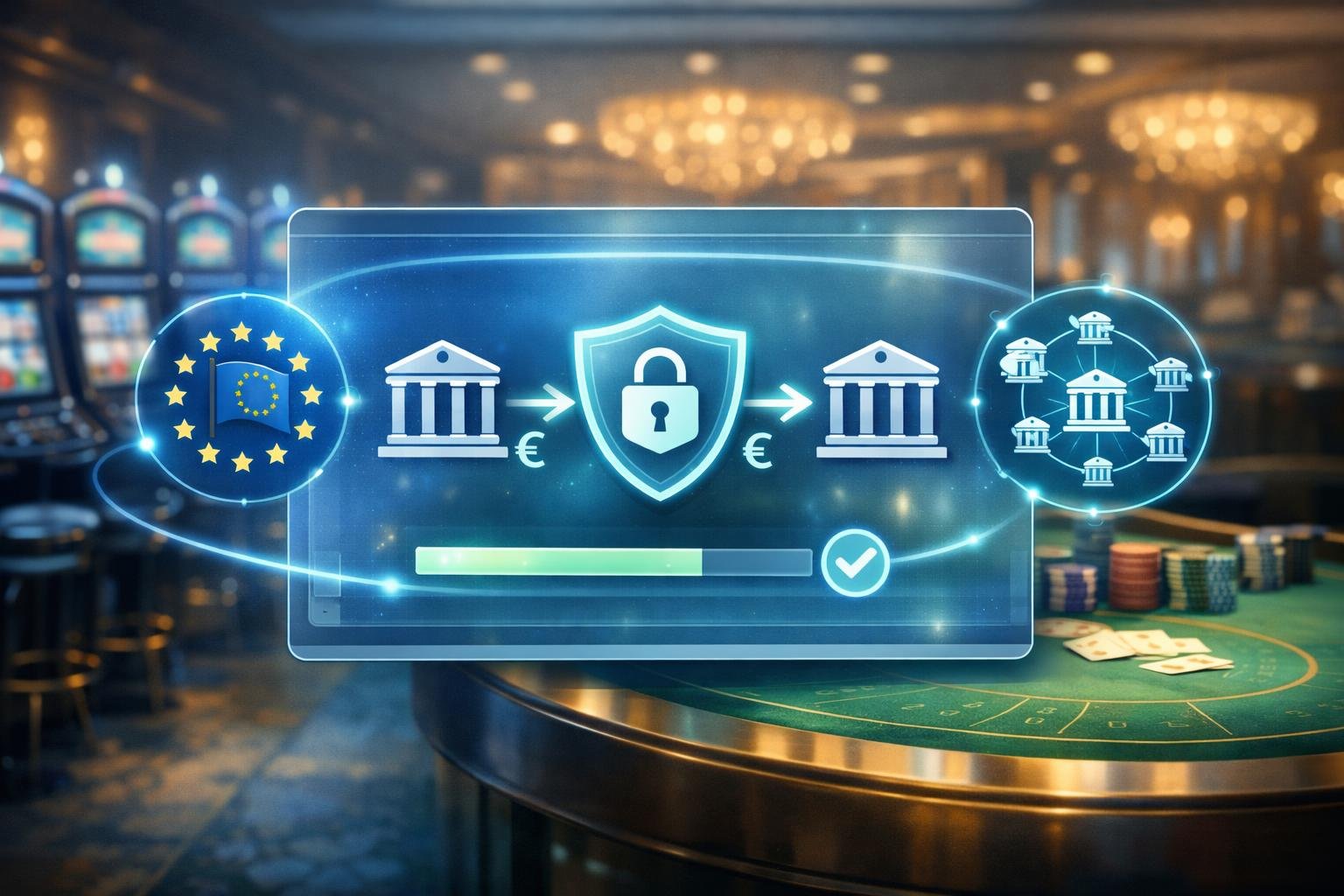
Casinos all over Europe use SEPA because it lets them offer direct bank-to-bank transfers for cashless euro payments. This kind of transfer keeps transaction costs down and meets strict EU rules for secure payments.
SEPA gives casinos a level of oversight that’s hard to find with other payment methods. The system hooks right into the existing banking infrastructure, so it’s easier for operators to serve players across Europe.
Key Benefits for Casinos Table
|
Benefit |
Description |
|---|---|
|
Regulatory Compliance |
Automatically meets EU financial regulations, lowering legal risks |
|
Lower Transaction Costs |
Banks usually charge less than SWIFT or international wire transfers |
|
Wide Market Reach |
Lets casinos cover 36 European countries with one payment system |
|
Reduced Chargebacks |
Direct bank transfers mean fewer disputes than card payments |
|
No Third-Party Fees |
Cuts out extra costs from payment service providers in most cases |
SEPA for gambling means casinos don’t have to juggle a bunch of different payment setups for each country. Instead, they can use one system that works everywhere in the SEPA zone.
The standardized format means casinos skip currency conversions and don’t have to figure out different banking protocols. That saves time and money, plain and simple.
Seamless Integration with Gaming Platforms
SEPA gambling payments plug straight into a casino’s existing banking setup—no need for complicated extra software. Most European banks already support SEPA transfers through their usual systems.
From what I’ve seen, casinos can add SEPA in just a few days since the requirements are pretty simple. The payment method uses International Bank Account Numbers (IBAN), which banks in Europe already know inside out.
Payment service providers find it easy to offer SEPA, too, since it follows the rules set by the EPC. This keeps payments secure for both the casino and the player, every single time.
Casinos working with payment processors usually get SEPA support as part of the package. The same system handles both deposits and withdrawals, so there’s no need to set up separate tools for money coming in and going out.
Security and Fraud Prevention
SEPA uses 256-bit SSL encryption for every transaction. That means your banking info stays protected from start to finish.
The European Central Bank keeps an eye on the system, adding another layer of regulatory safety. Bank-to-bank transfers create a clear paper trail, so casinos can check where funds come from—important for following anti-money laundering rules.
Direct bank connections mean fewer middlemen handling your sensitive data. Each payment goes straight from your bank to the casino’s bank account.
SEPA requires strong customer authentication under EU payment regulations. This makes unauthorized transactions a lot tougher compared to some other payment methods.
Casinos see fewer fraud cases because banks double-check account ownership before processing a transfer. It's much harder for someone to use stolen info with SEPA than with most card-based payments.
Benefits for Players

SEPA casinos give players practical perks thanks to the direct bank connection and EU regulations. The method combines easy access, steady transfer speeds, and bank-level protection.
You can find the best SEPA casinos offering nice promotions, like a solid welcome bonus and free spins for new members.
Ease of Use and Accessibility
I find SEPA refreshingly simple. You don’t need to sign up for a new account or register for anything beyond your regular bank setup.
If you have a bank account in the SEPA zone, you can deposit at SEPA online casinos using your IBAN and BIC codes. No extra apps or digital wallets required.
The system works in 36 countries, so whether you’re in Germany, France, or Norway, you’re covered. Most top SEPA casinos list it right in their cashier section, next to other payment options.
I can finish a deposit in just a few minutes by entering my bank details and confirming the amount. This convenience also applies to SEPA withdrawals—you don’t have to switch methods to cash out your winnings.
It keeps all your transactions neat and in one place, which I really appreciate.
Speed of Deposits and Withdrawals Table
SEPA transfers usually clear faster than old-school bank wires, but they're not as speedy as instant e-wallets. Most of the time, my deposits show up within one business day, though now and then a bank surprises me and credits it the same day.
SEPA withdrawals generally take about one to three business days after the casino gives the green light.
|
Transaction Type |
Processing Time |
Notes |
|---|---|---|
|
Deposits |
Same day to 1 business day |
Some banks offer instant SEPA |
|
Withdrawals |
1-3 business days |
Depends on casino verification |
Honestly, the wait feels longer than with e-wallets, but it's still much better than those old-fashioned wire transfers. If you care more about safety than raw speed, SEPA's a fair compromise. Keep in mind, regular bank schedules still apply, so if you send money on a Friday, you might not see it until after the weekend.
Enhanced Security Features
SEPA runs under strict EU banking rules, so every transfer I send gets the same protection as any other bank payment. The system uses encryption and extra checks to keep out unwanted eyes.
What I really like is that SEPA casinos only keep my bank info as long as they need it for the transaction. That level of trust is why I use SEPA for grabbing no deposit bonuses or other promos. Payments go straight from my bank to the casino's, so there aren't extra middlemen who could mess things up. This direct connection adds a kind of accountability you just don't get with some other methods.
Each SEPA payment leaves a clear record on my bank statement, so I can always double-check deposits and withdrawals. That makes it way easier to track my spending and make sure bonuses—like free spins or reload offers—really show up in my account.
How Does This Payment Method Work?
SEPA moves your casino payments by sending a regular euro bank transfer from your account to the casino's. Don't worry, we'll explain how this works in plain terms.
It's smart to know your deposit limits and how SEPA functions at your favorite casino. Most sites make it pretty clear in their banking section how to start a SEPA transfer.
You'll use your IBAN and BIC codes to route the money through the European banking network. Most folks make a SEPA credit transfer to move funds between their bank and the casino. Timing really depends on your bank's schedule and whether the casino supports instant SEPA transfers.
Step-by-Step Guide to Deposits
When I want to deposit, I open the casino cashier and pick the bank transfer option. The system either shows me the casino's IBAN and BIC or sends me to a payment gateway.
The gateway gives me a special reference number just for my payment. Then I hop into my online banking or mobile app to finish the transfer. My bank asks me to confirm the amount, the recipient, and that reference code—usually with a text code or app approval.
Most regular SEPA deposits land in the casino account after a business day. If my bank supports instant SEPA, it can be just seconds, but not every casino is set up for that. The casino credits my player account once the money arrives.
You'll need a bank account that either uses euros or can handle euro payments. If your account is in another currency, your bank will convert it and possibly charge a small fee. Annoying, but not a dealbreaker.
Step-by-Step Guide to Withdrawals
To cash out with SEPA, I go to the cashier and pick bank transfer for my withdrawal. The casino asks for my IBAN and sometimes my BIC code.
Before they send the money, I'll need to pass any ID checks the casino requires. That might mean uploading a photo of my ID or a utility bill. The casino reviews my request on their own schedule.
Once they approve it, the casino sends the SEPA transfer to my bank account. My bank processes the incoming payment, which usually shows up in one to three business days.
All in, the whole withdrawal process can take anywhere from two to five business days. Some casinos only let you withdraw to the same bank account you used for deposits, so keep that in mind.
Transaction Fees and Limits
Potential Fees:
-
My bank might charge for sending or receiving transfers
-
The casino could add a flat fee or a small percentage
-
Currency conversion costs pop up if your account isn't in euros
Many banks in SEPA countries offer free or cheap euro transfers for regular accounts. SEPA credit transfers are usually treated like domestic payments, so they're among the cheapest ways to fund your casino account. Most casinos set their own deposit limits to help you play responsibly. I always check my bank's fee list and the casino's terms before I move any money.
Minimum deposits usually start at €10 or €20, while the max depends on the casino. Withdrawal limits are set by both the casino and your account's verification level. SEPA is great for bigger transactions, especially if you're running into card or e-wallet caps.
Compatibility and Global Reach

SEPA works only in certain countries for euro payments, so whether you can use it depends on your bank's location. Currency and device compatibility stick to regular banking rules, and you can usually access everything through your bank's app on your phone.
Availability in Different Countries Table
SEPA covers 36 countries in Europe. That includes all 27 EU members and a handful of others from the European Free Trade Association who signed up for the system. Thanks to this, players from EFTA countries get the same payment standards as those in the EU.
|
Region |
Countries |
SEPA Status |
|---|---|---|
|
EU Members |
Austria, Belgium, Bulgaria, Croatia, Cyprus, Czech Republic, Denmark, Estonia, Finland, France, Germany, Greece, Hungary, Ireland, Italy, Latvia, Lithuania, Luxembourg, Malta, Netherlands, Poland, Portugal, Romania, Slovakia, Slovenia, Spain, Sweden |
Full participation |
|
EFTA Countries |
Iceland, Liechtenstein, Norway, Switzerland |
Full participation |
|
Other European |
United Kingdom, Monaco, San Marino, Vatican City, Andorra |
Full participation |
If you're in a SEPA country, you can use this method at casinos that support euro bank transfers. Banks in these places handle SEPA payments using the same technical standards, so it's pretty seamless.
Supported Currencies Table
SEPA only works with euro payments. Even banks outside the eurozone need the transfer to be in euros if they're part of SEPA.
|
Account Currency |
SEPA Compatibility |
Notes |
|---|---|---|
|
EUR |
Full support |
Direct euro bank transfers with no conversion |
|
GBP, SEK, DKK, PLN, CZK (non-euro SEPA countries) |
Requires conversion |
Bank converts to EUR; conversion fees may apply |
|
USD, CAD, AUD |
Not compatible |
SEPA does not process non-euro transactions |
If my account isn't in euros, my bank will convert the money during the transfer. The rate and any fees depend on what my bank charges. The casino always gets euros, no matter what currency my account started with.
Mobile Compatibility and Usability
SEPA transfers work just fine on your phone through banking apps or mobile browsers. When I deposit from my phone, the casino usually sends me to my bank's mobile site or opens the banking app directly.
Most European banks have decent mobile apps for both iPhone and Android. I can approve SEPA payments using fingerprint, face ID, or a PIN. The casino's payment page usually notices when I'm on mobile and makes the process smoother.
Comparison with Other Payment Methods
SEPA goes up against cards, e-wallets, prepaid vouchers, and digital apps at European casinos. Each one has its own quirks when it comes to speed, fees, privacy, and how easily you can move your money.
Advantages Over Other Options
SEPA transfers generally cost less than most other options when you're moving larger sums between your bank and a casino. Credit cards often tack on a 2-5% fee for deposits or withdrawals, but SEPA usually comes with little or no fee from the casino itself.
This method also gives you better regulatory protection than e-wallets like Skrill or PayPal. Since SEPA works with your main bank account, you get all the oversight and consumer protection that comes with European banking laws. If you like knowing your transactions are backed up by your bank's security, SEPA is a solid pick.
SEPA lets you use your regular bank funds—no need to keep a separate balance in a digital wallet. Unlike Paysafecard or other prepaid options, you don't have to buy vouchers or load up another account before you can deposit. You just send a transfer from your existing account. Some casinos even throw in a no deposit bonus so you can try out games risk-free.
Disadvantages Compared to Competitors
Speed is where SEPA really lags behind the faster options out there. Deposits can take a few hours or even a whole business day to clear.
Meanwhile, Skrill, PayPal, and credit card casinos drop your money in instantly. Withdrawals through SEPA? You’re usually waiting one to three business days, which feels like forever if you’re used to instant banking apps like Trustly that wrap things up in just a few hours.
SEPA asks you to share your IBAN details with the casino, so there’s definitely less privacy compared to methods like Paysafecard. If you’d rather keep your gambling activity tucked away from your main bank account, you might find e-wallets or prepaid vouchers more your style.
It’s also worth mentioning that SEPA doesn’t play nicely with non-euro transactions. Got accounts in pounds, crowns, or anything else? You’ll need to look for another payment method or pay some conversion fees.
Cashless euro payments work best when your main account is already in euros. Otherwise, the whole process just gets a bit clunky.
Best Use Cases
SEPA shines when you’re dealing with bigger deposits and withdrawals, and you’re not in a rush. If you’re moving €500 or more, skipping those percentage-based fees that credit cards tack on can save you a decent chunk compared to the instant options.
If you’re the type who values regulated banking over pure convenience, SEPA’s probably your friend. In places like Germany and the Netherlands, folks tend to lean toward bank-backed methods because the rules are stricter, so SEPA feels like a natural fit there.
SEPA also makes sense if you already manage your casino funds through your main bank account and don’t want to juggle a bunch of payment apps. If you’d rather keep everything in one place instead of maintaining separate Skrill or PayPal balances, SEPA just keeps things tidy. Plus, a lot of players use these transfers to snag a weekly reload bonus.
Licensing and Regulatory Compliance
SEPA casino operators need the right licenses and have to follow strict anti-money laundering and “know your customer” rules to accept euro payments legally. The European Payments Council sets the technical standards, while gaming regulators make sure casinos stick to the gambling-specific rules.
Licensing Requirements
Every casino that takes SEPA payments has to hold a valid gambling license from a recognized European authority. The Malta Gaming Authority is one of the most common ones for EU-based casinos.
Licensed casinos need solid banking relationships with financial institutions that support SEPA transfers. They also have to register their business info, like BIC and SWIFT codes, with payment processors.
These codes help banks check that transactions happen between legit businesses. The Eurosystem oversees the payment infrastructure under the broader PSD framework, but the actual gambling licenses come from national or local gaming authorities.
If a casino doesn’t have the right license, banks will just block SEPA transactions to and from those accounts. Most payment processors ask operators for license paperwork before they’ll turn on SEPA payments.
License status affects which countries a casino can serve and which banks will work with them. And don’t forget to check if your bonus funds come with any special wagering requirements before you try to cash out.
Anti-Money Laundering (AML) and Know Your Customer (KYC) Policies
Before I can make SEPA deposits at a licensed casino, I have to verify my identity. That means sharing my full name, address, date of birth, and a government ID.
This KYC process helps block fraud and keeps the casino in line with EU banking rules. Casinos keep an eye on transaction patterns to spot anything fishy.
Large or frequent SEPA transfers might trigger extra checks. AML rules require casinos to report weird transactions to the authorities, and you’ll often see payment limits set up to cut down on money laundering risks.
KYC checks usually happen when you sign up or before your first withdrawal. Some casinos use third-party services to double-check your details against official databases.
SEPA transfers always include the sender’s info, so casinos can match payments to verified accounts. It’s all about keeping things above board.
Certifications and Third-Party Audits
Licensed casinos get their payment systems and data security audited regularly. SSL encryption protects your SEPA transaction data as it moves between your bank and the casino.
Independent auditors make sure casinos follow the payment standards set by the European Payments Council. Gaming authorities want proof that casino banking systems tick all the right boxes for security and technical requirements.
Auditors check that SEPA payment records are accurate and stored safely. Compliance certificates show that the casino keeps its financial controls and data protection up to standard.
Payment processor certifications matter because they prove the casino meets the banking industry’s rules. Audits look at transaction security, keeping funds separate, and how complaints are handled for SEPA payments.
Common Issues and How to Resolve Them
SEPA casino payments usually go off without a hitch, but hiccups can still happen. Most problems come down to timing, wrong account details, or a miscommunication between your bank and the casino.
Transaction Delays
SEPA transfers usually take one to three business days to finish up. If things take longer, it’s often because you sent a payment on a weekend or bank holiday.
Banks just don’t process transactions during those times, so your deposit or withdrawal gets bumped to the next business day. I’ve noticed delays can also pop up if banks flag a payment for extra security checks, especially if it’s your first time sending money to a new casino or you’re moving a big amount.
Your bank might hold the payment until they’re sure everything’s legit. Here are some common reasons for delays:
-
Weekend or holiday processing schedules
-
Extra security checks by your bank
-
Incorrect IBAN or account details needing manual review
-
Different time zones between your bank and the casino’s payment processor
Take a look at your bank statement to see if the money left your account. If it did, reach out to the casino so they can track down the payment on their end.
Deposit or Withdrawal Errors
Entering the wrong account number is the most common reason SEPA payments fail. If you mess up your IBAN, the money might bounce back or just get stuck somewhere in the banking system.
Always double-check every digit before you hit confirm. Some casinos set minimum and maximum limits for SEPA payments, so if you try to deposit €5 but the minimum is €10, it’s not going through.
Withdrawals that go over daily or monthly limits will get blocked too. And don’t forget, SEPA only handles euro payments—if your bank account is in another currency, you’ll need to convert it first or pick another payment method.
Contacting Support
If I run into problems, I go straight to the casino’s customer support team. They can check their payment logs and let you know if your transaction showed up.
Most casinos have live chat, email, or phone support just for payment issues. Keep your transaction reference number, date, and amount handy when you reach out—this helps them find your payment faster. Taking screenshots of any error messages is also a good idea.
If the casino can’t help, contact your bank. They can trace the payment through the SEPA network and figure out where it got stuck. Bank support teams have access to detailed transaction records that the casino just won’t see.
Pros and Cons
SEPA casino payments give you direct bank access and cover a huge chunk of Europe, so it’s no wonder SEPA direct debit casinos are so popular. But yeah, you’re trading some speed and privacy for those perks. The fees and how fast things move mostly depend on your bank and the casino’s own policies.
Four Advantages Table
|
Advantage |
Details |
|---|---|
|
No Extra Accounts |
I can just use my regular euro bank account—no need to sign up for extra wallets or payment services. It saves time and keeps life simple. |
|
Wide European Coverage |
SEPA works in 41 European countries. Whether I’m in the EU, the UK, or places like Switzerland or Norway, I can make deposits and withdrawals. |
|
Suitable for Large Transfers |
Banks usually set higher limits than cards or e-wallets. That makes SEPA really handy if I want to move bigger amounts without worrying about hitting a cap or running into wagering restrictions. |
|
Strong Regulation |
European payment laws and banking rules protect SEPA transactions. My transfers go through licensed banks that have to follow strict security and data protection standards. |
Four Disadvantages Table
|
Disadvantage |
Details |
|---|---|
|
Slower Processing |
Deposits and withdrawals usually take one to several business days. The casino has to approve my request, and banks need time to move the money through their systems. |
|
Limited Privacy |
I have to share my IBAN and sometimes BIC with the casino. That means my bank account details go straight to them, unlike payment options that keep things more private. |
|
Potential Fees |
My bank might charge for sending or receiving transfers. Some casinos also tack on their own processing fees for SEPA deposits or withdrawals, so my balance could take a small hit. |
|
Euro Currency Only |
SEPA only works with euros. If my bank account uses another currency, I’ll get hit with conversion fees and exchange rates that could eat into my winnings. |
Conclusion and Final Thoughts
So, SEPA really stands out if you’re looking for a straightforward banking option at online casinos across Europe. With SEPA, you move money directly from your bank account using standardized euro transfers—no third-party apps or middlemen in the way.
Let me break down the main perks in plain English:
-
You send money right from your bank to the casino, skipping any extra steps or middle services.
-
It works in 36 European countries, so you’re covered almost anywhere in the EU and beyond.
-
Most of the time, you won’t pay much (if anything) in transaction fees.
-
Your money stays safe thanks to strict EU financial rules.
-
Deposits can land in your casino account in as little as 10 seconds—yep, it can be that quick.
There are a few things to watch out for. Withdrawals might take up to five business days, depending on how fast the casino processes things. Sometimes, banks tack on a fee for cross-border payments, and if you’re in the UK, you might see extra costs due to currency conversion since the pound isn’t the euro.
SEPA feels like the right pick if you care about security and don’t mind waiting a bit for your cash-outs. You’ll need a valid IBAN and a regular bank account. Not every casino offers SEPA, so it’s smart to peek at the payment options before you sign up.
This system’s been running smoothly for several years and sticks to tough EU rules. That’s why I trust it and feel good about recommending it.
SEPA’s especially handy for folks who plan their deposits and want to avoid surprise fees. Many casinos even let you use these deposits to grab bonus spins or cashback deals. Sometimes, there’s a welcome bonus just for using SEPA, which is a nice little bonus.
If you’re playing from a country in the Single Euro Payments Area, SEPA’s definitely worth considering. It’s a reliable way to keep things simple and secure.
Just a quick reminder—always check each casino’s terms for withdrawal times, deposit limits, and any quirks. And if you ever feel like you need support with responsible gaming, groups like gambleaware are always there for you.