






Ultimate Texas Hold'em is one of those casino games that puts a twist on classic poker—you’re up against the dealer, not a table full of strangers. If you’re curious about how this game works, or just want to up your skills, you’re in the right place.
Let’s dive in and break down the mechanics and betting patterns you’ll need. Unlike regular poker, you can actually raise your bet at different points in the hand, and the earlier you do it, the bigger your raise can be.
Here’s something important: the dealer needs at least a pair to qualify. Learning the rules and figuring out when to raise or check is honestly half the battle.
The house edge in Ultimate Texas Hold'em sits around 2.2% if you use smart strategy. That’s actually pretty solid compared to most casino table games.
Payouts matter—especially when you hit strong hands like straights, flushes, or the elusive royal flush. Those bonus payouts on your blind bet can really make your night.
You’ll start each hand with two equal bets: the ante and the blind. You have three chances to raise, or you can fold if things look grim.
This game moves fast. That’s part of the thrill—plus, those bonus payouts for big hands keep things exciting even when the cards aren’t going your way.
I put this guide together to walk you through everything you need to know. From the basic rules to when to go big with your bets, I’ll help you avoid the rookie mistakes that cost people money.
Whether you’re brand new to casino poker or just want to sharpen your game, you’ll find something helpful here. Let’s see what makes Ultimate Texas Hold’em worth your time.
Key Takeaways
-
Ultimate Texas Hold'em gives you three chances to raise, but once you do, you’re done betting for that hand.
-
The house edge is about 2.2% with good play, which is better than a lot of other casino games.
-
You’ll need to know basic poker hand rankings and follow some simple rules for raising based on your two cards.
What Is This Casino Game?
Ultimate Texas Hold'em puts you head-to-head with the dealer, not a table full of sharks. The game uses regular poker hand rankings, but the strategy and betting are a little different from what you might know from Texas Hold’em at home.
Game Overview
This game uses a single 52-card deck. You’re playing against the dealer—no bluffing your neighbor here.
To get started, you make two equal bets: the Ante and the Blind. There’s also an optional side bet called Trips, and some tables throw in a hole card bonus for certain two-card combos.
The dealer gives you and themselves two cards face down. Five community cards show up in stages: three for the flop, then the turn, then the river.
If the table offers a hole card bonus, you might get extra payouts just for your starting hand. You’ll build your best five-card poker hand from your two cards plus the five community cards.
Here’s what surprised me: the timing of your Play bet is everything. You can go big—three or four times your Ante—before the flop, or play it safer later on with a smaller raise. But you only get one shot to raise per hand.
For the dealer to qualify, they need at least a pair. If they don’t and you win, your Ante just pushes, but your Play bet still pays out.
History and Evolution
Roger Snow from Shuffle Master came up with Ultimate Texas Hold’em. He wanted to bring the thrill of poker to the casino floor but with a house edge baked in.
Galaxy Gaming has a similar game called Heads Up Hold 'Em. That version usually caps the pre-flop raise at 3x and adds a bad beat feature, making the house edge a tad higher—about 2.36% instead of 2.18%.
Bally Gaming (now Light & Wonder) owns the trademark, but lots of people still think of it as a Shuffle Master game. You’ll find it everywhere from Vegas to Auckland, New Zealand.
Ultimate Texas Hold’em hit a sweet spot. It lets you use poker skills without the stress of facing seasoned poker pros.
Popularity Among Players
This game pops up in casinos all over the world. You’ll usually see it at tables that seat six or seven players, similar to blackjack.
It draws in both die-hard poker players and folks just looking for a fun table game. Poker fans love using their Hold’em skills in a new setting, while newbies like the structure and simplicity.
Online poker’s rise has also given Ultimate Texas Hold’em a boost. Playing online means faster hands and a great way to practice without pressure.
One thing I love: you can pick your stakes, from casual to high roller. The action stays fast and lively, whether you’re playing online or in a real casino.
Why Do Casinos Offer This Game?

Casinos love Ultimate Texas Hold'em because it keeps players entertained and the money flowing. The game takes familiar poker ideas and adds a house edge that works in the casino’s favor.
Benefits for Casinos Table
|
Benefit |
Description |
|---|---|
|
House Edge |
The casino keeps about a 2.2% advantage if players use good strategy. |
|
High Table Limits |
Bets can range from $5 up to $500 or more, so there’s room for everyone. |
|
Fast Game Pace |
Dealers can run 50-60 hands an hour—way faster than regular poker. |
|
Lower Labor Costs |
One dealer can run the whole table, unlike poker rooms that need more staff. |
|
No Player vs Player |
No player arguments or disputes—just you and the dealer, simple and smooth. |
The way the game’s set up, casinos always have a mathematical edge on every hand. Honestly, it’s easy to see why they prefer this over traditional poker rooms, where their profit comes from rake alone.
With ante and blind bets, casinos get more action from each player, every hand.
Player Appeal and Retention
Ultimate Texas Hold'em is a go-to for anyone who wants poker action without the stress of reading other players or waiting for a full table. I love that I can adjust my bet size based on how strong my hand feels—there’s genuine strategy involved.
Those bonus payouts on the blind bet? They’re a huge draw. Hit a royal flush and you’re looking at 500 to 1. Even a straight flush pays 50 to 1. It keeps hope alive, even when you’re on a cold streak.
The game is easy enough for beginners to pick up, but there’s plenty of depth for serious players. You don’t have to master poker psychology or worry about intimidating pros. The player-vs-dealer setup makes things way less stressful.
Unique Features Table
|
Feature |
Player Advantage |
|---|---|
|
Flexible Raise Timing |
Go big with a 4x bet early or play it safe with a 1x raise later. |
|
Action on All Raises |
Your raise counts even if the dealer doesn’t qualify—nice, right? |
|
Bonus Blind Payouts |
Score extra cash for premium hands, no matter what the dealer holds. |
|
Community Cards |
If you know Texas Hold’em, you’ll pick this up fast. |
|
Optional Trips Bet |
This side bet pays out on three-of-a-kind or better, regardless of the dealer’s hand. |
All these features make the game feel balanced and exciting. If you start with pocket Aces, you’ll feel like you’re in the driver’s seat.
The Trips side bet adds another layer of fun, especially if you love chasing those big hands.
Benefits for Players
This is where it gets interesting—Ultimate Texas Hold'em mixes entertainment, good odds, and flexible betting in a way that stands out from other casino poker games. You get more say in your bets, and the house edge is actually decent if you play smart.
Entertainment and Skill Development
I find Ultimate Texas Hold'em genuinely engaging. It’s got enough strategy to keep your brain busy, but it’s also social and lively.
Each hand gives you a few chances to bet or check, so you really feel like you’re in control. Your decisions matter, especially when you have to decide how much to wager based on your cards and the community cards on the table.
The real skill comes in knowing when to go big—like making a 4x raise—or when to hold back. If you’re using optimal strategy, always pick the 4x raise over 3x; that’s where the value is. Some online versions let you pick 3x, but honestly, it’s just not as smart mathematically.
Sometimes I’ll check and wait for more info before risking more chips. That decision-making process is a big part of the fun. If you stick with it, you’ll see your poker instincts and probability sense sharpen over time.
Unlike slots, where luck rules everything, Ultimate Texas Hold’em actually rewards you for learning the ropes. You’ll get better at spotting good hands and reading the odds every time you play.
The game also moves at a pace that lets you think, but never drags. It’s a sweet spot between action and strategy, and honestly, I haven’t found another table game quite like it.
Winning Potential Table
|
Hand Type |
Blind Bet Payout |
Frequency |
|---|---|---|
|
Royal Flush |
500 to 1 |
Very Rare |
|
Straight Flush |
50 to 1 |
Rare |
|
Four of a Kind |
10 to 1 |
Uncommon |
|
Full House |
3 to 1 |
Moderate |
|
Flush |
3 to 2 |
Moderate |
|
Straight |
1 to 1 |
Common |
Let’s dive in—this Blind bet is where the real adrenaline starts. When I land a strong hand, I score bonus payouts, even if the dealer beats me.
My Ante and Play bets pay even money when I win, nice and simple. The payout structure feels like it’s designed to make those rare, high-ranking hands extra thrilling.
There’s also the optional Trips side bet. This one pays out based only on my hand’s strength, so it throws in another way to snag some profit if I catch something premium.
Honestly, checking out the ultimate texas hold’em payouts table always gets me thinking about the wild swings possible with these side wagers.
Accessibility Across Devices
I love that I can play Ultimate Texas Hold'em anywhere—at a land-based casino, on online sites, or right from my phone. Most mobile versions run smoothly in a browser or casino app, since standalone apps are pretty much history now.
Online play lets me practice at low stakes before I ever step up to bigger bets. Some sites let me play for as little as $1, while most physical casinos set their minimum at $5 or $15.
The best part? Mobile compatibility means I can sneak in a few hands while waiting for coffee or chilling at home. The digital format keeps things moving quickly, since the software deals the cards and handles payouts automatically.
I get the same rules and strategies everywhere, so once I learn the ropes, my skills transfer no matter where I play.
How to Play
Ultimate Texas Hold'em is such a cool mashup of poker hand rankings and casino-style betting. The action comes from knowing when to raise and how to get the most out of the ante, blind, and trips bets.
Rules and Gameplay Overview
If you’re curious about how to play Ultimate Texas Hold’em, here’s where it all starts: I put equal bets on both the ante and blind spots. There’s also an optional trips bet I can toss in right away.
The dealer gives me two face-down hole cards and deals two for themselves. Five community cards hit the table in stages, ending with the turn and river.
I build my best five-card poker hand from any combo of my two cards and the community cards. This is where it gets interesting—each round, I have decisions to make.
Here's how the betting rounds work:
-
Pre-Flop: I can check or make a play bet of 3x or 4x my ante.
-
After the Flop: If I checked before, now I can bet 2x my ante or check again.
-
After the River: If I checked twice, I have to either bet 1x my ante or fold.
The dealer needs at least one pair to qualify. If the dealer qualifies and I win, I get paid on all three bets.
At showdown, the dealer compares their best five-card hand with mine. If the dealer doesn’t qualify and I win, my ante just pushes, but the play bet pays out even money.
The blind bet only pays up if I’ve made a straight or better. That’s when things get really exciting.
|
Hand |
Blind Bet Payout |
|---|---|
|
Royal Flush |
500 to 1 |
|
Straight Flush |
50 to 1 |
|
Four of a Kind |
10 to 1 |
|
Full House |
3 to 1 |
|
Flush |
3 to 2 |
|
Straight |
1 to 1 |
Tips and Strategies for Beginners
Here’s what surprised me when I first started: I always make the 4x raise with strong starting hands before the flop. Even though the rules let me raise 3x, it’s almost never the best move—if my hand is good enough to raise, I want to push it to the max with a 4x bet.
Once the community cards are out, my flop strategy becomes super important. I use it to decide if I should bet 2x or just check, especially with hands like any ace, a king with a 5 or higher, a queen with an 8 or higher, or any pair.
The trips side bet pays based on my final hand, whether I beat the dealer or not. Usually, a three-of-a-kind pays 3 to 1, but it can vary depending on the paytable.
Full houses and straights have their own payout rules. Just a heads-up: trips bets look tempting, but they come with a bigger house edge.
I try not to fold too often. Once I’ve put money into the ante and blind, it usually makes sense to see things through unless my hand is hopeless.
The 1x river bet is often worth making, unless the board is completely dead for me. I know some players keep an optimal strategy chart handy to help with these tricky spots.
Basic betting guidelines:
-
Raise 4x with premium starting hands.
-
Raise 2x after the flop with two pair or better.
-
Make the 1x river bet with any hidden pair or better.
I always keep an eye on my kicker cards. A king with a strong kicker can make all the difference compared to a king with a weak one.
Advanced Techniques for Experienced Players
When I’m playing post-flop, I rely a lot on reading the board. If I’ve got a hidden pair, I’ll make a 2x raise.
I also raise when I’ve got a strong flush draw—think four to a flush with high cards. If the turn and river complete my hand, both the play and blind bets pay out based on the payout table.
Here’s where it gets tricky: I have three chances to raise, but after I do, my betting for that hand is done.
The river strategy takes some real thought. I’ll make the 1x raise with any pair, even if it’s hidden or just using the board.
If I hit a flush draw or full house, I try to maximize my raises as early as possible. I’ll also raise with ace-high or king-high if my kicker beats the middle community card.
Advanced 2x raise situations:
-
Four to a flush with two high cards.
-
Four to an outside straight with at least one overcard.
-
Two overcards to the board.
Understanding the payout structure and strategy—pros like James Grosjean talk about this a lot—helps me manage my bankroll. Ultimate Texas Hold’em can get swingy, so I always make sure I’ve got enough in my bankroll for the long haul.
The blind bet is where the biggest payouts hide, but it only triggers with a straight or better. I’ve had stretches where I lost several hands in a row, then suddenly hit a monster and everything changed.
Landing a royal flush on the blind bet? That pays 500 to 1, and it’s such a rush. I find experienced players focus a lot on the risk of each raise, always thinking about positive expected value.
When I’m deciding on those marginal river bets, I like to calculate my pot odds. By the river, my Ante and Blind are already committed, so I’m just risking one more unit for a shot at the whole pot and the dealer’s bets.
I only need about a 20% win probability to make that last river bet worth it. Sometimes, optimal strategy says I should bet with as little as a 10% to 15% chance, thanks to the dealer qualification rules.
Oh, and about the progressive jackpot side bet? It pops up at some tables, but honestly, I skip it. The odds of hitting something like a royal flush are just too low for my taste.
Game Variations
Now, let’s talk about game variations. Ultimate Texas Hold'em has a few twists that spice up the action, like changes to betting, payouts, or special features.
The Auckland variant, for example, forces you to use specific cards, which totally changes your approach. Some casinos toss in progressive jackpots or bad beat bonuses for extra excitement.
This Auckland version? It ramps up the variance since you have to follow strict card requirements. It feels a lot different from games like PLO, where you’ve got more hole cards to work with and a bit more wiggle room.
Common Variations Table
Let’s dive in! The wildest twist I’ve seen so far? That’s the Auckland, New Zealand version. Here, both you and the dealer must use both your hole cards and exactly three community cards to build your final hand.
This flips the usual rules on their head, since most games let you mix and match any five cards. It’s a subtle change, but wow, it really shakes up your strategy.
Some casinos also tinker with the Blind bet pay tables. The standard payout is a whopping 500 to 1 for a royal flush, but I’ve spotted tables with stingier odds—the kind that quietly boost the house edge.
I always check the posted pay table before playing. It’s a quick way to make sure I’m not missing out on fair odds.
|
Feature |
Standard Rules |
Auckland Variant |
|---|---|---|
|
Card Usage |
Any 5 cards |
Must use both hole cards + 3 community |
|
Dealer Qualification |
Pair or better |
Pair or better |
|
Betting Options |
4x, 2x, or 1x raise |
4x, 2x, or 1x raise |
Regional and Casino-Specific Variations
This is where it gets interesting. Galaxy Gaming offers a game called Heads Up Hold 'Em. The format feels familiar, but here, you’re limited to a 3x pre-flop raise, and there’s a built-in bad beat bonus that spices up the base game.
Some casinos have a bad beat bonus side bet, too. This little wager pays when your monster hand actually loses to an even bigger one—painful, but hey, at least you get a consolation prize.
The jackpot usually kicks in if you lose with quads or better, and the payouts scale up depending on the hands involved. It’s a rollercoaster, honestly.
Other regional quirks? Minimum and maximum bet limits swing a lot between places. And online, I’ve stumbled onto turbo versions where the action flies by at double speed.
Emerging Trends
Progressive jackpots are popping up all over Ultimate Texas Hold’em tables these days. These side bets reward you for landing premium hands—think straight flushes or royal flushes—and the top prize just keeps growing until someone nails it.
Another cool thing: some casinos let you play multi-hand versions. You can run several hands at once against a single dealer, which really amps up the action if you’re feeling bold (or a little restless).
Online platforms have jumped on the live dealer bandwagon, streaming real dealers and cards right to your screen. There’s something about seeing those cards hit the felt in real time that just feels more legit.
Some sites even toss in chat features and tournament formats. Suddenly, you’re not just playing cards—you’re part of a buzzing online poker room.
Technology Behind the Game
Online Ultimate Texas Hold’em leans on random number generators to keep card deals fair and unpredictable. Live dealer versions, though? They use real-time streaming, so you’re seeing every shuffle and deal as it happens.
With mobile and even VR options, you can play from your couch, your commute, or anywhere you feel like chasing a flush.
Software and RNG Integration
Here’s what surprised me: online Ultimate Texas Hold’em runs on Random Number Generator (RNG) software, which shuffles and deals cards at lightning speed. The RNG spits out millions of number combos every second, so every card is a total surprise—no patterns, no repeats.
Licensed online casinos get their RNGs certified by outside agencies. These folks check that the software really is random and that the house edge sticks close to the expected 2.18%.
Casino software providers lock down those RNG algorithms with encryption, so no one can mess with the results. The system also keeps a digital trail of every hand, which means regulators can double-check everything if needed.
It’s honestly reassuring. Online play feels as solid as sitting at a real casino table.
Live Dealer Technology
Live dealer Ultimate Texas Hold’em brings real dealers into the mix, streaming from pro studios straight to your device. You watch them handle physical cards under high-def cameras, and the whole thing feels a bit like a private Vegas table.
Optical character recognition (OCR) reads the cards instantly and updates your digital interface, so you’re always in the loop. You can even chat with the dealers, and multiple camera angles let you peek at the action from all sides.
The stream runs with barely any lag—usually under a second. Studios stick to the same rules and payouts as brick-and-mortar casinos, so there are no surprises.
Most European live dealer feeds stream from Malta or Romania, while US games are geo-fenced to states like New Jersey, Pennsylvania, or Michigan. That’s all about staying on the right side of local gaming laws.
Mobile and VR Compatibility
Most online casinos have Ultimate Texas Hold’em on mobile browsers or dedicated apps. You get touch controls for betting and making decisions, but the core RNG stays the same as on desktop.
Switching between phone, tablet, and computer is seamless, thanks to cloud-based accounts. And if you’re into futuristic stuff, some sites now offer VR tables with 3D graphics and surround sound. You’ll need a headset, but it’s the closest thing to sitting at a real casino table without leaving home.
Licensing and Fair Play

If I’m playing Ultimate Texas Hold’em at a casino, I want to know everything’s above board. Licensed casinos have to follow strict rules set by gaming authorities, use certified RNGs for online play, and get audited regularly to make sure the games are fair.
Regulatory Standards Table
Every region has its own watchdogs. The big names? Nevada Gaming Control Board, New Jersey Division of Gaming Enforcement, and the UK Gambling Commission (especially for international online casinos).
Each authority sets its own minimums for fairness, player safety, and financial security. Here’s a quick look at how some of the heavy hitters stack up:
|
Jurisdiction |
Authority |
Key Requirements |
|---|---|---|
|
Nevada |
Nevada Gaming Control Board |
Annual audits, employee background checks, game testing |
|
New Jersey |
Division of Gaming Enforcement |
RNG certification, monthly reports, dispute resolution |
|
UK |
UK Gambling Commission |
Third-party testing, segregated funds, responsible gaming tools |
I always look for a casino’s license number on its website or gaming floor before I play. It’s a quick gut check for legitimacy.
Ensuring Fairness
The game sticks to standard poker hand rankings and fixed pay tables—nobody can sneak in changes mid-session. Land-based casinos train their dealers to follow strict shuffling and dealing routines.
Online, the RNG takes over to make sure every card is a true wildcard. These systems have to match the odds of a real 52-card deck—no funny business.
Testing labs run millions of simulated hands to confirm everything’s genuinely random. If you want to get nerdy, you can check the game’s RTP (Return to Player) percentage. With perfect play, it’s 97.82% against the ante bet, so the house edge sits around 2.18%.
Certifications and Audits
Independent labs like Gaming Laboratories International (GLI) and eCOGRA check Ultimate Texas Hold’em games for fairness. They dig into the software, crunch the math, and double-check payout stats.
Casinos have to submit to regular audits—usually every quarter or year. Auditors comb through game logs, verify payouts, and test the RNG to make sure it’s still up to snuff.
You’ll often spot seals from these labs right on the casino’s site. TST and iTech Labs also certify casino games, and their seals mean the game passed some pretty tough randomness and payout tests.
Common Issues and How to Solve Them
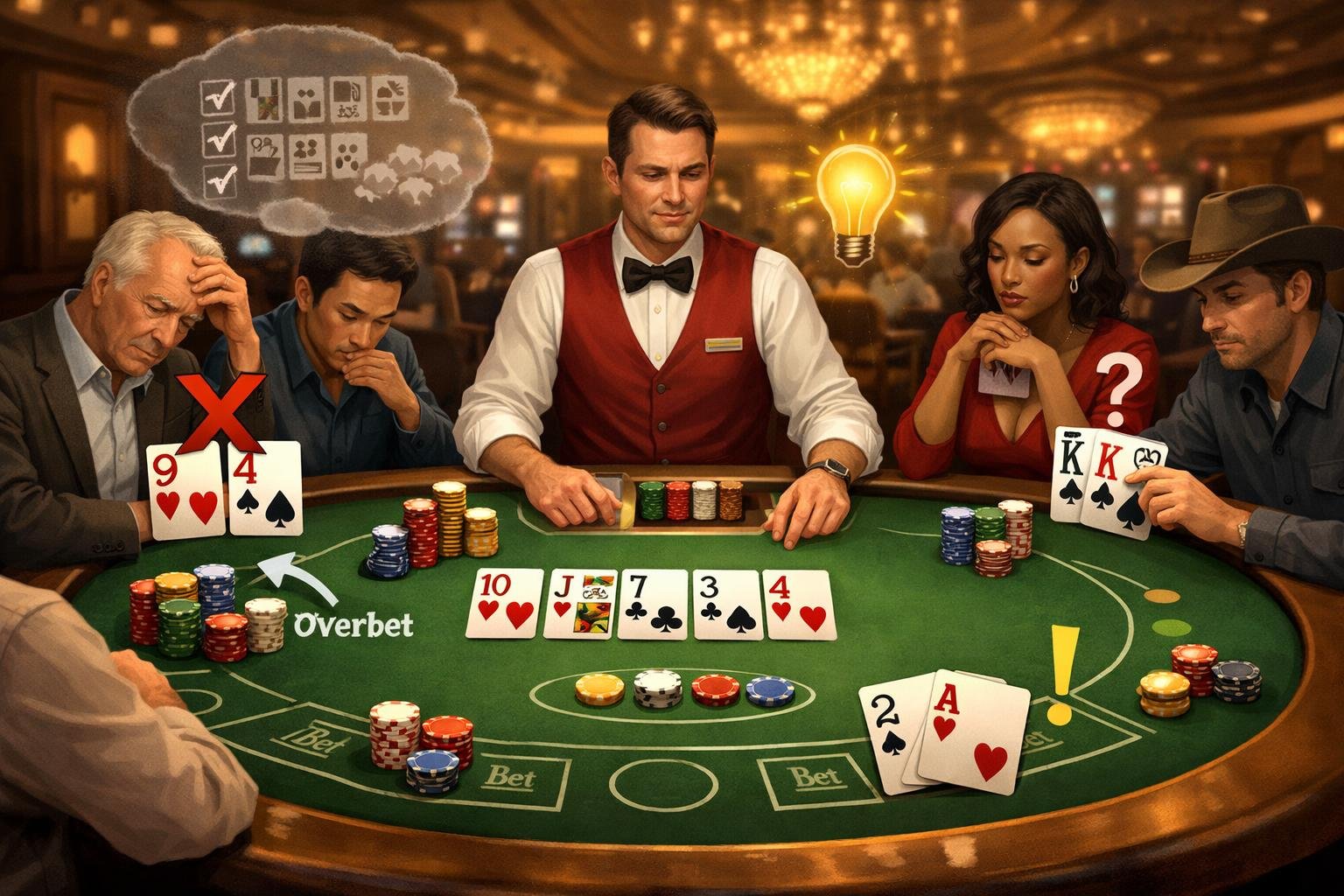
Let’s be real—everyone hits a snag learning Ultimate Texas Hold’em. Whether it’s confusing betting rounds or tech hiccups online, I’ve seen it all. Let’s talk about the usual headaches and how to fix them fast.
Gameplay Challenges
The most common trip-up? Betting at the wrong moment or folding hands you should play. New players often check pre-flop with strong cards, missing out on the big 4x raise and leaving chips on the table.
If you’re not sure when to bet, keep a strategy chart handy your first few sessions. It lays out exactly when to raise 4x, 2x, or 1x based on your hole cards and the board.
Online casinos usually let you reference these charts as you play. That’s a lifesaver when you’re just starting out.
Another confusion: mixing up ante, blind, and play bets. Ante and blind are mandatory and must be equal to start each hand. The play bet is optional and goes in the box behind your ante when you decide to raise.
The Trips side bet trips people up, too (pun intended). It only pays when you make three of a kind or better—doesn’t matter if you beat the dealer or not.
Technical Errors or Glitches
Online games freeze or disconnect sometimes—it happens. Don’t stress. Most licensed casinos save your game state and let you pick up right where you left off when you log back in.
If the display glitches—buttons not working, cards not showing—try these quick fixes:
-
Clear your browser cache and cookies
-
Update your browser
-
Switch browsers
-
Check your internet speed
-
Restart the app if you’re on mobile
If you keep getting disconnected, your internet might be too slow. Ultimate Texas Hold’em really needs a stable connection, especially for live dealer games. I’d test my speed and switch to wired if possible.
Contacting Casino Support
If you need help, most online casinos have a few ways to reach them. Live chat is usually fastest—I get responses in under five minutes at the good sites.
Before you reach out, grab this info:
-
Your username and account details
-
When the issue happened
-
Screenshots of any error messages
-
Your device and browser version
Email support works for less urgent stuff but can take 12-24 hours. Some big casinos have phone support, but hours may vary depending on where you are.
At a real casino, just talk to the dealer first—they can answer most rule questions on the spot. For bigger problems or payment disputes, ask for a floor supervisor. They usually sort things out right away.
Pros and Cons
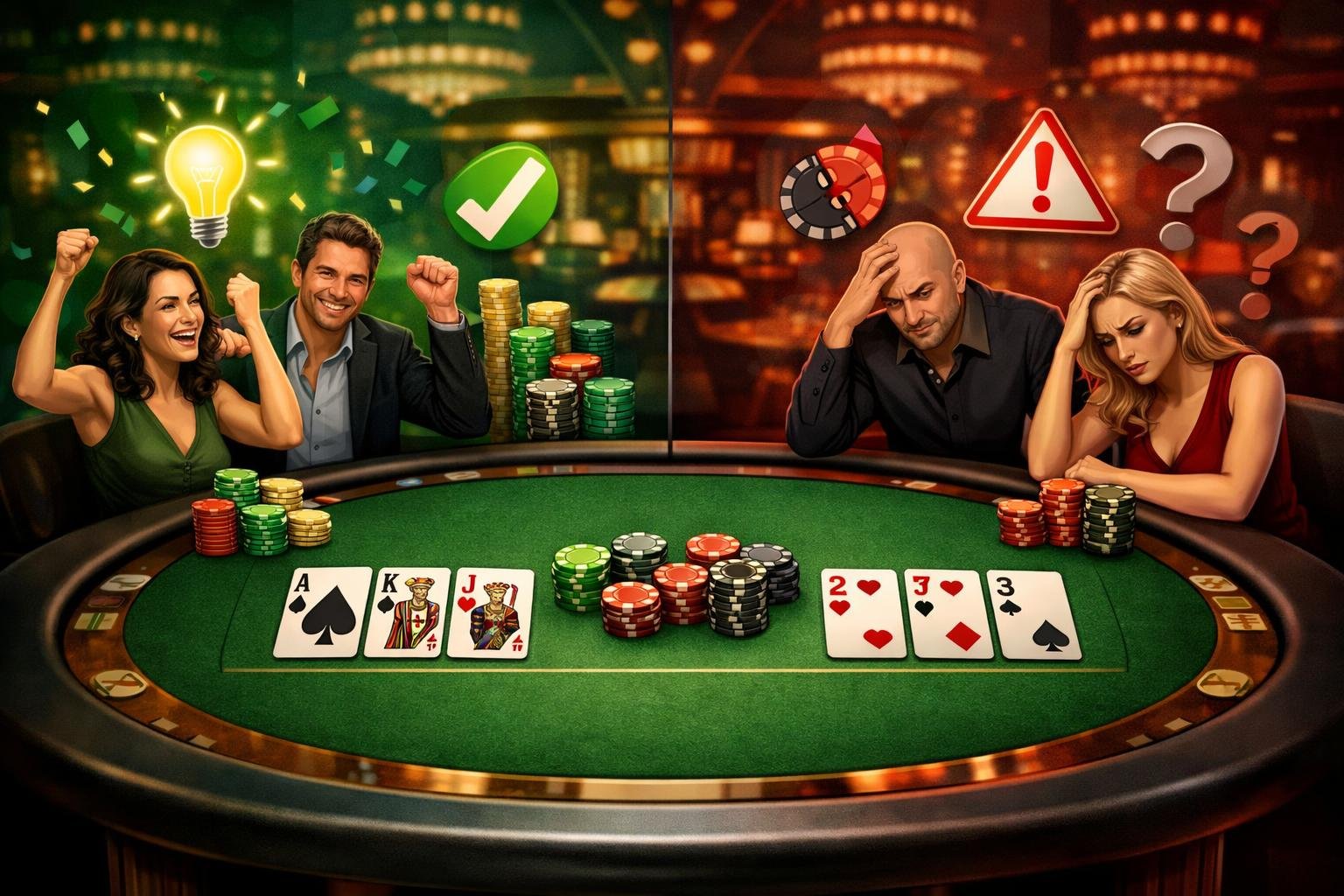
Ultimate Texas Hold'em is one of those casino games that really gets your brain firing. It rewards sharp betting decisions and offers odds that are actually pretty reasonable compared to most games on the floor.
The house edge hangs around 2.2% if you stick to a solid strategy. But if you get reckless or just wing it, your losses can pile up fast.
Four Advantages Table
|
Advantage |
Description |
|---|---|
|
Low House Edge |
If I play my cards right, the house edge drops to about 2.2%. That beats most other table games, hands down. |
|
Strategic Control |
I get to decide when to raise—4x, 2x, or just 1x my ante—depending on my hand. That kind of control is rare in casino games. |
|
Multiple Betting Opportunities |
With three chances to raise or check as the hand unfolds, I can shift my bets as the community cards come out. It keeps things exciting and unpredictable. |
|
Trips Bet Option |
There's an optional side bet—the Trips bet—that pays based on my hand strength alone. Even if the dealer beats me, I can still score a payout here. |
Four Disadvantages Table
|
Disadvantage |
Description |
|---|---|
|
Higher Minimum Bets |
To get in on the action, I have to put down two equal bets (ante and blind) every hand. So my minimum investment is always doubled. |
|
Complex Strategy |
Honestly, learning when to make those 4x, 2x, or 1x raises takes some memorization. There are a lot of hand combos and situations to keep straight. |
|
Dealer Non-Qualification Push |
Sometimes I win, but if the dealer doesn't qualify with at least a pair, my ante just pushes. That means I miss out on extra profit. |
|
Trips Bet House Edge |
The Trips side bet can get pricey—the house edge runs between 3.5% and 6%, depending on the pay table. It's tempting, but it adds risk. |
Responsible Gaming

Ultimate Texas Hold'em should be about fun, not stress. If you keep your bankroll in check and stay honest with yourself, you'll protect both your wallet and your peace of mind.
Setting Limits
Pick a budget before you even sit down. Only bring what you can lose without sweating your bills or skipping groceries.
I always set both a loss limit and a win goal. If I hit either, I cash out—no exceptions.
Time limits matter, too. Decide how long you'll play before you start. Long sessions just wear you out and make mistakes more likely.
Keep track of your wins and losses over time. Those “small” losses add up if you’re not careful. I jot down my results after every session, just to stay honest.
Recognizing Problematic Behavior
There are some clear warning signs when gambling starts to go sideways. If you start chasing losses, betting bigger to win back what you lost—watch out. That’s a slippery slope.
Borrowing money to play or dipping into funds meant for rent or groceries? That’s a red flag. And if you find yourself hiding your play from friends or family, something’s off.
When you get antsy or irritable if you’re not playing, or you’re skipping out on work or family just to gamble, it’s time for a reality check.
If the fun disappears and it starts to feel like a need, step back and reassess. The game should never feel like a burden.
Available Tools and Support
Most casinos have self-exclusion programs that let you block yourself for months or even years. It’s a solid option if you need a hard stop.
Online casinos often let you set deposit limits or session reminders. These can kick in automatically and keep you from going overboard.
National Problem Gambling Helpline: 1-800-522-4700 is there 24/7 with free, confidential help. The counselors actually listen and can point you toward resources nearby.
Groups like Gamblers Anonymous hold regular meetings—some are even online now, which makes joining a lot easier. It’s a great way to talk with people who get it.
Don’t hesitate to ask your casino host or customer service about local responsible gaming options. They usually know what’s available in your area.