









Solana is a Layer 1 blockchain built for speed. When you’re picking a Solana casino payment method, that speed really stands out.
Deposits usually arrive in under two seconds. Withdrawals often hit your wallet within minutes.
If you’re tired of waiting days for a bank transfer or paying sky-high gas fees on Ethereum, SOL feels like a breath of fresh air at top Solana gambling sites. It’s a go-to for folks who love fast-paced games like Blackjack and want their money to move just as quickly.
Solana as a casino payment method is all about near-instant settlement, fees that are barely noticeable, and a wallet setup that keeps you in charge of your own funds. The flip side? Not every casino takes SOL yet, and—like all crypto—there’s a bit of a learning curve and some price ups and downs to keep in mind.
Don’t worry, we’ll explain. Here’s what you need to know before you use SOL at Solana online casinos—from setting up a wallet and making deposits to understanding fees, bonus rules, safety, and how it all compares to other ways to pay.

Key Takeaways
-
Solana settles casino deposits in about one to two seconds, with lightning-fast transactions and fees under a penny. It’s easily one of the quickest and cheapest crypto options out there.
-
More casinos are starting to accept SOL, but it’s still not as common as Bitcoin or Ethereum. Most of the ones that do are licensed in Curaçao, not by stricter groups like the MGA or UKGC.
-
SOL’s price can swing a lot. If you’d rather avoid crypto ups and downs, you might want to look at stablecoins or stick with more traditional payment methods.
|
Key Fact |
Detail |
|---|---|
|
Method Type |
Layer 1 cryptocurrency (native coin) |
|
Operated By |
Solana Labs (network is decentralized) |
|
Typical Deposit Speed |
Under 2 seconds (network confirmation) |
|
Typical Withdrawal Speed |
Minutes to under 1 hour (casino-dependent) |
|
Withdrawals Supported |
Yes, at most accepting casinos |
|
Typical Fees |
Under $0.01 per transaction (network); casino fees vary |
|
Bonus Eligibility |
Varies by casino; many crypto casinos include SOL |
|
Regulatory Status |
Unregulated asset; casino licensing varies by operator |
What Solana Is And How It Fits Casino Payments
What SOL Actually Is
Solana is a decentralized blockchain network that launched in 2020. Anatoly Yakovenko co-founded the project, and Solana Labs mainly keeps it running and evolving.
Yakovenko built Solana to handle transactions super fast. The blockchain uses both Proof of History (PoH) and Proof of Stake (PoS), which just means it can scale up and support a big DeFi ecosystem right on the chain.
Major tech names like Google Cloud have even started supporting Solana’s infrastructure. The Jump Crypto team is working on something called the Firedancer client, which should make the network even more efficient and stable over time.
SOL is the native coin for Solana. People use it to pay transaction fees, stake, and as a way to send money around. Solana casinos use SOL for both bets and rewards, and its efficiency is a big reason why more gambling sites are giving it a shot.
Solana Pay is making it easier for merchants and casinos to accept SOL. It’s a bit like a bridge between regular online shopping and blockchain payments.
With Solana Pay, checking out feels more familiar. You just buy SOL on an exchange, keep it in a wallet that works with Solana, and send it straight to the casino’s deposit address.
The network, at least on paper, can handle about 65,000 transactions per second. In the real world, it still leaves Ethereum and Bitcoin in the dust. Block finality—the time it takes for a transaction to be locked in—usually happens in under 400 milliseconds.
Why Players Use It For Gambling
Let me break this down for you: players love Solana for three reasons—speed, low cost, and privacy. When you deposit SOL, it hits your casino account in about one or two seconds. Withdrawals, once the casino green-lights them, usually pop back into your wallet within minutes.
The network’s fees are so small you’ll barely notice them—just a fraction of a cent per transaction. If you’ve ever paid Ethereum’s gas fees, you know what a relief that is. It makes small, frequent deposits actually doable, which is why so many folks prefer SOL over Ripple or Litecoin for everyday play. High-frequency players especially appreciate how SOL keeps up with their pace.
Privacy is another plus. Sure, Solana transactions are public on the blockchain, but you never have to share your bank or card details with the casino. If your country has banking restrictions on gambling, this helps you sidestep some hassles.
How Solana Differs From Bitcoin And Ethereum
Here’s a quick side-by-side look:
|
Feature |
Solana (SOL) |
Bitcoin (BTC) |
Ethereum (ETH) |
|---|---|---|---|
|
Typical TPS |
~65,000 |
~7 |
~30 |
|
Average Fee |
Under $0.01 |
$2 or more |
$5 or more |
|
Deposit Confirmation |
~1-2 seconds |
10-60 minutes |
15 seconds to several minutes |
|
Casino Acceptance |
Growing, but niche |
Widest |
Very wide |
|
Smart Contract Support |
Yes |
Limited |
Yes (native) |
Bitcoin still rules the roost for casino acceptance and brand power. Ethereum’s ecosystem is bigger and ties in closely with Web3 gaming.
Solana sits somewhere in the middle. It moves money faster and cheaper than the other two, but you’ll find it at fewer casino cashiers (at least for now).
If speed and low fees matter most to you, Solana’s tough to beat. If you want the widest choice of casinos, Bitcoin’s still the leader. Some folks also like using tether for a more stable experience.
Others lean toward Litecoin because it balances speed and broader acceptance. Still, plenty of casinos that support LTC and XRP are also adding Solana for its efficiency.
How Deposits And Cashouts Usually Work
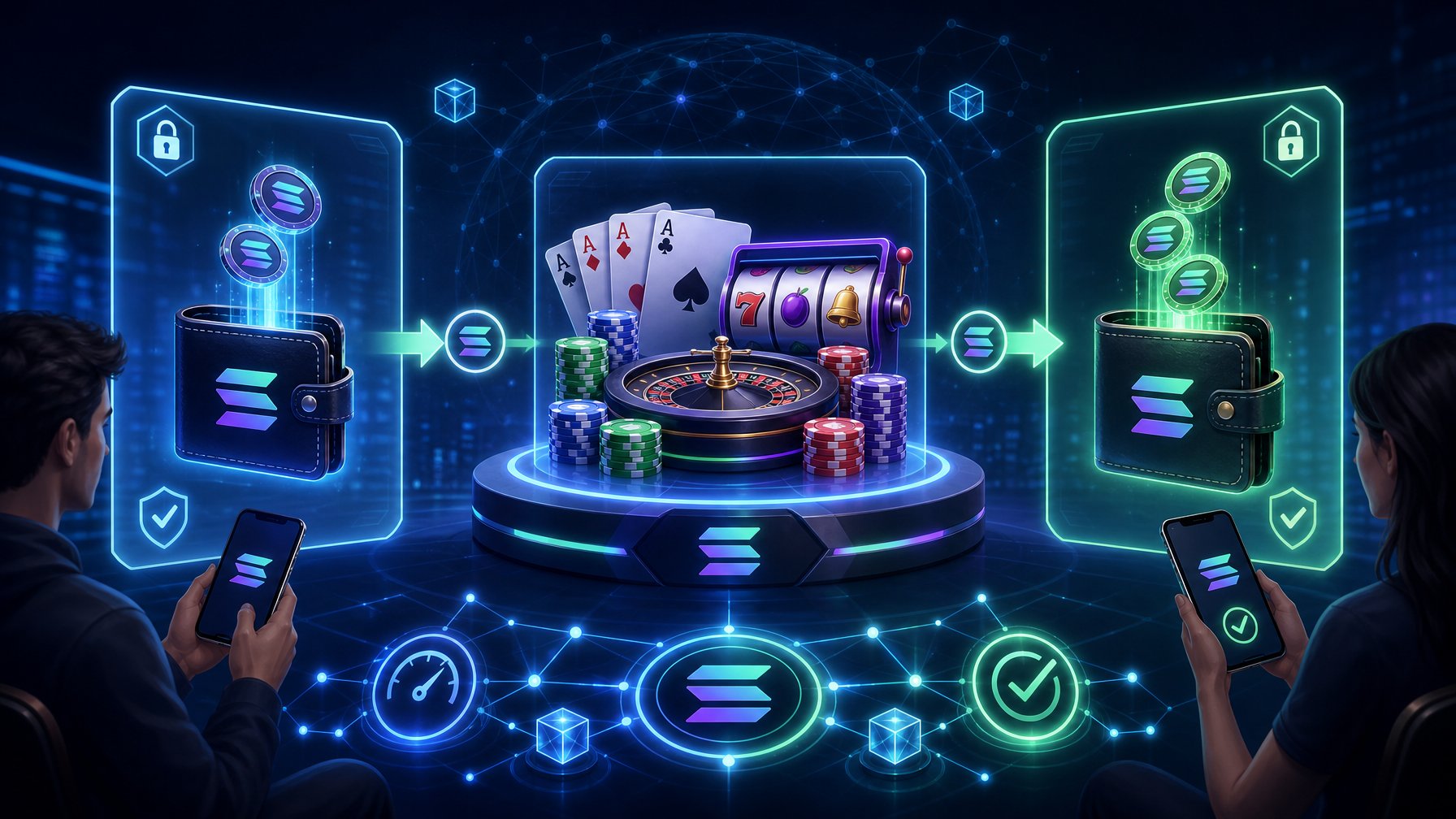
Using A Solana Wallet In The Cashier
Before you can use SOL at a casino, you’ll need a compatible Solana wallet. Phantom and Solflare are the two most popular picks.
Both are non-custodial wallets, so you’re the only one with access to your keys. They work as browser extensions or mobile apps, so you can use them on pretty much any device.
Phantom is probably the easiest for most players. It connects to Web3 sites with one click, shows your SOL balance clearly, and signing transactions is a breeze.
Solflare does much the same but adds a few extra features if you want more control. Both let you interact with decentralized apps without much fuss.
If you’re holding a lot of SOL and want extra security, you might want a Ledger hardware wallet. It works with both Phantom and Solflare as a signing device, which is great for anyone keeping a big balance or playing high stakes.
When you’re ready to deposit, it’s usually straightforward. Pick SOL as your payment method, copy the casino’s deposit address, and send the amount you want. Just make sure you’re sending real SOL on the Solana network—not a wrapped version from another chain.
Deposits, Confirmations, And Balance Crediting
Once you hit send, the Solana network confirms your deposit in under two seconds most of the time. Most casinos credit your balance within a minute or two after that, though some might wait for a few extra confirmations.
Always double-check the deposit address before sending. Blockchain transactions can’t be undone, and sending SOL to the wrong address means it’s gone for good. There’s no way to get it back.
Minimum deposit amounts for SOL depend on the casino. It’s smart to check the payment terms or cashier page first, since some casinos set crypto minimums that are higher than you might expect.
Withdrawals, KYC, And Common Restrictions
Let’s start with withdrawals, since that’s usually the part everyone cares about most. When you want to cash out, you just send in a withdrawal request, enter your Solana wallet address, and then wait for the casino to send your funds. On the blockchain side, the money lands in your wallet within seconds after the casino sends it.
The slow part is almost always the casino’s own processing time. Some crypto-focused casinos are lightning fast, but others—especially the bigger, old-school brands—might make you wait a few hours.
Now, about KYC (Know Your Customer) checks: you’ll bump into these even at most crypto casinos. Almost every operator wants to verify your identity before letting you withdraw, no matter how you paid in.
At some crypto-only spots, KYC might not kick in until you reach a certain withdrawal amount or trigger an automated review. Don’t worry, we’ll explain what that means in plain terms: usually, if you’re cashing out small amounts, you might not have to upload your ID right away.
There are a few common restrictions worth knowing. Some casinos let you deposit with SOL but only pay out in another coin or a stablecoin, which can be a surprise if you’re not expecting it. Others might block certain withdrawal methods based on where you live.
Bottom line: always check the cashier page and payment policy before you send any money in. It’s not fun to get caught off guard.
Speed, Fees, Limits, And Bonus Eligibility
Typical Deposit And Withdrawal Speed
Solana is honestly one of the fastest ways to move money in and out of casinos right now. Just to give you a sense of how quick things are, here’s a simple table:
|
Transaction Type |
Network Time |
End-to-End (Casino Processing Included) |
|---|---|---|
|
Deposit |
Under 2 seconds |
1-5 minutes (balance credited) |
|
Withdrawal |
Under 2 seconds |
Minutes to under 1 hour (most crypto casinos) |
|
Withdrawal (traditional casino) |
Under 2 seconds |
Several hours or up to 24 hours |
It’s not the network that slows things down—it’s the casino’s own back-end. Solana itself is blazing fast and almost never gets bogged down.
Crypto-first casinos usually pay out quickly because their systems are automated. If you’re dealing with a bigger, more traditional casino, manual reviews can slow things down.
From what I’ve seen, Solana is the quickest mainstream crypto for actual settlement. Only Bitcoin’s Lightning Network is faster, but hardly any casinos accept Lightning yet.
Network Costs, Exchange Spreads, And Casino-Side Fees
One thing that makes Solana so attractive: its network fees are tiny—usually less than a cent per transaction. You’ll almost never notice them.
But here’s where you might lose a little value without realizing it:
-
Exchange spread: When you buy SOL from an exchange, the price you get includes a little markup. If you buy SOL and send it right to a casino, you’re paying whatever spread the exchange builds in.
-
Casino currency conversion: Some casinos don’t keep your balance in SOL—they convert it to dollars or euros. When they do, they might use a rate that’s not exactly in your favor.
-
Casino withdrawal fees: A few operators charge a flat fee or a percentage when you withdraw crypto. This isn’t super common at crypto-first casinos, but it does happen at hybrid sites.
So, while the network fees are basically nothing, keep an eye out for exchange and conversion costs. That’s where small amounts can quietly slip away.
Minimums, Maximums, And Bonus Rules
Deposit and withdrawal limits for SOL are set by each casino. Usually, you’ll see minimum deposits of just a few dollars’ worth of SOL. Maximum withdrawals depend on the site’s rules and whether you’re in a VIP program.
Let’s talk bonuses, since that’s a big draw for a lot of folks. Most crypto casinos include SOL for welcome bonuses, which is a nice change from e-wallets like Skrill or Neteller that often get left out.
Solana casino bonuses can be matched deposits or free spins. These are pretty common at the better SOL casinos, and you can use them on table games or slots. Some players look for no-deposit bonuses to test a site—think of it as a free sample before spending your own money.
Some casinos calculate wagering requirements using the dollar value of SOL when you deposit. That means you won’t have to chase a moving target if SOL’s price changes.
Always check the bonus terms before you deposit for a promo. If you find a no-deposit bonus, just know that sometimes there are special rules for cashing out SOL winnings.
Availability, Safety, And What To Watch Out For
Where Solana Support Is Common
Solana is mostly supported at crypto-first and crypto-friendly casinos. As of mid-2026, most SOL casinos run under Curaçao Gaming Control Board licenses—not the stricter ones from Malta or the UK.
That matters because Curaçao licenses are accepted in a lot of places, but they don’t have as much oversight. If you’re in a tightly regulated country (like most US states), you’ll find that SOL casinos are usually offshore.
Solana isn’t as widely accepted as Bitcoin or Ethereum, but the network’s getting more popular. Big DeFi providers like Helius and validator projects like Firedancer are making Solana more reliable, which helps more casinos add it.
If you’re using fast payment rails like Solana, it’s easy to get carried away. Setting deposit limits is a smart way to stay in control, especially if you love table games or live poker. Most good casinos offer responsible gambling tools, so take advantage of those.
Security, Privacy, And Wallet Hygiene
Solana transactions are protected by strong cryptography. The Solana Program Library has had several security audits, and there’s an active bug bounty program to catch problems early.
But honestly, your own habits matter just as much. Here’s what I’d suggest:
-
Never share your seed phrase. No real casino or support agent will ever ask for it—seriously, never.
-
Use a separate wallet just for gambling. That way, if a casino gets hacked, your main funds are safe.
-
Double-check deposit addresses. Some sneaky malware can swap out the address you copy to your clipboard.
-
Think about using a hardware wallet if you’re holding more than you’d want to lose.
Your privacy is better than with cards or banks, since there’s no middleman. But remember, Solana’s blockchain is public—anyone can see the transactions. For most folks, that’s fine, but it’s not anonymous.
Compliance, Verification, And Volatility Risk
SOL isn’t regulated in most places, but casinos still have to do KYC and anti-money-laundering checks. Sometimes, they’re even stricter with crypto withdrawals than with regular money. Expect to prove your identity when you cash out, even at crypto-focused sites.
Price swings are a real thing with SOL. If you deposit when SOL is $150 and withdraw when it’s $120, you’ve lost some value, no matter how your bets went. That’s not just theory—SOL’s price can move a lot in a short time.
If you want Solana’s speed but don’t want to worry about price drops, you can use SPL-standard stablecoins like USDT-SPL or USDC-SPL. These are pegged to the dollar and move just as fast. It’s a good way to keep things predictable.
Not every casino supports these stablecoins, though—so check before you deposit. It’s a bit like how the Tron network has TRC-20 stablecoins, but not every site takes them.
One last thing: Solana’s had network outages in the past. That’s less common now, but if the network goes down in the middle of a session, your transaction could get delayed or stuck. It doesn’t happen often, but it’s something to keep in mind.
How It Compares With Other Casino Payment Options
Versus Cards And Bank Transfers
Visa and Mastercard are still the most widely accepted options at online casinos. In Canada, Interac is popular because it’s reliable and connects straight to your bank account. Interac is super secure, but it can’t keep up with crypto for speed. Visa deposits are instant, but getting your money back out is where things drag.
Withdrawals to cards usually take two to five business days. Bank transfers can be even slower—sometimes up to a week.
Solana blows both out of the water for withdrawals. Getting your winnings in minutes instead of days is a big deal if you want quick access.
Cards and bank transfers are familiar and easy for most people, and you don’t have to deal with crypto wallets. Plus, card deposits almost always count for bonuses, unlike some e-wallets.
But in the US, card payments to gambling sites are often blocked by banks, even if the casino says they accept them. Solana skips that whole headache.
Versus E-Wallets
E-wallets like PayPal, Skrill, and Neteller are quicker than cards for withdrawals. Prepaid options like paysafecard are good for privacy, but you can’t use them to cash out. Most e-wallet withdrawals clear within 24 hours, and you don’t have to give the casino your bank info.
The big downside? Many casinos won’t give you a welcome bonus if you deposit with Skrill or Neteller. PayPal is only available in a few places and is often excluded from promos too.
Solana usually lets you claim bonuses at crypto-friendly casinos, which is a real plus if you’re chasing offers. E-wallets are more widely accepted at traditional, tightly regulated casinos, where Solana isn’t as common.
Versus Other Cryptocurrencies
Let me break this down for you in plain terms. Solana really stands out from Bitcoin and Ethereum because it's just so much quicker and cheaper to use. With Bitcoin, you might wait anywhere from 10 to 60 minutes for your deposit to show up, and each transaction can cost a few bucks, which makes small bets kind of a hassle.
Ethereum speeds things up a bit compared to Bitcoin, but it's still not as fast as Solana. Plus, those gas fees can be a real pain—definitely higher than what you’ll pay on Solana.
Now, there are a few other coins people talk about. Litecoin, for example, confirms transactions faster than Bitcoin and usually costs less. XRP (you’ll hear it called Ripple) also clears payments pretty quickly, but it’s had some legal drama that makes things a bit uncertain at times.
Dogecoin is easy to use and lots of folks accept it, but it just can’t keep up with Solana’s speed. Binance Coin is quick too, though not every casino supports it. Honestly, if you’re after the smoothest experience, Solana often gives you better results than these other options.
Think of Solana as the sports car of casino payment methods in 2026—fast, sleek, and cheap to run. The catch? Not every casino takes it yet, so you might have to look around a bit more than you would for Bitcoin or Ethereum.
But don’t worry, you can still find plenty of great Solana casinos for table games, slots, and even live dealer games like Blackjack, roulette, baccarat, or poker. If you’re not a fan of price swings, you can usually use stablecoins like USDT too.
Oh, and here’s a neat bonus: a lot of Solana casinos offer special promos or bonuses just for using SOL. If you appreciate speedy payments, you’ll probably enjoy the little extras that come with it.
Final Verdict
Who Solana Suits Best
Choosing a Solana crypto casino is honestly a smart move if you already have crypto or feel comfortable with it. If you’ve used Ethereum or Bitcoin and got frustrated by the fees or slow wait times, Solana’s near-instant deposits and withdrawals are a breath of fresh air.
The network fees are almost nothing, which is tough to beat. If you want quick access to your winnings and don’t want to mess with cards or e-wallets, SOL’s speed is a huge plus.
Some folks prefer not to go through banks, maybe for privacy or because their bank just blocks gambling payments—Solana helps you sidestep all that. For anyone into crypto-focused casinos with provably fair games or even NFT rewards, Solana’s often the main currency there.
If you’re playing on your phone, good news: Phantom and Solflare have solid mobile apps for both iOS and Android. It’s all pretty user-friendly once you get the hang of it.
Who May Prefer Another Method
Let’s be real, Solana isn’t for everyone. If you want the widest choice of casinos, especially those with big-name licenses like MGA or UKGC, you’ll find more options with Bitcoin or Ethereum.
Don’t love the idea of your balance going up and down with crypto prices? Stablecoins or regular money might feel safer. It’s no fun watching your withdrawal shrink before it even lands in your wallet.
If you just want something simple, cards or PayPal are way easier. Setting up a Solana wallet, buying SOL, and keeping track of your recovery phrase can be a headache if you’re not into tech stuff.
And for high rollers, some Solana casinos cap withdrawals lower than what you’d get with other payment methods. It’s worth checking the fine print.
Pros And Cons Summary
Pros
|
Advantage |
Why It Matters |
|---|---|
|
Deposits clear in under 2 seconds |
It’s basically the fastest way to fund your casino account |
|
Network fees under $0.01 per transaction |
You pay almost nothing, no matter how much you deposit or withdraw |
|
Withdrawals typically settle in minutes |
Much quicker than cards, bank transfers, or most e-wallets |
|
SOL deposits often qualify for casino bonuses |
You get bonus offers that e-wallet users often miss out on |
Cons
|
Disadvantage |
Why It Matters |
|---|---|
|
Casino acceptance is narrower than BTC or ETH |
You’ll have fewer casinos to choose from, mostly Curaçao-licensed ones |
|
SOL price volatility adds financial risk |
Your balance can change in value, even if you’re not playing |
|
Requires a crypto wallet and exchange account |
There’s a bit more setup than with cards or e-wallets |
|
Network outages, though rare, can delay transactions |
It’s not 100% risk-free if you need your money instantly |
Solana won’t be the right fit for everyone, and that’s totally fine. If you want to see how it stacks up against other ways to deposit or cash out, you can browse our full range of casino payment method guides at FreeCasino.co.