












Monero is a privacy-first cryptocurrency that stands apart from Bitcoin, Ethereum, or Litecoin. If you care about keeping your financial life private while gambling online, picking the right Monero casino payment method really matters.
Most cryptocurrencies leave a public trail of every transaction, but Monero hides the sender, receiver, and amount automatically. For casino players who want real privacy, that’s a big deal.

Monero (XMR) launched in April 2014 as an open-source, decentralized cryptocurrency. No company owns it, and a worldwide group of contributors keeps it running smoothly.
It’s become a popular pick for online gambling, especially for those looking for privacy. With Monero as your casino payment method, you can handle both deposits and withdrawals in crypto.
Plenty of Monero online casinos now cater to XMR users who want a high-privacy gambling spot. These sites are built with Monero fans in mind.
Key Takeaways
-
Monero encrypts the sender, receiver, and transaction amount by default. That makes it the most private cryptocurrency you can use for online gambling.
-
Deposits are quick and fees stay low, but not as many casinos accept XMR compared to Bitcoin or Ethereum. Always check for a casino’s license before trusting it with your money.
-
Bonuses can be tricky—some casinos offer them for crypto, others don’t. The best Monero casinos usually have a welcome bonus and sometimes free spins for new signups.
-
Finding a good Monero casino often means looking for clear wagering requirements. Many players say Monero beats transparent blockchains when it comes to protecting your privacy.
|
Key Fact |
Detail |
|---|---|
|
Method Type |
Decentralized privacy cryptocurrency |
|
Ticker Symbol |
XMR |
|
Launched |
April 2014 |
|
Operated By |
Open-source community (no central owner) |
|
Typical Deposit Speed |
Under 30 minutes (2 confirmations typical) |
|
Typical Withdrawal Speed |
Minutes to a few hours after casino processing |
|
Withdrawals Supported |
At select casinos; not universally available |
|
Typical Fees |
Very low network fees; casinos rarely add their own |
|
Bonus Eligibility |
Varies by casino; check terms before depositing |
|
Regulatory Status |
Unregulated asset; some exchanges have delisted XMR due to compliance pressure |
What Monero Is And Why Players Use It
Monero In Brief
Monero is an open-source cryptocurrency built on something called the CryptoNote protocol. Unlike Bitcoin, which puts all transaction details out in the open, Monero was designed so nobody on the outside can see who sent what, who received it, or how much was sent.
Monero started up in April 2014 and has been run by a decentralized community ever since. There’s no big company or venture capital behind it. That independence can be pretty appealing if you want to keep your financial activity private.
How Privacy Features Work In Practice
Monero keeps things private with three main tools working together. Don’t worry, we’ll explain:
-
Ring signatures mix your transaction with a bunch of others from the blockchain. This makes it impossible for anyone to tell which input actually sent the money.
-
Ring Confidential Transactions (RingCT) hide the amount you send. Even if someone could spot your transaction, they wouldn’t know how much you moved.
-
Stealth addresses create a new, one-time address for every transaction. That way, your real wallet address never shows up on the blockchain.
So, Monero transactions are private by default. No one can use a blockchain explorer to link your deposit to your identity or wallet history. That’s a sharp contrast to Bitcoin, where everything is out in the open forever.
Who This Method Best Suits
Monero is best for players who put privacy above everything else. If you’re already comfortable with crypto wallets and like being in control of your own funds, it’s a natural fit.
It’s also handy if you’re in a place where banks make it tough to use traditional payment methods for gambling. For beginners, though, Monero might feel a bit technical. Setting up a wallet takes a little more effort than using something like PayPal, and you might need to try a few casinos before finding one that accepts XMR.
How It Works For Deposits And Withdrawals
What You Need Before You Start
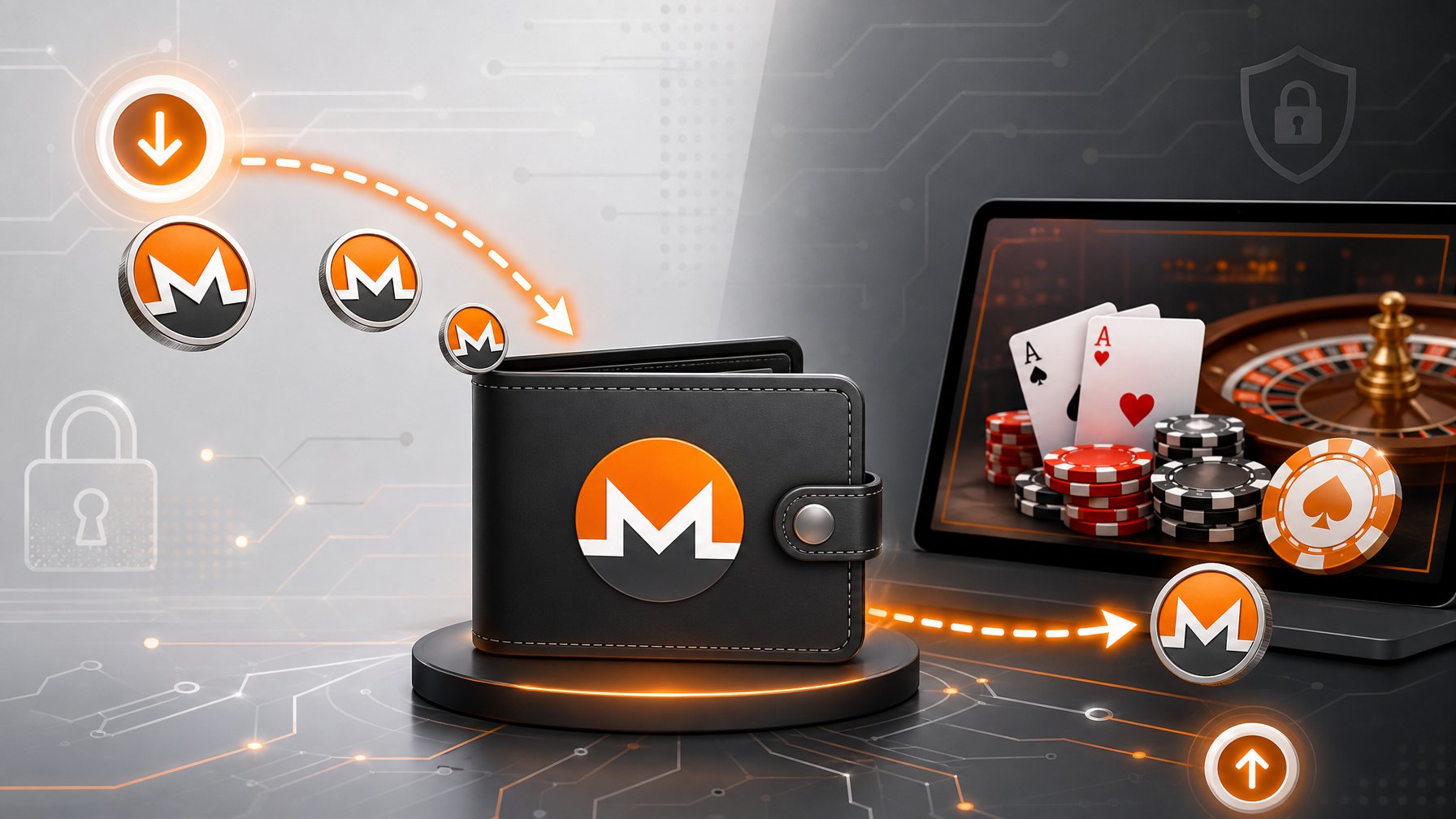
Before you can make a casino deposit with XMR, you’ll need a funded Monero wallet. You can grab official options at getmonero.org, like the Monero GUI wallet for desktop or the CLI for tech-savvy folks. If you’re a mobile user, several trustworthy third-party wallets support XMR too.
To put money in your wallet, just buy XMR on a crypto exchange and send it to your wallet address. Heads up—some big exchanges have stopped offering Monero because of regulations, so you might need to shop around depending on where you live.
Making Monero Deposits
Once your wallet’s funded, making a deposit is pretty straightforward. Learning how to use Monero takes a few extra steps, but it’s all about keeping your transactions secure. The casino’s system handles the encryption, so you don’t have to worry about the technical stuff.
-
Log into your casino account and open the cashier.
-
Pick Monero or XMR from the list of accepted cryptocurrencies.
-
The casino gives you a unique deposit address (sometimes with a payment ID).
-
Copy that address into your wallet’s send function and enter the amount.
-
Your transaction goes out to the Monero network and usually reaches the casino after two confirmations.
Here’s a tip from experience: always send a small test transaction first. That way, you can double-check the address and make sure the casino credits your XMR before sending a bigger amount.
Withdrawing Back To Your Wallet
Withdrawals work in reverse. In the casino cashier, choose XMR as your withdrawal method, enter your Monero wallet address, and submit the request.
The casino will process your withdrawal, which can take anywhere from a few minutes to a few hours, depending on their own checks. Once they send the funds, Monero’s network is usually quick, so your wallet gets the money soon after approval.
Speed, Fees, Limits, And Practical Availability
Typical Processing Times
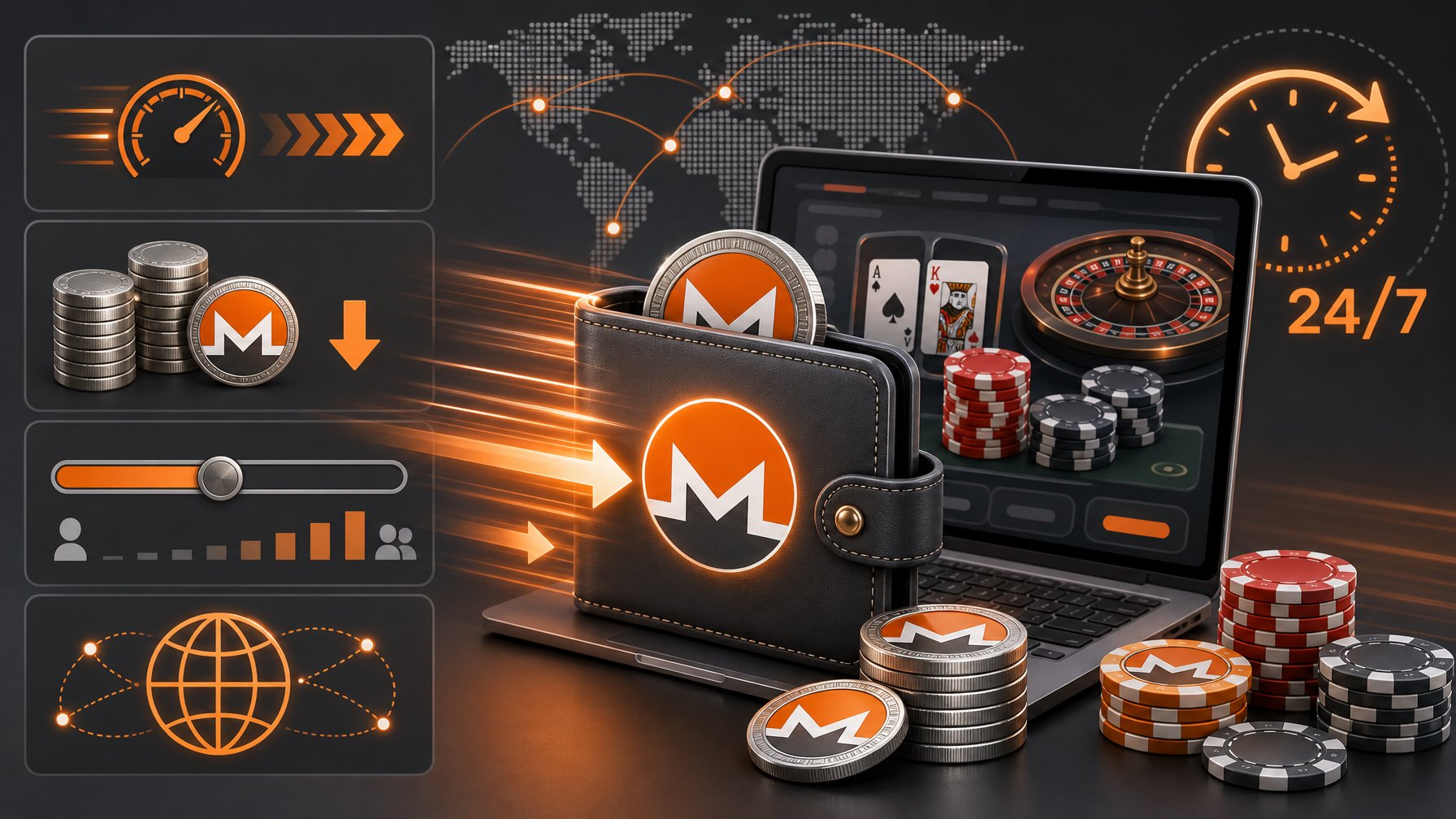
Monero is actually one of the quicker cryptocurrencies for casino use. Network confirmations usually finish up within 20 to 30 minutes after you send a deposit, though casinos might wait for two confirmations before adding it to your balance.
|
Transaction Type |
Typical Speed |
|---|---|
|
Deposit (network confirmation) |
20 to 30 minutes |
|
Deposit (casino credit) |
Shortly after 2 confirmations |
|
Withdrawal (casino processing) |
Minutes to several hours, varies by casino |
|
Withdrawal (network delivery) |
Fast once casino releases funds |
Withdrawal speed really depends on the casino’s own process. Some crypto-focused casinos approve withdrawals almost instantly, while others batch them at certain times. Always check the casino’s policy so you know what to expect.
Fees And Network Costs
Monero’s network fees are tiny compared to Bitcoin or Ethereum. Most transactions cost just a fraction of a dollar, and casinos rarely tack on extra charges. That makes Monero one of the cheapest crypto options for deposits and withdrawals.
One thing to keep in mind: you might pay a fee when buying XMR on an exchange to fund your wallet. That’s the exchange’s spread or trading fee, not something Monero itself charges.
Regions, Currencies, And Bonus Eligibility
Monero is a decentralized digital asset, so it doesn’t come with built-in geographic restrictions. If you’re in a region where major card networks or bank transfers just won’t work, XMR often lets you sidestep those headaches.
Let me break down some practical points about using Monero at online casinos:
-
Currency: Some casinos keep your account in XMR, while others convert it to regular money like dollars or euros. A few crypto casinos run entirely in crypto, so you never have to think about fiat conversions at all.
-
Mobile casino: Both XMR wallets and most casino sites work smoothly in your phone’s browser. You won’t run into any real mobile limitations here.
-
Welcome bonus and reload bonus eligibility: This part can be all over the place. Many folks hunt for a juicy welcome bonus or some free spins, but not every casino offers these for XMR deposits. Sometimes, you’ll find a special reload or deposit bonus just for crypto users, which is always a nice perk.
-
Promotions: Always double-check the terms before you deposit. Some bonus spins or welcome offers just don’t apply if you’re using Monero, and that can be a letdown if you were counting on them.
-
VIP and loyalty programs: At crypto-friendly casinos, XMR deposits usually rack up loyalty points like any other payment. If you’re aiming for VIP status, privacy coins like Monero sometimes unlock special perks and exclusive rewards.
Game Access, Platform Features, And Player Experience
What You Can Usually Play
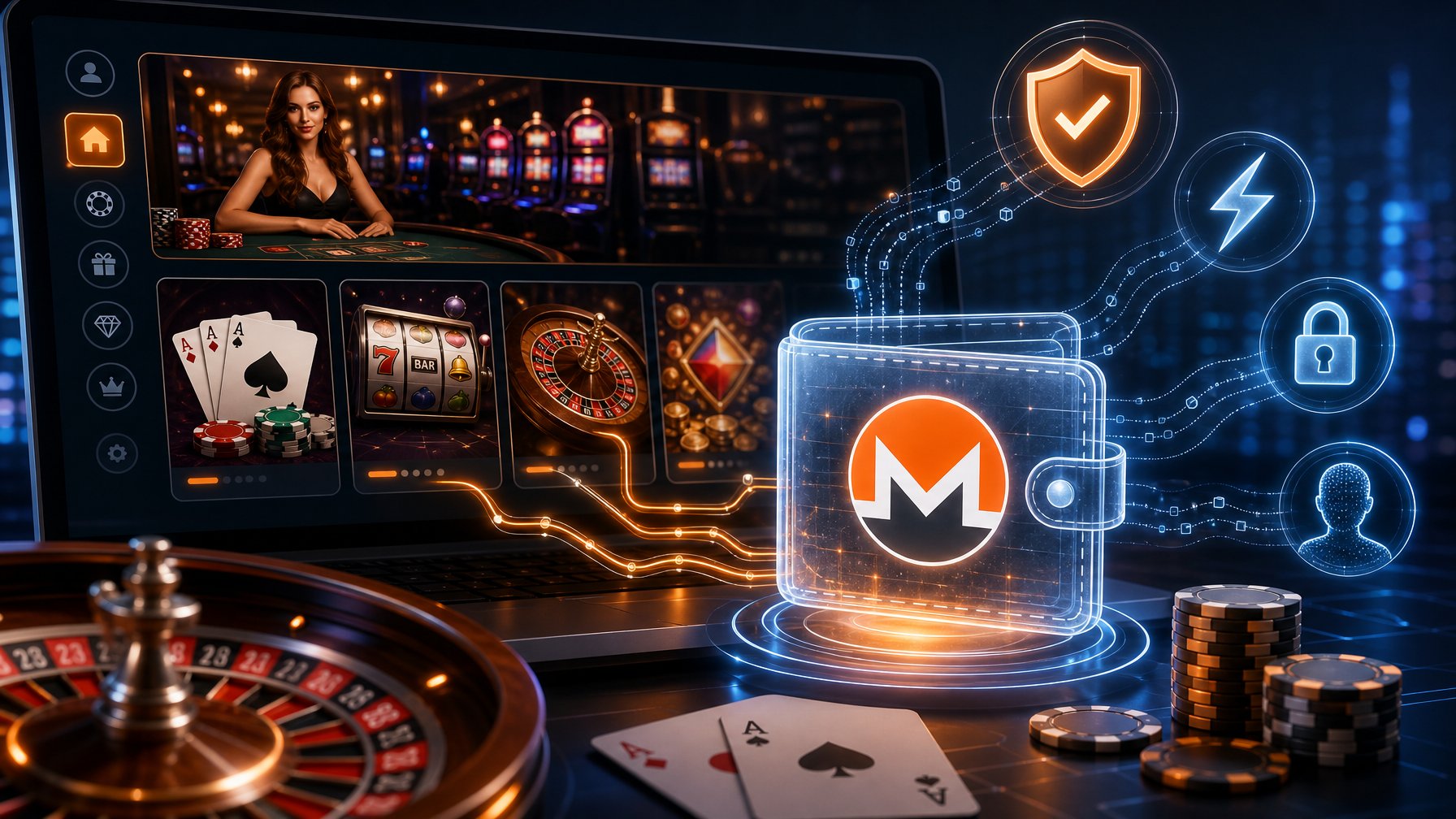
Most casinos that accept Monero are pretty focused on crypto and tend to offer a huge range of games. In my experience, you’ll see a ton of slots from all sorts of game studios.
Table games like blackjack, roulette, and baccarat are almost always there. They deliver that classic casino feeling you might be looking for.
It doesn’t stop there—video poker and big jackpot games are usually in the mix, too. If you’re chasing a life-changing win, those progressive jackpots can get wild.
Some sites even toss in a sportsbook section, but not all. The game selection mostly depends on the casino, not the payment method. Many Monero-focused sites also offer “provably fair” games, which just means you can check they’re not cheating you—nice peace of mind, right?
Software And Live Gaming Ecosystems
Crypto gaming platforms that take XMR usually pull in games from all kinds of providers. You might see the BetConstruct platform managing everything behind the scenes, but the real stars are the game studios—NetEnt, Pragmatic Play, Play’n GO, Red Tiger, and plenty more.
NetEnt and Pragmatic Play especially have a reputation for top-notch slots. You’ll also run into titles from Betsoft, Endorphina, Spinomenal, and Thunderkick. For live dealer games, Evolution Gaming handles most of the action, so you get live blackjack, roulette, baccarat, and even those game show-style experiences.
And honestly, the live casino vibe at a Monero casino feels just like what you’d get at any traditional online casino. You get the immersive atmosphere, but with the bonus of keeping your financial details private.
The real difference in game quality comes down to which software licenses the casino holds. Just because a casino takes Monero doesn’t automatically mean you’ll get the best games. There’s a bit of luck involved there.
Support And Account Experience
Customer support at XMR casinos can be a mixed bag. Crypto-first platforms often have live chat available 24/7, which is a lifesaver if your deposit or withdrawal gets stuck.
One thing to keep in mind: some Monero casinos skip most of the “know your customer” (KYC) checks when you sign up. That makes registration super fast, but it might mean there’s less consumer protection compared to fully licensed operators. If you want peace of mind, it’s smart to stick with casinos that show off their licenses, no matter how you pay.
Safety, Verification, And Important Drawbacks
Privacy Versus Transparency
Monero’s privacy setup is honestly next-level. Thanks to ring signatures, RingCT, and stealth addresses, nobody—not blockchain analysts, regulators, or random folks—can snoop on your transactions.
For casino players, that means you get a real layer of financial privacy. When you deposit Monero at a crypto casino, there’s no public record tying your identity to the transaction.
But here’s the flip side. If something goes wrong—maybe a deposit doesn’t show up—you can’t just point to a public transaction ID and have a third party verify it. Monero makes it harder to audit things for dispute resolution, at least compared to more transparent blockchains.
KYC, Compliance, And Payment Proof
Lots of Monero casinos advertise themselves as low-KYC or even no-KYC. In reality, if a casino operates in a regulated country, they’re legally required to check your identity if you deposit or withdraw above certain amounts, no matter how you pay.
Casinos in less tightly regulated places might skip KYC, but that also means you have less protection as a player. Some folks use Tor browsers for extra privacy when accessing Monero casinos—just a heads-up in case you’re privacy-obsessed.
Advanced users sometimes combine Monero with Tor for maximum anonymity. This combo sits in a legal gray area in many places, so be aware of your local laws.
Using Tor with Monero hides even your IP address from the casino, giving you a super private setup. For some, that’s a big deal.
If you ever need to prove a Monero payment to a casino, you’ll have to share a private transaction key. Only the sender (that’s you) can generate this key, so hang onto it just in case your deposit needs to be confirmed later.
Risks To Watch Before You Pay
There are a few important risks to think about before you go all-in with XMR at a casino.
-
Irreversible transactions: Send Monero to the wrong address, and it’s gone for good. There’s no chargeback, no central authority, and no appeals process.
-
Exchange delistings: Some big exchanges have dropped XMR due to regulatory pressure. You might need to use a smaller exchange or peer-to-peer market to buy Monero, and that can come with extra risks.
-
Price volatility: Crypto prices bounce around a lot. The value of your XMR deposit might be higher or lower by the time you cash out—sometimes by quite a bit.
-
Limited casino acceptance: Monero isn’t as widely supported as Bitcoin, Ethereum, or Litecoin. Not every casino lets you withdraw in XMR, so always check that you can both deposit and withdraw before you sign up.
How It Compares With Other Casino Payment Options
Compared With Bitcoin And Other Cryptocurrencies
Monero’s biggest edge over Bitcoin is privacy. Every Bitcoin transaction is public—anyone can look up your wallet address and see exactly what you’ve been up to. Monero, on the other hand, hides all the details by default.
|
Factor |
Monero (XMR) |
Bitcoin (BTC) |
Ethereum (ETH) |
|---|---|---|---|
|
Transaction Privacy |
Full (by protocol) |
None (public ledger) |
None (public ledger) |
|
Typical Network Fee |
Very low |
Variable, can be high |
Variable, can be high |
|
Casino Acceptance |
Growing but limited |
Widest availability |
Wide availability |
|
Confirmation Speed |
Fast (approx. 2 min per block) |
Slower (10 min per block) |
Moderate |
|
Exchange Availability |
Reduced due to delistings |
Very widely available |
Widely available |
If privacy is your top concern, Monero comes out ahead—no contest. If you care more about having tons of casinos to choose from and the easiest way to move money in and out, Bitcoin is still the practical pick.
Some big names like FortuneJack, 1xBit, 1xSlots, and 1xBet all support Monero. Many players love 1xBit for its huge game selection and Monero support. These sites often make the “best Monero casino” lists thanks to their game variety and crypto-friendly approach.
Compared With Cards, E-Wallets, And Bank Methods
Let me break this down for you: Monero gives you stronger privacy and lower fees than the usual payment methods like cards or bank transfers. However, it does come with a bit more technical setup and not as much protection if things go wrong.
|
Factor |
Monero (XMR) |
Debit/Credit Cards |
E-Wallets |
Bank Transfer |
|---|---|---|---|---|
|
Privacy |
Very high |
Low |
Moderate |
Low |
|
Deposit Speed |
Fast |
Instant |
Instant |
Slow |
|
Withdrawal Speed |
Fast to moderate |
3 to 5 days typical |
24 to 48 hours typical |
3 to 5 days typical |
|
Fees |
Very low |
Low to moderate |
Low to moderate |
Variable |
|
Bonus Eligibility |
Varies by casino |
Usually eligible |
Often excluded |
Usually eligible |
|
Chargeback Protection |
None |
Yes |
Partial |
Limited |
|
Ease of Use |
Moderate (requires wallet) |
High |
High |
Moderate |
If you care most about privacy and quick transactions, Monero stands out compared to cards or bank transfers. E-wallets like Skrill or Neteller are a bit of a compromise, but keep in mind that casinos often leave them out of bonus offers.
Monero's bonus eligibility can be hit or miss, but it's not as frequently excluded as e-wallets usually are. Just something to consider if chasing bonuses is your thing.
Pros And Cons At A Glance
Pros
|
Advantage |
Why It Matters |
|---|---|
|
Strongest privacy of any mainstream crypto |
Sender, receiver, and amount are all hidden by protocol, not just policy |
|
Very low network fees |
Transaction costs are a fraction of what Bitcoin or card methods may charge |
|
Fast deposit confirmations |
Funds typically reach the casino within 30 minutes of sending |
|
No geographic payment barriers |
Works in regions where cards or bank transfers face restrictions |
Cons
|
Disadvantage |
Why It Matters |
|---|---|
|
Limited casino acceptance compared to Bitcoin |
Fewer operators support XMR, especially for withdrawals |
|
Irreversible transactions with no fraud protection |
A wrong address or disputed payment has no recovery mechanism |
|
Exchange delistings reduce acquisition options |
Regulatory pressure has removed XMR from several major platforms |
|
Price volatility affects real value |
The XMR-to-fiat rate can shift significantly between deposit and withdrawal |
Monero isn't for everyone, and that's totally fine. If you're curious about how it stacks up next to other options, you can browse our full range of casino payment method guides at FreeCasino.co to see what matches your style.