












Instant bank payment stands out as one of the most practical ways to move money between your bank account and an online casino. Unlike card payments, it skips the card network and doesn’t require a third-party wallet.
In my experience, using bank transfer deposits means your funds go directly from your account—no middlemen, no fuss. If you’re after the speed of a card deposit but want the directness of a bank transfer, instant bank payment really carves out its own lane.

This form of instant banking lets players jump into the action right away. It creates a seamless bridge between your money and your favorite gaming spots.
Choosing instant bank payment at the cashier means you can skip entering card numbers or topping up a wallet. I’ve found this especially handy when you want to grab the latest bonuses or free spins before they’re gone.
It’s also perfect if you want to join a live table without missing your seat. Timing really is everything in those games.
The method runs on open banking rails, so deposits land instantly at most major online casinos. Providers like Trustly, Brite, Zimpler, Volt, iDEAL, Interac, EPS, and ACH-based services connect your account straight to the casino’s cashier.
You authenticate through your bank’s own interface, approve the transfer, and you’re off. No card details. No e-wallet top-ups. Simple.
Still, it’s not a magic bullet for everyone. Withdrawal speeds can be all over the place. Some regions have patchy coverage. And if you’re in the US, the landscape looks a lot different than in Europe. Here’s what you need to know before diving in.
Key Takeaways
-
Instant bank transfer casinos usually clear deposits in seconds, but withdrawals can take longer depending on your bank and the casino’s internal process.
-
Players want fast payouts, and direct banking options consistently deliver some of the quickest access to your winnings.
-
In the US, you’ll mostly find ACH and eCheck rails at regulated casino sites. European players get access to faster open-banking options.
-
Deposits via instant bank payment almost always qualify for welcome bonuses, but always double-check the casino’s terms before you deposit.
What It Is And Why Players Use It
Instant bank payment isn’t just one product. It covers any payment method that moves your funds straight from your bank account to a casino using real-time or near-instant rails.
Think open-banking providers, domestic instant transfer schemes, and ACH-based platforms—they all fall under this umbrella.
|
Key Fact |
Detail |
|---|---|
|
Method type |
Direct bank-to-casino transfer via open banking or instant ACH rails |
|
Common providers |
Trustly, Brite, Zimpler, Volt, Pix, EPS, POLi, iDEAL, Interac, Giropay, ACH/eCheck (US) |
|
Typical deposit speed |
A few seconds to under 1 minute |
|
Typical withdrawal speed |
15 minutes to 2 business days (varies by bank and provider) |
|
Withdrawals supported |
Yes, at most operators |
|
Typical fees |
Usually free at casino level; some banks may apply a small fee |
|
Regulatory status |
Providers typically licensed by financial regulators (e.g., Finansinspektionen for Trustly) |
The main draw is simple. You log in with your bank, authorize the payment, and the casino gets the money almost instantly.
No card details linger on the casino’s servers. No wallet account to juggle. Most major banks play nice with these services, so you probably won’t need to open a new account.
How Instant Bank Payment Differs From Standard Bank Transfers
Standard bank transfers—sometimes called wire transfers—are old-school. You initiate them manually through your bank, and they can take one to five business days to arrive, depending on where the money’s going.
Instant bank payment changes the game. The payment provider connects straight to your bank using open banking APIs. You authenticate and approve everything in one go, and the funds travel instantly instead of waiting for batch processing.
From a player’s perspective, this difference is night and day. Standard wires are useless if you want to start playing right now. Instant bank payment actually delivers the speed today’s casino players expect.
Plenty of casinos now prefer these systems over the old-school banking methods. I can’t blame them.
Who Operates The Payment Flow And What That Means For Players
The casino never connects to your bank directly. A licensed payment provider sits in the middle, handling the technical handshake, the redirect for authentication, and the money movement.
In Europe, you’ll see names like Trustly (regulated in Sweden), Volt, Brite, and Zimpler. In the Netherlands, iDEAL is everywhere. German players often use Sofort or EPS. Canadians get Interac, while Aussies have Poli.
Your credentials never touch the casino’s systems. The provider handles authentication on its own regulated platform, then tells the casino when the money’s good to go.
When It Is A Better Fit Than Cards Or Digital Wallets
If you want both speed and privacy, instant bank payment is a strong pick. You get card-like deposit speeds, but your card details stay private.
I’ve watched plenty of players start with Visa or Mastercard, only to switch once they see how painless direct bank links are. Compared to e-wallets like Skrill or Neteller, instant bank payment is even simpler—no wallet balance to manage, no extra login, and you’re rarely blocked from casino bonuses.
Cards are accepted almost everywhere, but US banks love to flag gambling transactions and block them. Mobile methods like Boku are fine for small deposits, but instant bank transfer gives you higher limits and direct payouts. In my experience, bank transfers dodge a lot of the headaches that come with cards and mobile payment blocks.
How Deposits And Withdrawals Usually Work

Using instant bank payment at a casino cashier is easier than most players think. Deposit flow is quick and nearly automatic.
Withdrawals, though, involve more steps on the casino’s side. That’s where most of the waiting creeps in.
What To Expect At The Casino Cashier
At the cashier, look for instant bank payment by provider name—Trustly, iDEAL, ACH, eCheck, or something similar. Enter your deposit amount, and you’ll get sent to the payment provider’s interface.
Pick your bank from the list, log in the usual way (often with biometrics on your phone), and approve the payment. You’ll get bounced back to the casino, and your balance should update within seconds.
The whole process rarely takes more than two minutes. No card numbers, no wallet top-ups, no extra friction.
Typical Deposit Confirmation And Payout Flow
Deposits confirm almost instantly because the provider notifies the casino in real time as soon as you approve the payment. The casino credits your account right away—no need to wait for the funds to physically settle.
Withdrawals move at a different pace. The casino has to approve your payout request, and that can take anywhere from a few minutes to 24 hours, depending on their process.
After approval, the provider pushes the funds to your bank. If your bank supports instant incoming transfers, you’ll see the money in minutes. If not, you might have to wait until the next business day.
Why Withdrawals Can Be Slower Than Deposits
Deposit speed is fast because you’re authorizing an outbound payment from your bank in real time. The money moves instantly since you’re the one initiating it.
Withdrawals depend on the casino’s approval time and your bank’s processing schedule. Even if the provider supports instant payouts, your bank might only credit incoming payments during business hours.
Casinos also run compliance checks on withdrawals, and that adds time no matter what payment method you use. In my experience, most instant bank payment withdrawals land within a few hours to one business day—sometimes faster, occasionally slower if your bank drags its feet.
Speed Fees Limits And Bonus Eligibility

Let me be blunt: if you don't know the numbers before you deposit, you're probably setting yourself up for a headache down the line. Fees and limits swing wildly between casinos and payment providers, so always check the fine print.
The table below gives you a sense of what to expect, but remember—these are ballpark figures, not gospel for every operator.
|
Factor |
Typical Range |
|---|---|
|
Deposit speed |
Seconds to under 1 minute |
|
Withdrawal speed |
15 minutes to 2 business days |
|
Casino-side deposit fee |
Usually free |
|
Casino-side withdrawal fee |
Usually free; some casinos charge a small flat fee |
|
Minimum deposit |
Often $10 to $20 at most regulated casinos |
|
Maximum deposit |
Varies widely; typically $500 to $5,000 per transaction |
|
Minimum withdrawal |
Often $10 to $25 |
|
Maximum withdrawal |
Varies by casino; often $2,500 to $10,000 per week |
Typical Timeframes And Transaction Costs
In my experience, you almost never pay a deposit fee at the casino itself. Payment providers make their money from the casino, not you, so most players never see a charge.
Your bank might tack on a transfer fee, but that's rare—most checking accounts in the US and Canada don't charge for outbound instant transfers. If you ever see a fee, it's usually buried in the bank's terms, so it's worth double-checking if you're unsure.
Withdrawals are usually just as cheap. The main thing to watch is whether the casino charges a processing fee for each withdrawal.
Some operators sneak in a flat fee (think $1 to $3 per withdrawal), but most don't bother. I've seen this more with smaller or offshore brands, so always skim the cashier terms before you cash out.
Minimums Maximums And Currency Considerations
Most regulated casinos I've played at set the minimum deposit for instant bank payments somewhere between $10 and $20. Maximums per transaction are all over the map—anywhere from $1,000 to $5,000, and sometimes higher if you verify your account fully.
Currency handling can get messy. If your bank account and the casino use different currencies, your bank will slap on a conversion fee at their standard rate. Don't get caught off guard; always check for currency conversion costs before you hit "confirm."
Withdrawal limits matter, too. Casinos set them to help players manage budgets, but honestly, they're just as much about risk management on the casino's end.
Set your own deposit limits if you want to stay in control. I've found that sticking to those limits helps avoid the temptation to chase losses—something even seasoned players slip up on.
Do Instant Bank Payment Deposits Usually Count For Promotions
Here's where instant bank payment really shines: almost every casino counts these deposits for bonuses. Whether it's a welcome offer, reload deal, or cashback, you're usually in the clear.
Free spins? Yep, you can snag those too. You won't get frozen out of promos just because you used a direct bank transfer.
On the flip side, e-wallets like Skrill and Neteller often get excluded from bonuses. Casinos see more chargebacks and fraud with those, so they play it safe.
Instant bank payments don't have that problem, so they're treated more like debit cards for bonus purposes. That's a big win in my book.
Every casino writes its own bonus terms, so don't assume—always check the rules before you deposit. If you're chasing a no deposit bonus or a low-wagering offer, read the fine print. I can't tell you how many players I've seen miss out because they didn't check the requirements.
Availability Safety And Verification Checks
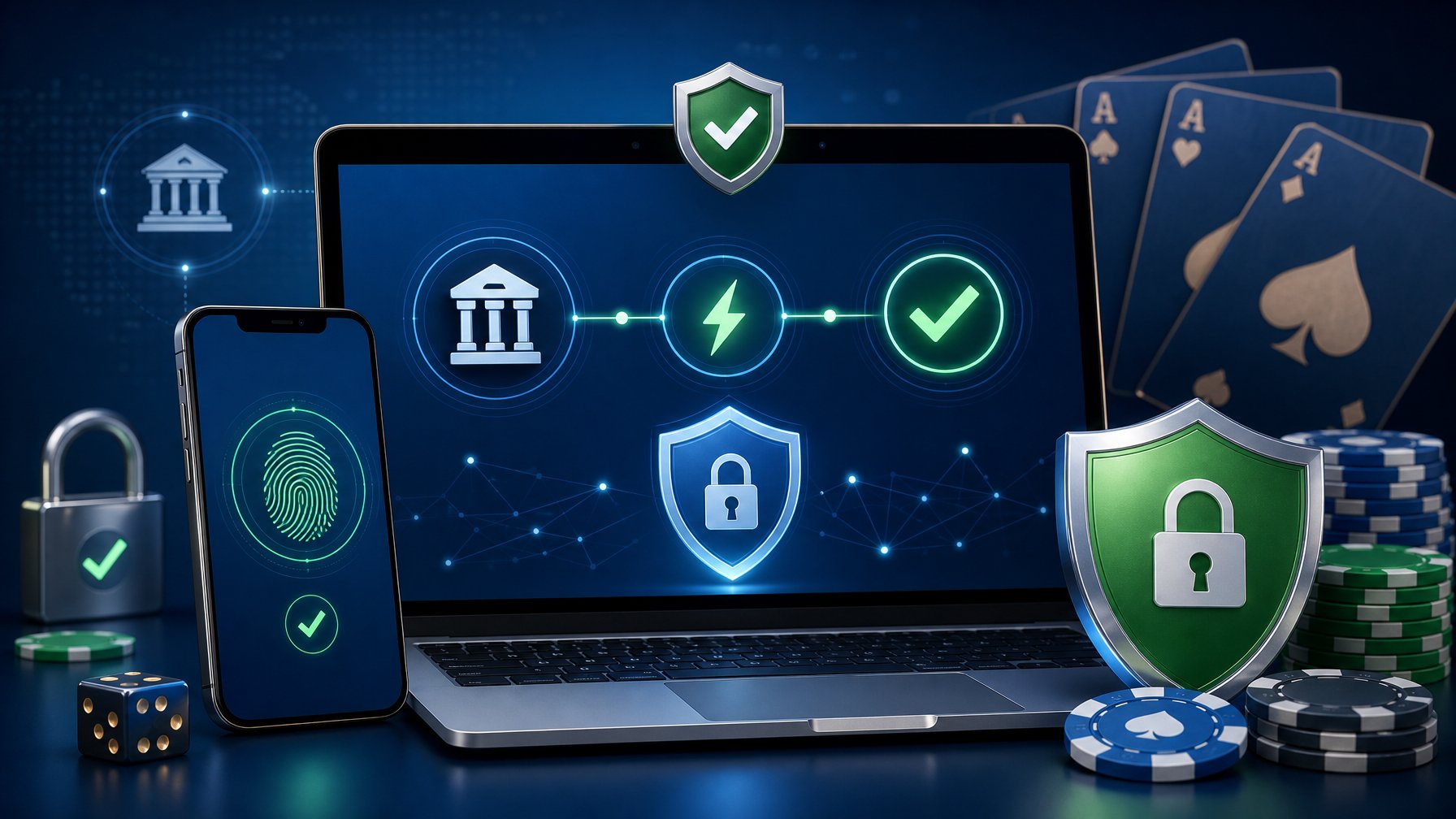
Let's talk availability. Not every player gets access to instant bank payment, and it really depends on your country and the casino's payment partners.
Knowing where the method actually works—and what security it brings—makes a huge difference in picking the right deposit option for your needs.
Regional Availability And Supported Banking Networks
Availability jumps around a lot by country and by which provider the casino plugs into. I've seen players in one state get instant access, while their neighbor can't use the method at all.
|
Region |
Common Method |
Notes |
|---|---|---|
|
USA (regulated states) |
ACH, eCheck, Trustly |
Available in MI, NJ, PA, WV, and other regulated iGaming states |
|
Canada (Ontario) |
Interac, Trustly |
Widely supported at AGCO-licensed operators |
|
Sweden |
Trustly (Pay N Play) |
Default method at nearly all Swedish-facing casinos |
|
Netherlands |
iDEAL |
Near-universal at Dutch-licensed operators |
|
Germany |
Trustly, Klarna |
Sofort was absorbed into Klarna in 2025 |
|
UK |
Trustly, PayByBank |
Growing acceptance at UKGC-licensed operators |
|
Australia |
Limited |
Federal AML rules restrict instant bank gambling deposits |
In the US, ACH and eCheck rule the day. Trustly's making moves in several regulated states, handling real-time deposits at licensed brands.
I've seen the top bank transfer casinos in New Jersey, Michigan, and Pennsylvania go all-in on these systems, mostly because they want to pay players fast and avoid card declines.
Security Features And Account Protection
If you care about security (and you should), instant bank payment is tough to beat. Your bank login and account number never hit the casino's servers. All the authentication happens on your bank's or the payment provider's side, not the casino's.
Most big-name providers use serious encryption and play by strict regulatory rules. For example, Trustly is regulated by Finansinspektionen in Sweden, and plenty of operators hold Malta Gaming Authority licenses.
On top of standard bank-level encryption, these platforms use SSL to keep your data secure when it moves across the web. Open-banking providers in the EU run under PSD2, so two-factor authentication is the norm. The casino never stores your banking details, which is a relief for privacy-minded folks.
One bit of advice: use a strong, unique password for your casino login. The payment provider keeps your funds safe, but your account security is still on you.
KYC AML And Other Friction Points To Watch
Instant bank payment can actually make KYC a bit less painful. Since the payment provider already confirmed your bank identity, the casino sometimes uses that as partial ID verification.
This is the whole idea behind Trustly's Pay N Play—no registration needed in some markets, just bank authentication. Super slick when it works.
In the US, though, casinos still run their own KYC and anti-money laundering checks. You'll need to verify your identity, address, and sometimes even your source of funds before you can withdraw big amounts.
Responsible gambling tools are often baked right into the cashier, which is nice. But the first withdrawal always takes longer—KYC checks slow things down. Plan for that extra processing time on your first cashout, especially if you're new to the site.
How It Compares With Other Casino Payment Options
Every payment method has its quirks and trade-offs. Instant bank payment nails some things and falls short on others—no method's perfect, and anyone who tells you otherwise hasn't played enough.
Against Cards And Traditional Bank Payments
Visa and Mastercard are the old standbys at most casinos. They're everywhere, and deposits hit instantly. But here's the rub: US banks still decline a ton of gambling transactions, even if you've got the funds.
Instant bank payment sidesteps that problem. Transfers go straight from your bank to the casino through a payment provider, not the card networks. In states where card payments get declined a lot, instant bank payment is a lifesaver.
Traditional wire transfers? They're dinosaurs—fine for moving big money, but way too slow for regular play. I've used wires for five-figure withdrawals, but wouldn't touch them for day-to-day gaming.
Against E-Wallets And Prepaid Methods
E-wallets like Skrill and Neteller are fast and convenient, but there are catches. Many casinos block e-wallet deposits from bonus offers. Plus, you have to fund the wallet before you can play, which adds an extra step.
Prepaid vouchers (Neosurf, CashLib, AstroPay) are deposit-only. They're anonymous and always count for bonuses, but you can't withdraw back to them—so you'll need another method for cashouts. MiFinity and Jeton look like e-wallets, but face similar bonus exclusions.
Instant bank payment wins on bonus eligibility and saves you the hassle of topping up a wallet. You can cash out the same way you deposit, which is a huge plus. The only real downside? Withdrawals can be a bit slower than e-wallets, depending on your bank's speed.
Who Should Choose It And Who Should Not
Instant bank payment is a great fit if you want to link your bank account directly, skip the e-wallet juggling, and make sure your deposits count for bonuses. It's also a solid choice if your debit card keeps getting declined by casino processors.
On the other hand, if you live in a market where instant bank payment isn't supported, or you want the absolute fastest withdrawals, e-wallets might edge it out. And if you prefer to keep your bank account totally separate from your casino activity, this method probably isn't for you.
Final Verdict With Pros And Cons
Instant bank payment stands out as a mature, tightly regulated option that genuinely benefits casino players in supported regions. In my experience, the deposit process is lightning-fast—often faster than cards or e-wallets.
Plenty of folks pick bank transfer casinos for the speedy payouts. Bonus eligibility usually stays intact, which is a nice perk if you’re chasing those promos.
Security’s rock solid since your banking details never actually touch the casino’s servers. Still, there are a few drawbacks—namely, it’s not available everywhere, withdrawals can lag depending on your bank, and sometimes your bank just won’t play ball.
Best Use Cases For This Method
Honestly, instant bank payment shines brightest for players in US regulated states, most of the EU where open banking is the norm, and Canada. If you want to fund your casino account straight from your bank without the hassle of card declines or topping up a wallet, this is your ticket.
It’s also a solid choice if you’re eyeing a welcome bonus but don’t want to get tripped up by e-wallet exclusions. That said, if you’re in a market without strong instant-banking support, or you’re dead set on keeping your bank identity separate from your casino account, you might want to look elsewhere.
When I’m picking a bank transfer casino, I always check for a deep game library. You want a mix: slots, tables, live dealer—something for every mood.
It helps if the site partners with heavy-hitters like Evolution Gaming, Playtech, Evoplay, and Pragmatic Play. Especially if you’re into live casino, those names matter. But once your cash hits your account, you can play whatever you want—the payment method won’t limit your game selection.
Four Advantages For Casino Players
|
Advantage |
Why It Matters |
|---|---|
|
Near-instant deposits |
Funds usually hit your account in seconds—sometimes even faster than cards. |
|
Generally bonus-eligible |
Most casinos let you claim bonuses with instant bank deposits, unlike a lot of e-wallets. |
|
Strong security model |
Your bank credentials stay with your bank—casinos never see them. It’s all handled in your bank’s secure environment. |
|
No card decline risk |
Everything goes bank-to-bank, so you skip the usual Visa or Mastercard declines that US players dread. |
Four Drawbacks To Consider
|
Drawback |
What It Means In Practice |
|---|---|
|
Variable withdrawal speed |
Payouts can drag if your bank or the casino takes its sweet time approving transactions. |
|
Uneven regional availability |
Some banks and countries just aren’t connected. US players especially get fewer choices compared to Europe. |
|
KYC still required |
You’ll still need to verify your identity before cashing out, even if you used bank authentication to deposit. |
|
Bank-to-bank traceability |
Your casino transactions are tied directly to your personal bank account. Not everyone’s comfortable with that. |
If instant bank payment doesn’t fit your style, FreeCasino.co has you covered with guides to all sorts of payment options—from prepaid cards and crypto to e-wallets. You can check out the full lineup and pick what works for you at freecasino.co/payment-methods/.