












Gift cards occupy an odd, but useful, middle ground in the world of online casino payments. They aren’t quite like your standard debit or credit card, definitely not e-wallets, and don’t behave like bank transfers either.
Choosing the right gift card for casino deposits means you’ve got to understand these differences. If you’re new to online casinos and want instant deposits, identifying which casinos actually accept gift cards is step one.
These are prepaid cards, often tied to networks like Visa or Mastercard, or sometimes issued directly by a casino operator. Lately, I’ve seen more gaming-specific gift card services popping up for digital use, and honestly, they’re catching on fast for casino deposits.
Depositing with a gift card is dead simple, but let’s not sugarcoat it: you can’t withdraw winnings back to the card. That one limitation shapes nearly every decision you’ll make about using gift cards for gambling.
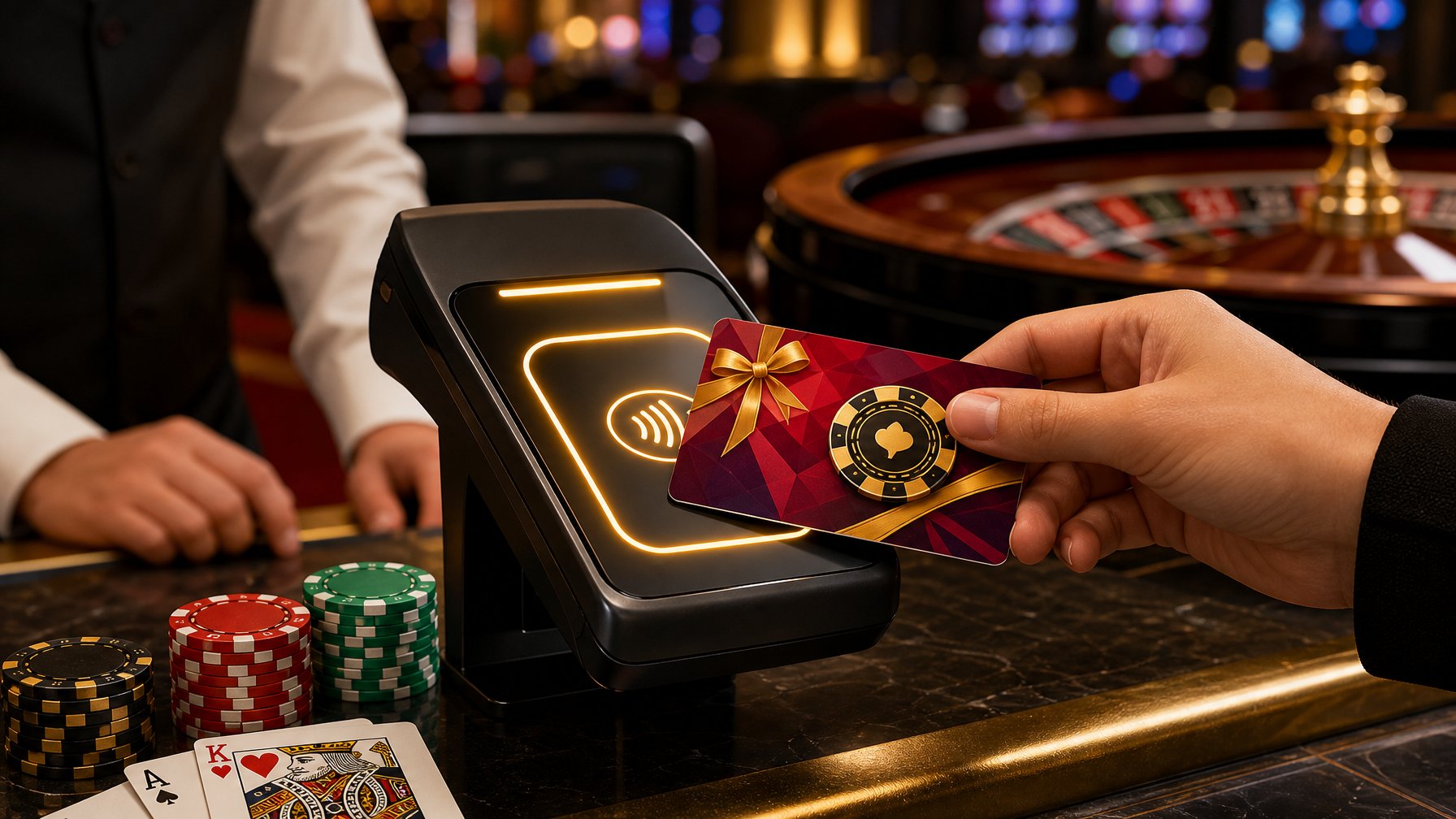
For US players, gift card casino deposits have become a real, practical option at several major legal sites. I’ve personally used them at places like DraftKings Casino, FanDuel Casino, BetMGM, Borgata, and BetRivers—though you’ll want to double-check availability in your state.
Options range from network-branded electronic cards to niche gaming gift cards sold on dedicated platforms. This variety caters to different budgets and play styles. If you’re strict about sticking to a gambling budget, gift cards often rank high for discipline and control.
Key Takeaways
-
Gift cards are fantastic for instant casino deposits, but you’ll always need a separate method to cash out your winnings.
-
Visa and Mastercard gift cards can work wherever debit cards are accepted—but only if you register them with a billing address first. Don’t skip that step.
-
Gaming-only cards like Game On are designed for regulated US casino sites. They come with their own purchase fees and deposit limits, so read the fine print.
|
Fact |
Detail |
|---|---|
|
Method type |
Prepaid gift card (network-branded or operator-specific) |
|
Typical deposit speed |
Instant |
|
Withdrawal support |
No |
|
Typical transaction fees |
None at casino; purchase fee may apply at point of sale |
|
Minimum deposit |
Typically $10 |
|
Bonus eligibility |
Varies by casino and card type |
|
Regulatory status |
Varies; network cards governed by card issuer rules |
What Gift Cards Are And How They Fit Casino Banking
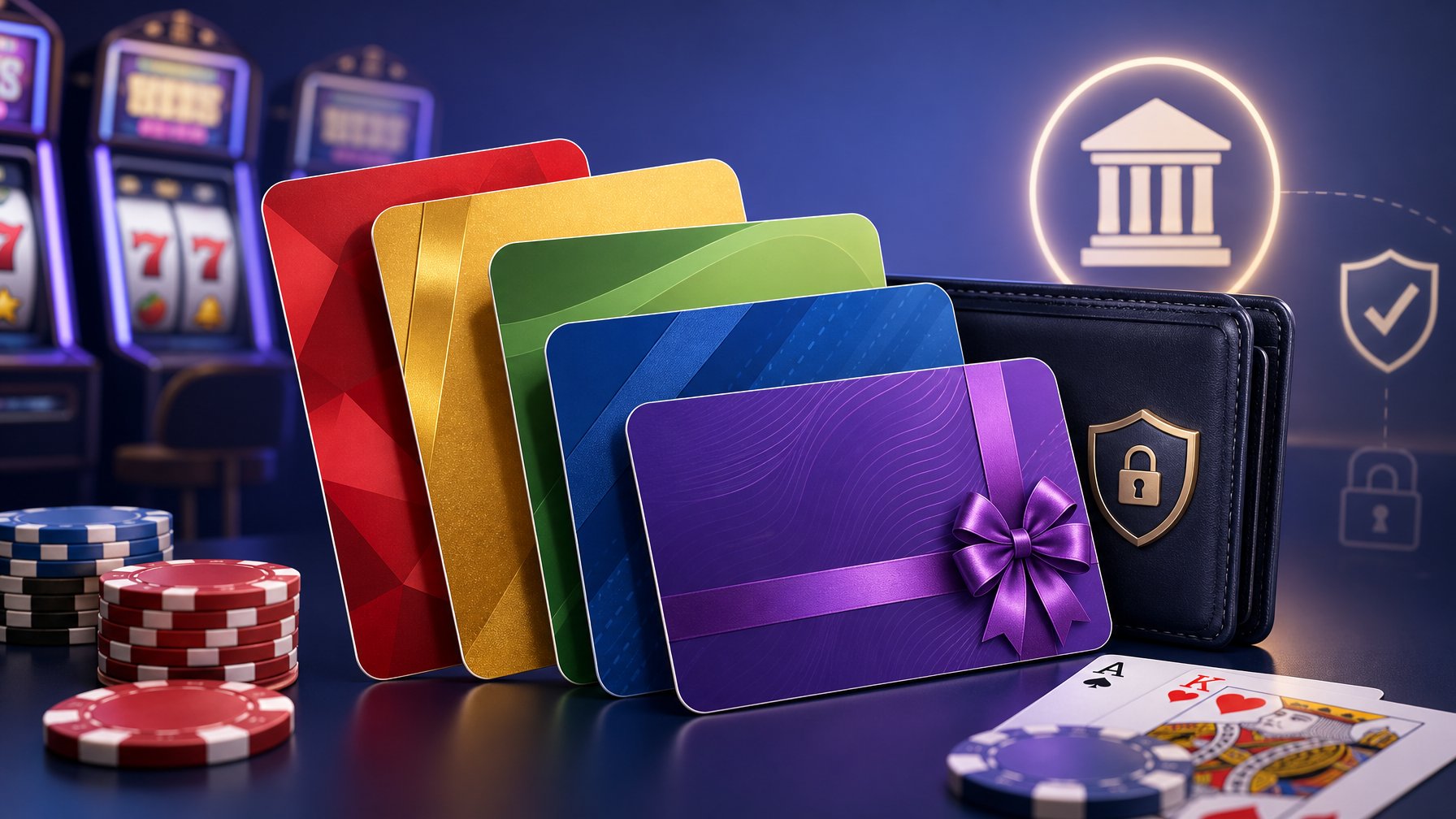
A gift card is basically a prepaid card loaded with a set amount of cash. You might get one in physical form or as a digital code, but either way, you’re spending the balance you put on it—no connection to your bank or credit line.
Within casino banking, gift cards act as a one-way ticket for deposits. They get your money onto the site fast, keep your bank details private, and lock in your max spend at whatever you loaded. Over the years, gift cards have morphed from simple store vouchers into surprisingly handy digital tools for gamblers.
Main Gift Card Types Used For Casino Deposits
Three main types of gift cards come up when you’re looking to make a casino deposit:
-
Network-branded electronic gift cards (Visa, Mastercard, Amex, Discover): These look and act like debit cards. You can use them anywhere the card network is accepted—including most casino cashiers that take debit.
-
Gaming-specific gift cards (think Game On): These are built just for online gambling at sites like BetMGM, BetRivers, DraftKings, FanDuel, Hard Rock Bet, and Parx. You can load them up to $400, but there’s a $5.95 activation fee at purchase.
-
Operator-branded cards: Some casinos offer their own gift cards, like BetMGM or DraftKings cards, which you redeem right in their cashier. Using these sometimes helps you rack up loyalty points too.
How Branded And Generic Cards Differ
In practice, the difference between these cards matters. Operator-branded cards drop into the casino’s cashier with almost no hassle. Gaming-specific cards like Game On are purpose-built for gambling and already play nicely with regulated US casino sites.
Generic Visa or Mastercard gift cards offer more flexibility, but there’s a catch. You need to register the card with your name and the same billing address you used for your casino account. Skip that, and you’ll almost always get declined by the payment processor.
When Gift Cards Make Sense For Players
Gift cards work best for players who want to keep gambling funds totally separate from their main bank account. The fixed balance acts as a hard stop on spending, which is honestly a godsend for bankroll discipline.
They’re also great if you’ve got a gift card as a present and want to put it to use. I see a lot of recreational players go this route for that exact reason.
In states where banks block gambling transactions, gift cards can be a sneaky workaround. Plenty of top Visa gift card casinos let you sidestep those annoying bank declines. If you like handling cash, PayNearMe is a similar method for loading up your account—handy in certain markets.
But if you’re a high-volume player, the lack of withdrawal support and the hassle of buying new cards each time gets old fast.
How Deposits Work And Why Withdrawals Need Another Method
Depositing with a gift card at a casino is about as straightforward as it gets. Withdrawing, though? That takes some planning, since you can’t send winnings back to a gift card at any regulated US casino.
Using Gift Card Deposits In Practice
At casinos that accept gaming gift cards, here’s the usual drill. Head to the cashier, pick the gift card or prepaid card option, enter your card number and any PIN or security code, then confirm the amount. Your funds show up instantly—at least in my experience, I’ve never had to wait.
If you’re using a network-branded gift card (Visa or Mastercard), you’ll pick the debit or credit card option and enter the details like a regular card. The casino’s system treats it as a normal card transaction.
Registration is the step everyone forgets. Before you try to deposit, register your generic Visa or Mastercard gift card at the issuer’s website with the same name and billing address on file with the casino. I’ve seen more failed deposits from skipping this than anything else.
Why Winnings Cannot Be Sent Back To A Gift Card
Payment processors for casinos just don’t allow outbound transfers to single-use prepaid gift cards. It’s not the casino’s fault—this is a technical and regulatory wall.
Prepaid gift cards don’t have the routing numbers, account holder verification, or reloadable features needed for a return payment. Even if the casino wanted to send money back, the card issuer’s system would block it.
Common Payout Alternatives After A Gift Card Deposit
Since gift cards are deposit-only, you’ll need to set up at least one withdrawal method before or soon after your deposit. Here are the most common options I’ve used at regulated US sites:
-
VIP Preferred (ACH/eCheck): Nearly universal at big operators, and you don’t have to deposit with it first to withdraw.
-
PayPal and Venmo: Available at select casinos. Personally, I prefer PayPal for speed and security.
-
Play+ card: This is a reloadable prepaid card you get from the operator. It handles both deposits and withdrawals and is available at BetMGM, Caesars Palace, DraftKings, FanDuel, and more.
-
Online banking / Trustly: These let you link your checking account for fast, direct payouts.
-
Debit card (Visa Fast Funds / Mastercard Send): If supported, you can get your winnings pushed right to your debit card—sometimes in just a few hours.
-
eCheck and e-check transfers: These take longer (usually two to five business days), but they’re reliable.
-
PayNearMe: Lets you cash out at a retail location. Not every operator offers this, but it’s handy if they do.
Set up your withdrawal method early. It’s a real headache to scramble for one when you’re ready to cash out.
Speed, Fees, Limits, And Bonus Eligibility

Gift cards are quick for deposits and casinos rarely charge a fee, but you’ll want to watch out for purchase costs and some built-in limits before you buy.
Typical Processing Times And Purchase Costs
Depositing with a gift card? In my experience, funds usually hit your casino balance instantly—no waiting around once you punch in those card details.
I've never seen a processing lag at any reputable platform that takes gift cards. But here's what most players miss: the fees sneak in before you even get to the casino.
The casino itself almost never tacks on a deposit fee for gift cards. The real cost shows up at the register when you buy that card in the first place:
|
Cost Type |
Detail |
|---|---|
|
Network-branded gift card (Visa/Mastercard) |
Usually a purchase fee of $3.95 to $6.95 at retail |
|
Game On gaming gift card |
One-time activation fee of $5.95 |
|
Operator-branded gift card |
Varies; some are free, others have a service fee |
|
Casino deposit fee |
Almost always none |
Those purchase fees sting more on small deposits, so keep that in mind when planning your bankroll.
Minimum Deposit And Transaction Limit Expectations
Most casinos set a minimum deposit at about $10. Gift cards follow the same rules as other payment methods here.
The upper limit? That's dictated by the card's balance, not the casino. Game On cards top out at $400 per card. Retail Visa or Mastercard gift cards usually max out between $200 and $500, though I've seen the odd higher-value card.
If you want to deposit more than your card allows, you can split it across multiple cards—but honestly, that's a hassle and adds unnecessary friction.
How Gift Card Funding Interacts With Casino Bonuses
Bonus eligibility with gift cards is all over the place. Some regulated US casinos let deposits from gaming gift cards or operator-branded cards qualify for welcome bonuses. In those cases, you can snag a deposit match just like you would with a debit card.
But plenty of sites exclude prepaid cards—including gift cards—from bonus offers. Always, always check the bonus terms before you deposit. Look for any mention of "prepaid cards" or "gift cards" in the eligible payment methods list.
Some offers won't count gift card deposits toward a bonus or free spins. Sometimes, those spins are even tied to specific slots. If the terms aren't clear, just ask support—I've saved myself headaches that way more than once.
Once your deposit lands, you're free to hit up live dealer tables (think Evolution Gaming) or hunt for high-RTP NetEnt slots. If you're playing at a sweepstakes or social casino, the bonus setup shifts—gift cards might unlock a first purchase bonus or a batch of free sweeps coins since those sites don't use real money.
Visa Gift Cards, Operator Cards, And Other Variations
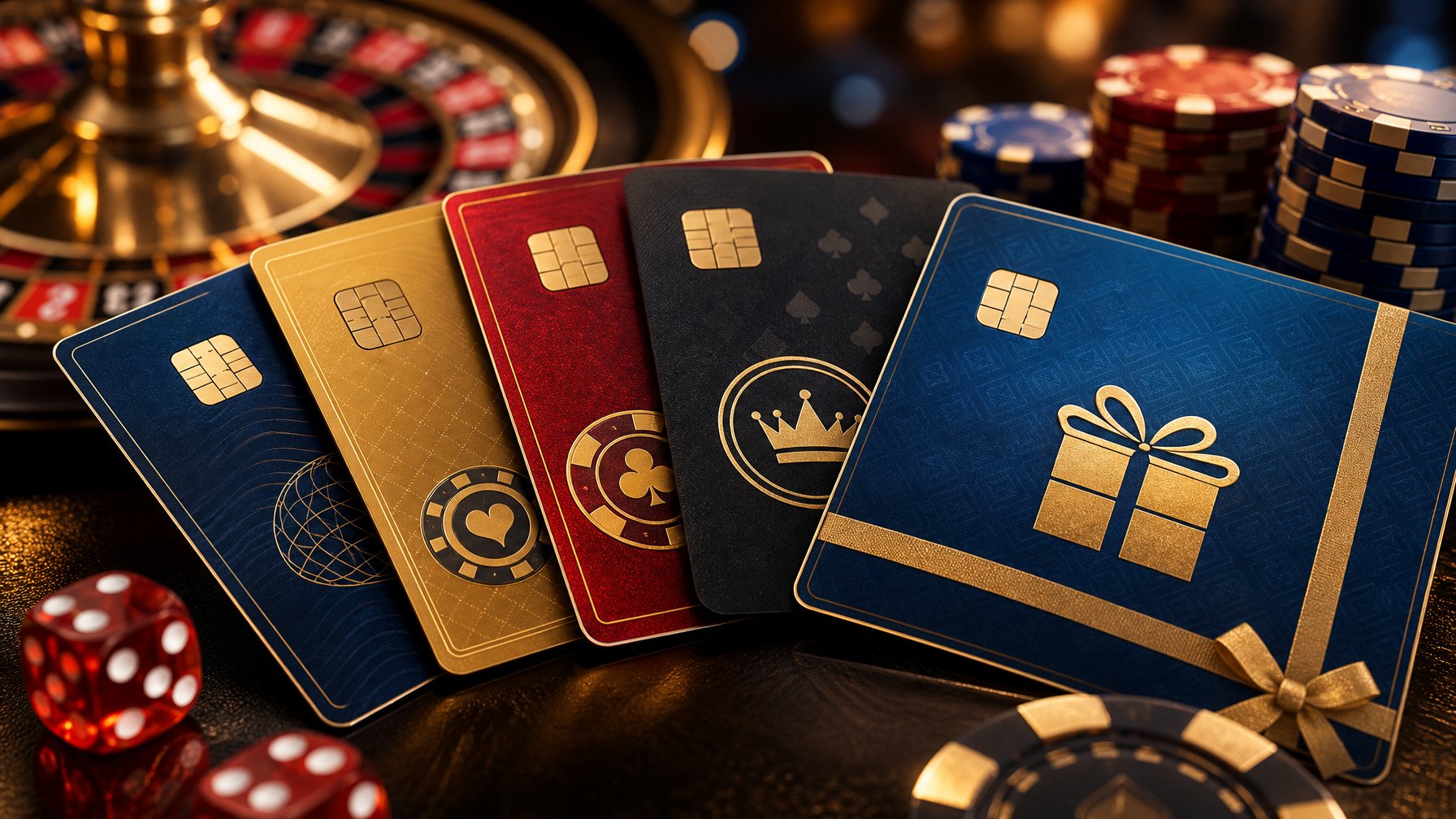
Gift cards aren't all created equal at the casino cashier. The card's brand and issuing network play a huge role in whether your deposit goes through or gets rejected.
Visa And Mastercard Gift Card Compatibility
Visa and Mastercard gift cards are the go-to for most US online casino players. They work a lot like a regular debit card, which is why so many folks (myself included) default to them.
They've got a standard card number, expiration, and CVV, so casinos can process them through the usual card payment systems.
American Express and Discover gift cards? Not so much. Some casinos that happily take Visa and Mastercard gift cards will flat-out decline AmEx, either because they don't support AmEx at all or because their payment processor flags gift cards differently.
Here's a detail most players overlook: you have to register a billing address for any network-branded gift card. If you skip this step, the casino's address check will fail and you'll get declined. Trust me, I've seen this trip up even experienced players.
Operator-Branded Card Systems In The US
Some big-name US casinos have rolled out their own branded gift cards. DraftKings has one you can buy and redeem right in their own ecosystem. BetMGM does something similar.
The Game On card is a bit different—it's not tied to just one operator. You can use it at several regulated casinos across New Jersey, Michigan, Pennsylvania, and West Virginia. Buy it online or pick one up at CVS, Walmart, or 7-Eleven.
Operator-branded and Game On cards almost always process smoother than generic Visa gift cards. They're built for casino cashiers, so you don't hit address issues or run into gambling restrictions from the card issuer.
Gift Cards At Sweeps Sites Versus Real-Money Casinos
At real-money US casinos, gift cards are strictly for deposits. But at sweepstakes casinos, it's a whole different story.
Sites like Wow Vegas let you buy premium currency or coin packages with Visa or Mastercard gift cards. Some even let you redeem your winnings for a digital gift card instead of a bank transfer.
So gift cards can work as both a way in and a way out at sweeps casinos—something you won't see at real-money sites. Daily login bonuses sweeten the deal, letting you play for free without spending a dime.
If you're dabbling in sweepstakes casinos, always check their terms to see which gift cards they accept for purchases or offer as redemption rewards. Each site handles this differently.
Security, Verification, And Responsible Use
People often call gift cards a "private" or "low-exposure" payment option, and that's true to a point. Your bank account stays out of the picture when you deposit. But don't confuse that with real anonymity—regulated US casinos will still verify your identity no matter how you fund your account.
Registration, Billing Details, And KYC Checks
Every legitimate US online casino runs a Know Your Customer (KYC) check. You'll need to provide your name, date of birth, address, and usually your Social Security Number (or at least the last four digits).
They'll also ask for a government-issued ID. This all happens at the account level, not when you add a payment method. So even if you use a gift card, your identity will get verified before you can deposit or cash out.
For network-branded gift cards, you'll need to register the card with a billing address that matches your casino account. If those details don't line up, expect a decline.
Why A Gift Card Deposit Can Be Declined
When a gift card deposit fails, it's usually for one of these reasons:
-
Unregistered card: No billing address on file with the card issuer.
-
Address mismatch: The card's registered address doesn't match your casino account.
-
Insufficient balance: The card doesn't have enough funds to cover your deposit (including any fees).
-
Issuer restriction: Some issuers block gambling transactions on gift cards, especially AmEx and certain retail-branded ones.
-
Card type incompatibility: The casino's payment processor doesn't support that particular card.
If you keep running into declines with regular gift cards, switching to a gaming-specific card like Game On or an operator-branded option usually solves the problem.
Budget Control Benefits And Their Limits
One thing I like about gift card deposits is the built-in cap. You can't spend more than what's loaded on the card, which makes it easier to stick to a budget for a session.
But let's be real—gift cards aren't a replacement for the real responsible gambling tools casinos offer. Things like deposit limits, session timers, self-exclusion, and cooling-off periods give you much stronger control. Use those tools alongside gift cards if you want a serious handle on your spending.
How Gift Cards Compare With Faster And More Flexible Options
Gift cards get the job done, but let's not kid ourselves—they're limited compared to the main options US casino players use today.
Compared With Debit Cards And Digital Wallets
A regular Visa or Mastercard debit card does everything a gift card does for deposits, plus it lets you withdraw directly to your bank. With Visa Fast Funds and Mastercard Send, I've had winnings hit my checking account in minutes at some casinos. Gift cards just can't compete there.
PayPal is another strong option where available. Deposits are instant, and withdrawals usually clear in under 24 hours. Skrill and Venmo work similarly in the right markets. These e-wallets add an extra layer of security, too. The only catch? Some casinos exclude e-wallet deposits from welcome bonuses, so check the terms before you commit.
Apple Pay is showing up at more mobile-friendly US casinos. Deposits are instant, and biometric authentication makes it slick for mobile users. Some casinos even let you withdraw via Apple Pay if they've enabled outbound payments.
That's a level of flexibility you just won't get with gift cards.
Compared With Bank-Linked Methods And Prepaid Accounts
Trustly and online banking let you move money straight from your checking account for both deposits and withdrawals. If you're looking for a visa gift card alternative, these are worth a look—they're secure and much more flexible. Deposits are instant, and withdrawal speed depends on your bank.
If you're comfortable linking your bank account, these options make the whole cashier process seamless. For those who prefer to keep things decentralized, bitcoin casinos might sound appealing, but they're not an option at regulated US sites right now.
VIP Preferred (the ACH/eCheck service) is the fallback withdrawal method after a gift card deposit. Many players use it or a standard e-check since you don't need to have deposited with the same method. It's reliable, but payouts can take two to five business days.
Play+ prepaid cards are probably the closest thing to gift cards, but they're reloadable and support both deposits and fast withdrawals. In my experience, Play+ works at nearly every major US regulated casino and can even fund your bets on live dealer games at DraftKings Casino. Those tables usually run top-tier software from Evolution and NetEnt.
Unlike a gift card, Play+ is a true two-way payment tool, which makes it a smarter choice for regular players.
Who Should Use Gift Cards And Who Should Skip Them
Gift cards make sense for:
-
Players who got a gaming or network gift card and just want to use it—no fuss, no wasted value.
-
Anyone who needs a hard spending ceiling but doesn't trust their own willpower at the tables.
-
If you live in a state where debit cards get declined at certain operators, gift cards can save you some headaches.
-
Folks who deposit only occasionally and don't need a payment method on file for regular use.
Gift cards are a poor fit for:
-
Players who want one card for both deposits and withdrawals—gift cards just won't cut it for payouts.
-
If you deposit often, buying a new card for every session gets old fast. Trust me, I've been there.
-
Bonus hunters should watch out—gift cards sometimes don't qualify for promos or welcome offers.
-
High rollers will hit a wall here, since most gaming gift cards cap out at $400.
Pros And Cons
Pros
|
Instant deposits |
Your funds land in your casino account right away after you complete the transaction. No waiting around—I've always liked that. |
|
No bank account exposure |
Your checking or savings account stays out of the equation. If you value privacy, that's a real plus. |
|
Built-in spending cap |
Once the card balance runs out, that's it for the session. In my experience, this helps keep things under control—especially on a hot streak or a tilt. |
|
Purpose-built gaming options available |
Game On cards and some operator-branded cards are made for US casino cashiers. They tend to get declined less often, which is a relief. |
Cons
|
No withdrawal support |
Winnings can't go back onto a gift card. You'll always need to set up a separate payout method—I've seen players trip up here more than once. |
|
Purchase fees |
Most gift cards come with a $3.95 to $6.95 activation fee at the register. For small deposits, those fees sting more than you’d think. |
|
Registration friction |
Network-branded cards (like Visa or Mastercard) have to be registered with your billing address. If you skip this, expect declines. |
|
Inconsistent bonus eligibility |
Some casinos don't count prepaid or gift card deposits toward welcome bonuses. Always double-check the terms first—I've seen people miss out. |
If gift cards don’t really fit your style, you can explore our other payment method reviews and see what lines up better with your deposit and withdrawal needs.