










If you're in Belgium and want a fast, secure way to fund your casino account, Bancontact might just be your best bet. You can use your existing Bancontact account for all your gaming transactions, which is pretty convenient.
The iGaming industry here has recognized Bancontact as a top choice for local transactions at online casinos. Technically speaking, this payment method links right to your Belgian bank account and processes deposits instantly—no need to share your card details.
When I play at a Bancontact online casino, I lean toward this method because it's both trusted and straightforward. Honestly, it feels a lot like paying for groceries online or settling a utility bill.

Bancontact stands as Belgium's most trusted payment method for online casinos, offering instant deposits with bank-level security and support from all major Belgian banks. The process is simple: pick Bancontact at the casino cashier, type in your amount, and approve the payment through your bank app.
Most deposits land in your casino account within seconds, so you can dive into the action right away. Not every casino supports Bancontact for withdrawals, though, and some leave it out of welcome bonuses.
I'll break down what you need to know about using Bancontact at online casinos—from how it works to which sites accept it, plus a few alternatives if you want more flexibility.
Key Takeaways
-
Bancontact delivers instant deposits at Belgian casinos by connecting directly to your bank—no cards or e-wallets required.
-
Withdrawals don't go straight to Bancontact; instead, casinos send winnings to your bank account via SEPA transfer.
-
It's safe and regulated by Belgian banking authorities, but you'll need a local bank account—it's strictly Belgium-only.
What Is This Payment Method?
Bancontact is Belgium's leading debit card payment system for both online and in-store transactions. In 2018, it merged with Payconiq to create a unified payment platform, complete with a handy mobile app.
This combo—often called bancontact payconiq—cemented its place as the top mobile payment provider in Belgium. It's basically the backbone of the region's iGaming payment scene.
Payment Method Overview
Under the hood, Bancontact is a bank-backed debit card network tied directly to Belgian bank accounts. Every account holder can get a Bancontact debit card linked right to their main bank.
The system handles payments in real-time, so you get instant confirmation. It's a go-to for anyone who wants their financial services local and fast.
When I use Bancontact at an online casino, I can pay with either the physical debit card or the Payconiq by Bancontact app. The app lets me scan QR codes or punch in payment details, which is super handy if you're used to contactless payments in shops.
For anything over €25, you'll need to enter your PIN—and there's 3D Secure protection built in. That PIN confirms your identity and greenlights the transfer from your Bancontact account.
With partnerships across 20+ Belgian banks, it's about as accessible as payment methods get for locals.
History and Development
Bancontact started back in 1979—some regions knew it as Mister Cash. The company spent decades building Belgium's most reliable payment network.
When Bancontact merged with Payconiq Belgium in 2018, it brought traditional card payments and mobile tech together in the Payconiq by Bancontact app. Over 20 Belgian banks back the app, and you can use it at hundreds of thousands of stores across the country.
Since launching the combined service, Bancontact has processed more than 2.5 billion payments. The system keeps expanding into neighboring countries, but Belgium is still its stronghold.
Popularity Among Online Casino Players
Belgian casino players love Bancontact because it gives them direct access to their bank accounts—no credit cards, no third-party wallets. Many Bancontact online casinos have even tailored their platforms for this crowd, with support and features that fit local habits.
Deposits go through instantly, so you can jump into games right away. If you're hunting for bonuses, some casinos even offer Bancontact-specific deals to stretch your deposit further.
Deposit limits usually depend on the casino, not Bancontact itself. Most sites set the minimum between €10 and €20 for this method, and it's often eligible for welcome or deposit bonuses.
The catch? Most casinos don't let you withdraw using Bancontact, so you'll need to cash out via bank transfer or maybe an e-wallet.
Why Do Casinos Use This Payment Method?
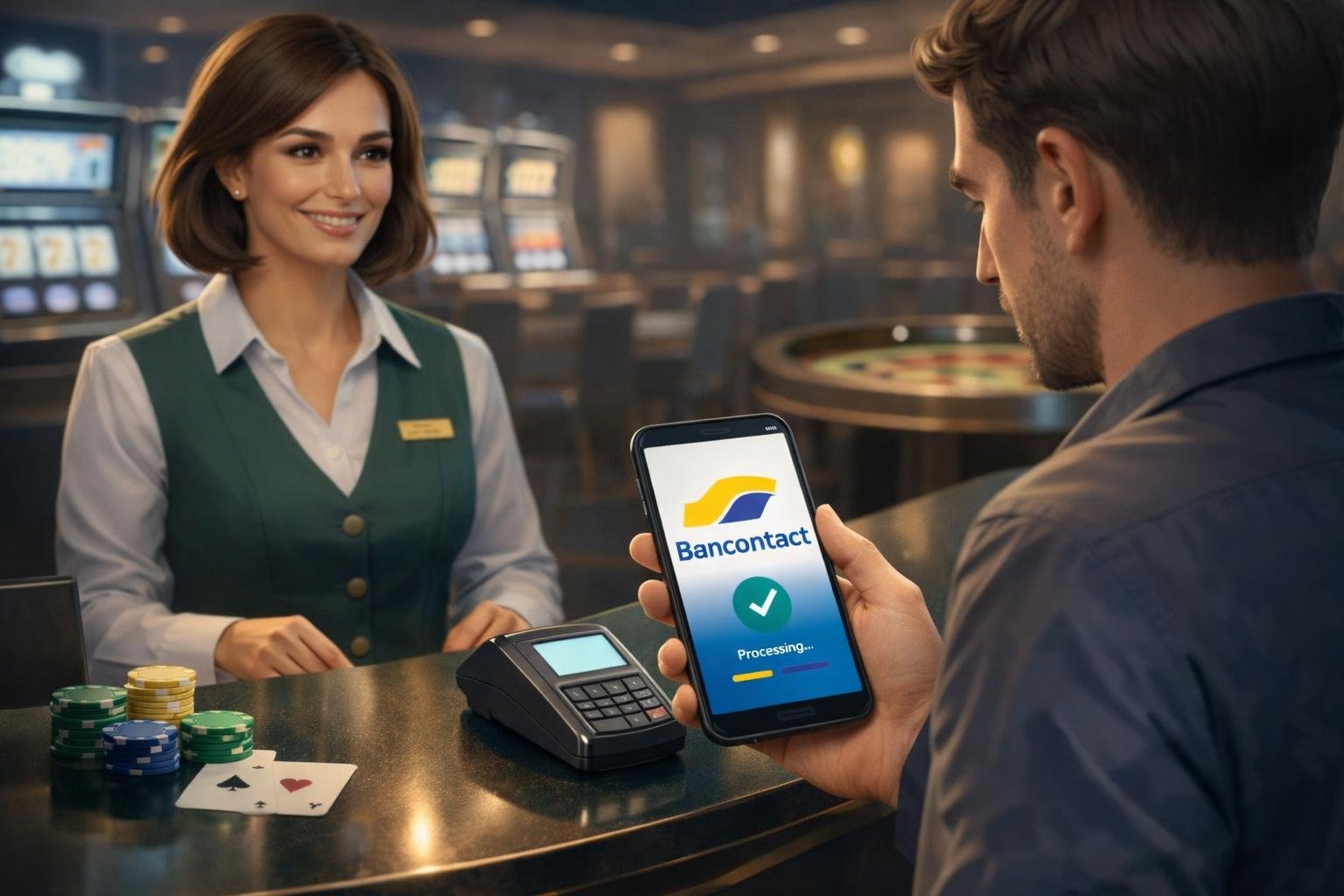
Online casinos in Belgium pick Bancontact because it plugs right into local banks, processes payments fast, and packs strong security against fraud. It's easy for casinos to set up and gives their Belgian customers a payment method they already know and trust.
Key Benefits for Casinos Table
|
Benefit |
Description |
|---|---|
|
Instant Deposits |
Players can fund accounts immediately, letting them start playing without waiting |
|
No Chargebacks |
Bank-to-bank transfers cut down on payment disputes and chargeback headaches |
|
Wide Market Reach |
Access to 2 million monthly users across Belgium, with support from 24 Belgian banks |
|
Zero Transaction Fees |
Casinos can offer fee-free deposits, which attracts budget-conscious players |
|
High Trust Factor |
Belgian players recognize and trust Bancontact as their national payment standard |
Seamless Integration with Gaming Platforms
Adding Bancontact to a casino's payment lineup doesn't require heavy technical lifting. The system connects through existing networks that handle the verification and transfer work.
Most gaming platforms integrate Bancontact with standard payment gateway APIs, so there's no need for custom builds or extra banking deals. The payment flow feels just like other bank transfer methods—players pick Bancontact, enter their bank info, and finish the transaction through their own bank's interface.
The mobile app makes deposits even easier, especially for players on the move. Casinos like this convenience because it lowers barriers to making a deposit, which usually means more deposits overall.
Security and Fraud Prevention
Bancontact brings multi-layered security to every transaction, protecting both casinos and players. Each payment runs through the player's bank, so the casino never sees sensitive credentials.
Every transaction requires bank-level authentication, and advanced encryption keeps data safe between your bank and the casino. That's a big reason why players—myself included—feel comfortable using it.
This setup makes fraudulent payments tough to pull off, especially compared to card-based methods. Players have to verify their identity with their bank before any money moves.
For casinos, this cuts down on stolen card payments and identity theft. The direct bank connection means payments always come from verified accounts, which helps casinos stay compliant with anti-money laundering rules.
Benefits for Players

Bancontact gives Belgian players direct bank transfers, instant deposits, and solid security—making casino payments simple and safe.
Ease of Use and Accessibility
Honestly, Bancontact is one of the easiest ways to deposit at online casinos. It connects straight to my Belgian bank account—no need for extra wallets or third-party apps.
To deposit, I just pick Bancontact in the cashier, enter my card details, and approve the payment through my bank's secure system. The whole thing usually takes less than a minute.
Compatibility isn't an issue since Bancontact works with all major Belgian banks. It's available 24/7, so I can top up my account whenever I feel like playing. Most casinos list it as a primary payment option, so I rarely have to dig around to find it.
Speed of Deposits and Withdrawals Table
|
Transaction Type |
Processing Time |
Typical Limits |
|---|---|---|
|
Deposits |
Instant |
€10 minimum, varies by casino |
|
Withdrawals |
1-3 business days |
€20 minimum, varies by casino |
Deposits hit my casino account right away with Bancontact—no waiting around. I can start playing seconds after confirming the payment.
For withdrawals, casinos process them as SEPA bank transfers to your linked account. In my experience, winnings usually show up in 1-3 business days after casino verification.
Enhanced Security Features
Bancontact uses bank-level security for every transaction. Each payment requires authentication through my bank, sometimes with a one-time code or even biometrics.
I never share my full banking info with the casino. Instead, Bancontact acts as a secure bridge between my bank and the casino, keeping my financial details private.
Banks monitor all Bancontact transactions for anything suspicious. If something looks off, my bank can flag or block it before it goes through. Belgian banking regulations add another layer of protection, so I feel pretty safe every time I use it.
How Does This Payment Method Work?
Bancontact processes payments straight from your Belgian bank account, either with a debit card or the Payconiq by Bancontact app. The system connects with nearly every Belgian bank and confirms transactions in real time, making casino deposits instant and hassle-free.
Step-by-Step Guide to Deposits
Let me walk you through how to deposit with Bancontact at an online casino. First, you’ll need to finish the casino’s registration and toss them a valid email address.
Most casinos want some basic ID verification before you can deposit anything. That’s just standard these days—think of it as showing your ID at the door.
Head over to the cashier or deposit page on your chosen casino’s site. Pick Bancontact from the payment options.
Type in the amount you want to deposit—just keep the casino’s minimum in mind, which usually sits around €10 or €20. The site will bounce you over to Bancontact’s secure payment portal.
Here’s where things get interesting, technically speaking. You’ll either enter your card details or, if you’re using the Payconiq app, scan the QR code that pops up.
Some banks want you to use a card reader or digipass for extra security. It’s basically a hardware key, like those fobs you see at offices, but for your money.
If you’re putting in more than €25, you’ll need to punch in your PIN. This is the same PIN you’d use at a grocery store checkout.
That extra step with the card reader or digipass? It’s not just for show—it’s a second layer of security, built right into the hardware.
After that, confirm the payment. If you’ve got two-factor authentication set up, your bank will probably ask you for it now.
Funds hit your casino account almost instantly. You can dive into the games right away once you see the balance update.
Step-by-Step Guide to Withdrawals
Here’s where things get a bit less convenient: most casinos don’t let you withdraw using Bancontact, even though the system technically could handle it.
Bancontact just wasn’t really built for receiving payments—it’s more a one-way street.
When it’s time to cash out, you’ll have to pick a different withdrawal method. Bank transfers, e-wallets, or even credit cards are the usual suspects.
Casinos always want you to finish the full KYC (know your customer) process before they’ll let you withdraw. That means uploading proof of ID and address—think utility bills and passports.
Once you’re verified, choose your withdrawal method in the cashier section. Enter the amount, hit submit, and then wait while the casino’s team reviews and approves your request. Processing times can vary a lot depending on the site.
Transaction Fees and Limits
Bancontact itself doesn’t tack on fees for casino deposits, whether you’re using the debit card or Payconiq app. That’s actually one of the big reasons folks in Belgium stick with it.
Since the payment processor keeps transaction costs low, Bancontact ends up cheaper than credit cards or some e-wallets. You’re not paying for bells and whistles you don’t need.
Each casino sets its own limits for deposits and withdrawals. From what I’ve seen, minimum deposits usually fall between €10 and €20.
Maximums? That’s all over the place—it depends on the casino’s policy and sometimes your VIP level.
Fee Structure:
|
Transaction Type |
Bancontact Fee |
Casino Fee |
Notes |
|---|---|---|---|
|
Deposits |
€0 |
Varies |
Check casino terms |
|
Withdrawals |
€0 |
Varies |
Not usually available |
Some casinos tack on their own processing fees, so it’s always worth reading the fine print. If you’re converting currencies or using extra Bancontact services, expect a small charge there too.
Compatibility and Global Reach
Bancontact is, at its core, a Belgian payment system. Its reach and currency support really reflect that regional focus.
It’s worth figuring out where Bancontact fits—especially if you’re trying to use it outside Belgium or on different devices.
Availability in Different Countries Table
Almost all Bancontact activity happens in Belgium. The system links up directly with Belgian banks, and you’ll need a Belgian-issued Bancontact card or the Bancontact app tied to a Belgian bank account.
|
Region |
Availability |
Notes |
|---|---|---|
|
Belgium |
Full access |
Primary market with complete functionality |
|
Other EU Countries |
Limited |
Some EU casinos accept it but requires Belgian bank account |
|
United Kingdom |
Very limited |
Rarely accepted at UK-facing casinos |
|
Rest of World |
Not available |
No support outside European market |
If you’re outside Belgium, you just can’t get a Bancontact card from your local bank. That’s a dealbreaker for most international players.
Supported Currencies Table
Bancontact runs on euros, plain and simple. That’s the default since it’s tied to the Belgian market.
Casinos that offer Bancontact almost always set up accounts in euros to keep things smooth. If you’re using another currency, the casino will handle the conversion, but your bank might tack on some fees if your account isn’t in euros.
|
Currency |
Support Level |
Transaction Type |
|---|---|---|
|
EUR (€) |
Full support |
Deposits and withdrawals |
|
USD ($) |
Not supported |
Conversion required through casino |
|
GBP (£) |
Not supported |
Conversion required through casino |
|
Other currencies |
Not supported |
Must convert to EUR |
Mobile Compatibility and Usability
Bancontact plays nicely with mobile devices—both via mobile casino sites and its own app. The app lets you pay by scanning QR codes or entering payment info right on your phone.
I’ve managed to complete deposits on mobile in under a minute using Bancontact. The process is basically a mirror image of the desktop version—no features get stripped out for mobile.
To set up the mobile app, you’ll need a Belgian bank account. Once you’ve got that, you get the same security as with the card, including all the authentication steps your bank requires.
Comparison with Other Payment Methods
Bancontact’s approach is pretty different from credit cards, e-wallets, or other casino payment systems. Let’s dig into how it actually stacks up—speed, cost, and where it shines (or doesn’t) for casino players.
Advantages Over Other Options
Since Bancontact links straight to my Belgian bank account, I don’t have to hand over credit card numbers or set up extra accounts like I would with Skrill, Neteller, or PayPal. That direct link means deposits usually land instantly.
I also dodge the transaction fees that some credit cards slap on gambling payments. Those can get sneaky—some banks treat casino deposits as cash advances, which isn’t great.
Security is honestly a big win here. Bancontact uses two-factor authentication and real-time fraud checks. Every transaction goes through my banking app, so there’s a second set of eyes on every payment.
For Belgians, Bancontact is just more widely accepted than most international options. Trustly is a solid alternative for fast bank transfers, but Bancontact is the familiar, homegrown standard. Plus, it operates under strict Belgian and EU rules.
Disadvantages Compared to Competitors
Bancontact only works if you’ve got a Belgian bank account. That rules out international players—Visa, Mastercard, or global e-wallets are better for them.
I can’t use Bancontact for withdrawals at most casinos. It’s mainly for deposits, so I have to set up something else (usually a bank transfer) to get my winnings out.
Refunds take longer than with e-wallets. Skrill or Neteller might return money in a few hours, but Bancontact follows old-school banking timelines—think 3-5 business days.
There’s no real buyer protection with Bancontact. If I have a dispute with a casino, I can’t do a chargeback like I could with a credit card.
Best Use Cases
I reach for Bancontact when I want to make a quick deposit at a Belgian-licensed casino. The money lands instantly, and I’m playing in seconds.
This method’s ideal if you want to keep your gambling separate from your credit card transactions. It keeps your casino payments out of your everyday spending records.
If you care about privacy, Bancontact is a good pick. You don’t share card info with a bunch of casino sites—everything stays inside your bank’s own secure system.
Licensing and Regulatory Compliance
Bancontact follows strict European payment regulations. That has a direct impact on how online casinos set up payments with this method.
Let’s break down the licensing requirements, anti-money laundering rules, and the certifications that keep your transactions safe.
Licensing Requirements
Casinos that want to accept Bancontact need valid gambling licenses from recognized authorities. These licenses make sure the casino’s running a legit operation and keeping their finances in order.
Bancontact itself plays by SEPA (Single Euro Payments Area) rules. That’s the European standard for moving money around safely and efficiently.
Only casinos that meet SEPA requirements and hold licenses in compliant jurisdictions can offer Bancontact. The usual licensing bodies you’ll see are the Malta Gaming Authority, the Belgian Gaming Commission, and Curacao eGaming.
Each authority checks payment flows and financial transparency before giving a casino the green light. Casinos have to pass regular audits and compliance checks to keep their licenses—and if they lose that, they can’t process Bancontact payments anymore.
Anti-Money Laundering (AML) and Know Your Customer (KYC) Policies
Casinos that use Bancontact have to put strict AML and KYC procedures in place. Technically speaking, these policies help prevent financial crimes and keep players safer from fraud.
Key AML requirements include:
-
Systems that monitor transactions and flag suspicious activity
-
Reporting for transactions above set thresholds
-
Risk-based approaches that look at each player's financial habits
-
Enhanced Due Diligence (EDD) for high-risk players
KYC policies mean the casino needs to verify who I am before I can deposit or withdraw. Usually, I'll upload my ID, proof of address, and sometimes proof of income for bigger transactions.
Bancontact ties directly into European banking systems, which makes these checks smoother. Since the payment method connects to my verified bank account, it adds another layer of identity confirmation right from the start.
Certifications and Third-Party Audits
Payment processors and casinos handling Bancontact transactions go through regular third-party audits. Auditors check that financial systems actually meet security standards and all the regulatory boxes.
PCI DSS (Payment Card Industry Data Security Standard) compliance tops the list of certifications, protecting payment data as it moves through the system. Casinos also need ISO 27001 certification for information security management.
Independent auditing firms look over casino payment infrastructure at least once a year. They dig into transaction records, security protocols, and whether the casino follows local gambling laws.
If a casino fails an audit, they can lose the right to process payments or even have their license revoked. Nobody wants that kind of headache.
Common Issues and How to Resolve Them
Bancontact is usually reliable for casino payments, but things don't always go smoothly. Payment delays, error messages, or confusion about who to contact—these problems pop up now and then.
Most issues have practical fixes, so you won't be stuck for long.
Transaction Delays
Delays with Bancontact transactions are pretty rare, and they're usually over in a few minutes. Occasionally, payments take longer to hit your casino account, especially if your bank's doing security checks or processing during odd hours.
Give it 15-30 minutes before you panic. In my experience, most delays sort themselves out in that window.
If your deposit still hasn't shown up after half an hour, open your mobile banking app and double-check if the money left your account. Look for the transaction in your recent activity.
Common causes of delays include:
-
Bank maintenance times
-
High traffic at the casino
-
Security verification steps
-
Typos in account details
Hang onto your transaction reference number. If you need to talk to support, they'll ask for it.
Deposit or Withdrawal Errors
Most Bancontact transaction errors boil down to insufficient funds, technical hiccups, or account verification problems. I've noticed deposit errors often happen when you hit your daily limit or your account details don't line up.
Make sure you've got enough in your account to cover the deposit and any possible bank fees. Check that your Bancontact card is still active and hasn't expired.
If you run into an error, try these steps:
-
Clear your browser's cache and cookies
-
Switch browsers or devices
-
Update your Bancontact app, if you use it
-
Check your daily transaction limits with your bank
Some casinos ask for extra verification on big transactions. You might need to upload ID or proof of address before the payment goes through.
If you keep running into trouble, consider switching to another payment method until you sort out the Bancontact issue.
Contacting Support
If something goes wrong with a Bancontact payment, your bank is usually the first place to call. They've got the tools to trace the payment and pinpoint where it got stuck.
If your bank says the money left your account but it's missing from your casino balance, reach out to casino support. Have this info ready:
-
Transaction date and time
-
Payment amount
-
Transaction reference number
-
Screenshots of any error messages
Most Belgian casinos offer support in Dutch, French, and English. Live chat usually gets you answers the fastest when payments go sideways.
Keep records of all your chats and emails with support—just in case you need to escalate things later. It's always better to have a paper trail.
Pros and Cons
Bancontact brings instant deposits and strong security for Belgian players. But, outside Belgium, it's pretty much a no-go. If you're looking for the best Bancontact casinos, stick with licensed operators that actually support local payment habits.
Four Advantages Table
|
Advantage |
Description |
|---|---|
|
Instant Deposits |
Funds show up in your casino account right after you confirm. Honestly, it's nice not having to wait—I've started playing within seconds of depositing. |
|
Strong Security |
Bancontact uses 3DS security, so your Belgian bank has to authenticate every transaction. That extra step protects you from unauthorized use. |
|
Direct Bank Connection |
Everything connects straight to your Belgian bank account—no middlemen. You never need to share your card details with the casino. |
|
Wide Belgian Acceptance |
Most Belgian and EU-friendly casinos take Bancontact. It's been the go-to payment system in Belgium since 1979, so it's everywhere locally. |
Four Disadvantages Table
|
Disadvantage |
Description |
|---|---|
|
Belgium Only |
You need a Belgian bank account to use Bancontact. If you're not in Belgium, you're out of luck. |
|
Transaction Fees |
Merchants pay a small processing fee, but most Belgian casinos cover it, so you don't see a charge as a player. |
|
Withdrawal Complications |
Not every casino supports Bancontact for withdrawals. You might have to pick another method to cash out. |
|
Limited Currency |
Bancontact mainly works with euros. If you're playing in another currency, you could get hit with conversion fees. |